

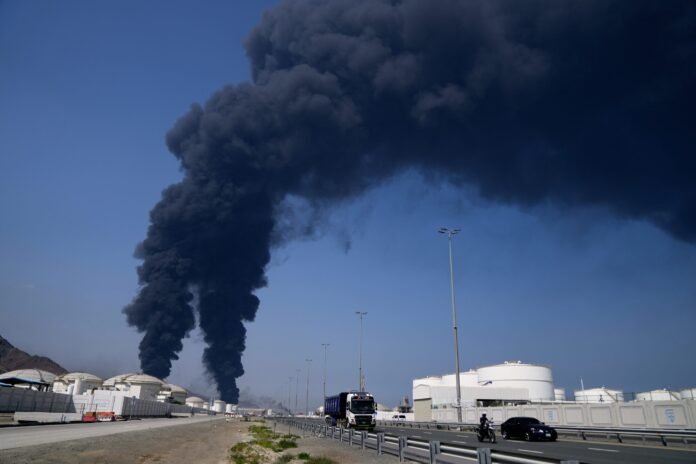
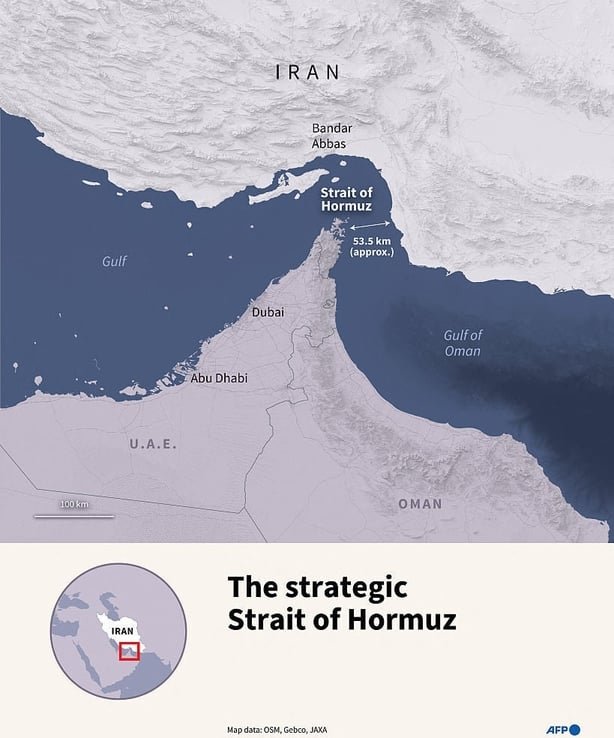
As the 2026 Iran War enters its second month, with United States and Israeli forces having launched devastating strikes on February 28 that claimed the life of Supreme Leader Ali Khamenei and targeted Iran’s nuclear and military infrastructure, the conflict has morphed into a sprawling regional crisis. Iranian retaliatory missile barrages, Houthi attacks on Israel, and Tehran’s effective closure of the Strait of Hormuz have upended global energy flows, displaced millions, and sent shockwaves through economies far beyond the Middle East.
For India, this is not abstract geopolitics but a visceral challenge to its core vulnerabilities: energy dependence, a vast diaspora, and a carefully calibrated foreign policy that has long sought to balance ties with Israel, Iran, and the Gulf states. What was once a manageable tightrope walk has become a high-stakes gamble, exposing the fragility of India’s rise as a global power and demanding urgent recalibration if New Delhi is to shield its 1.4 billion citizens from the fallout.

The most immediate and punishing impact has been on energy security, the lifeblood of India’s economy. India imports nearly 90 percent of its crude oil and 80 to 85 percent of its liquefied petroleum gas (LPG), with the vast majority of these shipments—some 2.5 to 2.7 million barrels of oil daily—transiting the Strait of Hormuz, now a war zone where Iranian forces have imposed tolls in yuan and halted traffic to US allies.
The result has been chaos at home: LPG shortages have triggered queues for cooking gas cylinders in cities from Mumbai to Chennai, domestic prices have jumped by ₹60 per cylinder and commercial ones by ₹114 to ₹115, and storage buffers that once offered two to three weeks of cover are rapidly depleting.
Fertiliser plants, already restricted to 70 percent of their gas supply, face further cuts, threatening the very foundation of food security in a nation where agriculture still employs nearly half the workforce. Oil prices have surged toward $120–150 per barrel, a spike that economists warn could add 0.2 to 0.25 percentage points to inflation for every $10 increase, widen the current account deficit, and force painful choices between consumer subsidies and fiscal restraint.
Industries from tile manufacturing in Gujarat’s Morbi cluster—where thousands of micro, small, and medium enterprises (MSMEs) have shuttered—to restaurants in Mumbai have scaled back operations, with some shifting to induction stoves or even firewood. These are not temporary inconveniences; they are the early tremors of a broader slowdown that could derail India’s post-pandemic growth ambitions precisely when the country needs every percentage point of gross domestic product (GDP) expansion to create jobs for its youthful population.

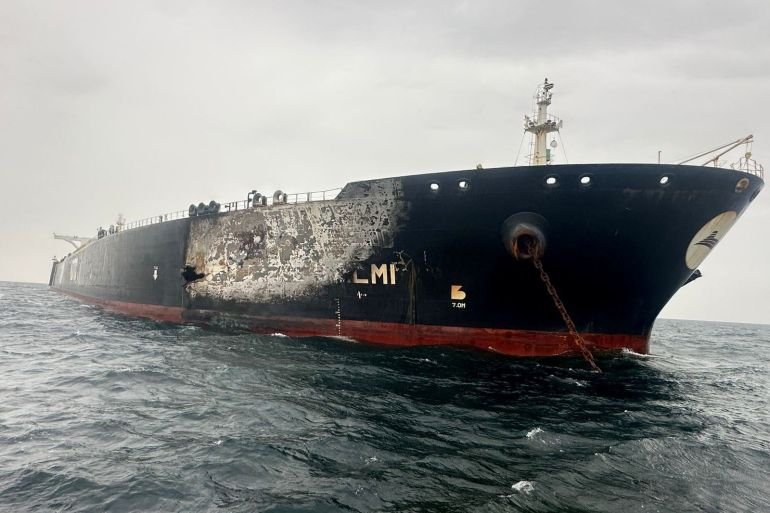
Compounding the energy crisis is the threat to remittances and the safety of India’s sprawling diaspora in the Gulf. With roughly 10 million Indians living and working across Saudi Arabia, the United Arab Emirates (UAE) , Qatar, Kuwait, Oman, and Bahrain—accounting for 38 percent of the record $135 billion in remittances received in 2024–25—these flows have become a quiet pillar of household stability and external balances, financing nearly half of India’s merchandise trade deficit. Kerala alone absorbs about a fifth of these inflows, underwriting everything from school fees to small businesses. Yet the war has already prompted the return of over 220,000 workers, and Iranian strikes on Gulf infrastructure, including near Dubai, have shattered the region’s image as a safe haven for expatriates.

With oil at $150 a barrel and LPG prices jumping ₹60 per cylinder, small businesses from Morbi’s tile factories to Mumbai’s restaurants are shutting down or switching to firewood. Fertiliser plants run at 70 per cent capacity, threatening India’s food security.
Families in India now monitor news of attacks on US bases in Saudi Arabia and Bahrain with dread, knowing that any escalation could trigger mass evacuations, disrupted schooling, and a sudden drop in money transfers. For a government already navigating rural distress and urban unemployment, the prospect of millions of households losing this financial lifeline is politically explosive. The human cost—Indian nationals killed or injured in the crossfire—adds a moral urgency that no amount of diplomatic hedging can obscure.
Diplomatically, the war has laid bare the tensions in India’s long-standing strategy of “de-hyphenation”—cultivating robust ties with Israel for defence technology and counterterrorism while preserving historic links with Iran through projects like the Chabahar port and the International North-South Transport Corridor (INSTC). Prime Minister Narendra Modi’s state visit to Israel just days before the conflict erupted, where he upgraded bilateral relations to a “special strategic partnership” and declared that “India stands with Israel firmly, with full conviction,” sent an unmistakable signal of alignment.
Early phone calls to Gulf leaders and Israeli Prime Minister Benjamin Netanyahu, condemning violations of sovereignty without equivalent outreach to Tehran, reinforced perceptions of a tilt toward Washington and Jerusalem. Only after the LPG crisis bit hard—some 13 to 14 days into the war—did External Affairs Minister (EAM) S. Jaishankar and Modi himself engage Iranian counterparts, securing passage for stranded Indian tankers and quietly leveraging Chabahar’s six-month sanctions waiver extension.
Critics rightly point out that this reactive course correction arrived too late to prevent supply disruptions and that India’s silence on the assassination of Khamenei contrasted sharply with its mourning for President Ebrahim Raisi in 2024. As Brazil, Russia, India, China, South Africa (BRICS) chair, New Delhi now faces pressure from partners like China, Russia, and South Africa, who have condemned the US-Israeli campaign outright. The optics matter: a perceived loss of strategic autonomy risks eroding leverage with Tehran at a moment when Chabahar offers India a vital bypass around Pakistan and a gateway to Central Asia.
Yet the war also presents India with an uncomfortable mirror. Its deepening defence and technology collaboration with Israel—drones, cybersecurity, agriculture—has delivered tangible benefits, from border security tools to water management innovations. At the same time, Iran’s role as a counterweight to Sunni Gulf monarchies and a partner in connectivity cannot be wished away. The conflict has already strained the delicate equilibrium, with Iranian frigate incidents near Indian waters and Houthi disruptions in the Bab el-Mandeb Strait adding to shipping insurance premiums and rerouting costs that make Indian exports less competitive. Broader trade—17 percent of India’s exports and $100 billion in imports from the region, including fertilisers and petrochemicals—hangs in the balance.
In this crucible, India’s traditional emphasis on strategic autonomy, honed through its handling of the Russia-Ukraine war, is being tested as never before. Over-reliance on Gulf oil and remittances has turned a regional skirmish into a domestic emergency, while an overly vocal pro-Israel stance has complicated back-channel diplomacy with Tehran.
The long-term implications extend beyond immediate pain. A prolonged conflict could accelerate global energy diversification away from the Middle East, offering India both risks and opportunities. On one hand, sustained high oil prices might hasten the shift to renewables and nuclear power, aligning with India’s net-zero goals and reducing vulnerability to chokepoints like Hormuz.
On the other, failure to diversify quickly—through expanded Russian and US imports, accelerated solar and green hydrogen projects, or strategic reserves—risks entrenching inflation and slowing industrial momentum at a time when China and other rivals press ahead.
Geopolitically, the war underscores the limits of US security guarantees in the Gulf; even Saudi Arabia and the UAE are quietly reassessing alliances, creating space for India to deepen multilateral engagement via BRICS, the Quad (Australia, India, Japan, the United States) , or a revamped I2U2 (India, Israel, UAE, US) grouping.
For Kerala, which absorbs one-fifth of foreign remittances from the Gulf, each interrupted money transfer means a halted school fee, a shuttered small shop, a family pushed to the brink. The war has turned a financial lifeline into a political time bomb.
New Delhi’s offer of safe harbour for the Iranian frigate IRIS-Dana hints at quiet pragmatism, but bolder steps are needed: proactive mediation calls, expanded energy diplomacy with Latin America and Africa, and a clear reaffirmation that India’s friendships are not zero-sum.
In the end, the Iran-Israel war is a stark reminder that India’s destiny is inextricably linked to West Asian stability.
The conflict has already cost lives, disrupted kitchens, and threatened livelihoods across the subcontinent. For a nation aspiring to lead the Global South and achieve developed-country status by 2047, this is a moment of reckoning. New Delhi must move beyond reactive firefighting to forge a genuinely autonomous path—one that protects its energy lifelines, safeguards its diaspora, and leverages its unique relationships to push for de-escalation.
Only by treating strategic autonomy not as rhetoric but as rigorous policy can India turn this crisis into a catalyst for resilience rather than a drag on its ascent. The alternative—a fragmented foreign policy that leaves millions of citizens paying the price at the pump and the dinner table—is one India can ill afford. The time for bold, balanced diplomacy is now.

The writer is Special Advisor for South Asia at Parley Policy Initiative, Republic of Korea. He is a regular commentator on the issues of Water Security and Transboundary River issues in South Asia. The views expressed are of the writer and do not necessarily reflect the views of Raksha Anirveda
