

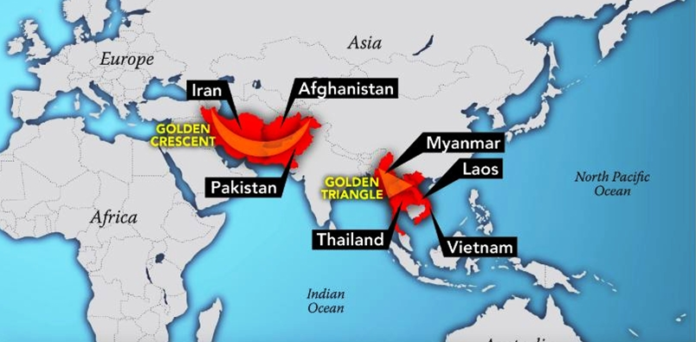
The Golden Crescent comprising Afghanistan, Pakistan, and Iran accounts for a dominant share of global illicit opium production, with Afghanistan alone historically contributing over 80–85 per cent of global output. For India, geographic proximity converts this into a direct internal security problem. The country is now both a transit corridor and a consumption hub. According to Indian enforcement data, heroin seizures have crossed 7,000–8,000 kg annually in recent years, while total narcotics seizures (including synthetic drugs) have risen by over 200 per cent in the past decade. These figures, while significant, represent only interdicted volumes, suggesting a far larger undetected flow.
The intersection of narcotics trafficking with militancy, organised crime, and socio‑economic vulnerabilities has created a hybrid threat landscape. This is most visible in Jammu & Kashmir and Punjab, but increasingly, spillover effects are evident in India’s north‑eastern states as well.

Production, Trafficking Routes, and Magnitude
Afghanistan’s opium economy remains structurally entrenched, with cultivation often exceeding 200,000 hectares annually in peak years. Even with fluctuations due to enforcement or climatic conditions, the production base remains resilient. The value of the Afghan opiate economy has been estimated at several billion dollars annually, forming a critical revenue stream for illicit actors.
India is affected through two principal corridors:
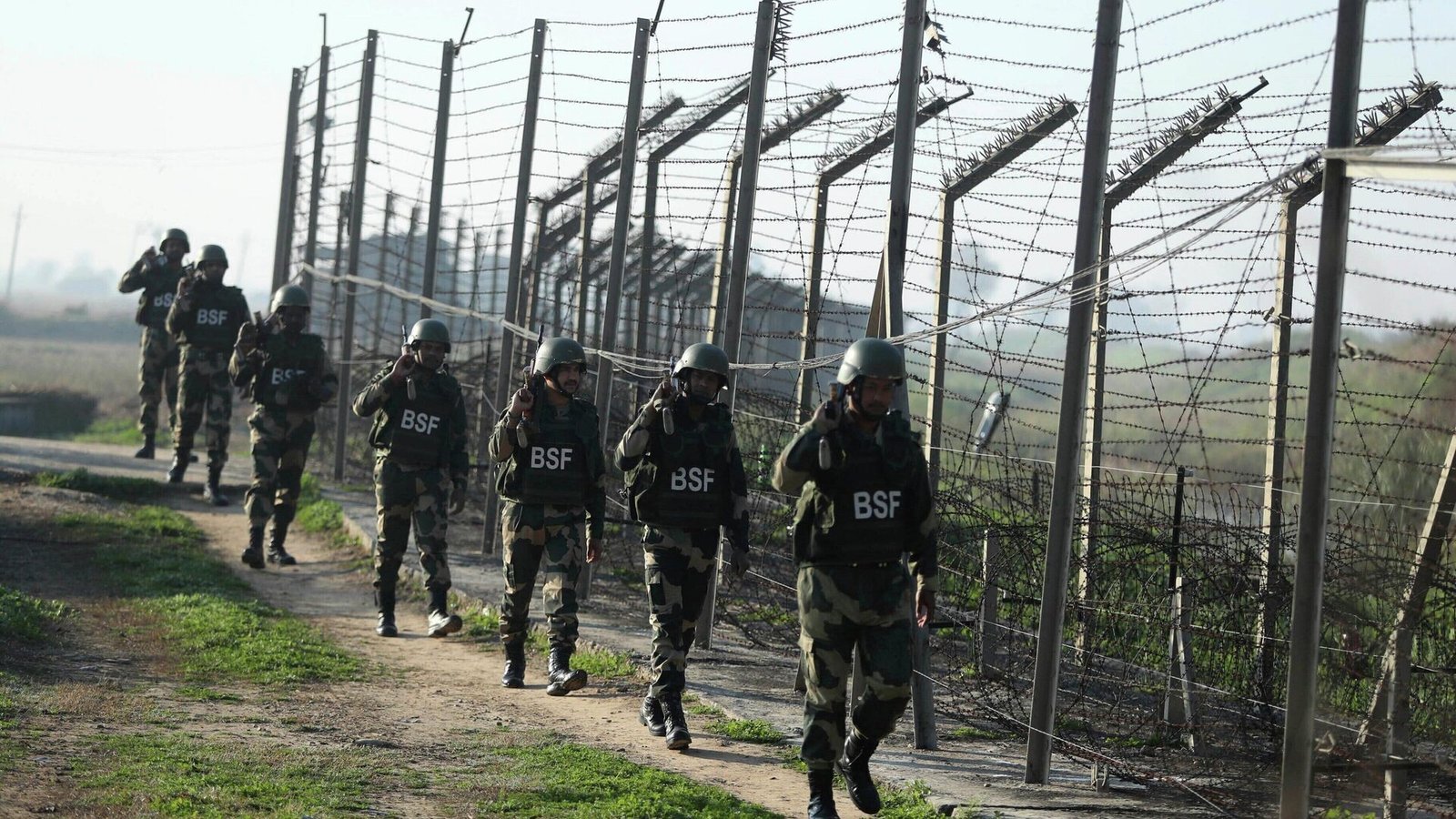
- The western land route via Pakistan feeds narcotics into Punjab and Jammu sectors. Border Security Force (BSF) data indicates hundreds of smuggling attempts annually, with seizure quantities in Punjab alone often exceeding 1,000 kg of heroin per year.
- The maritime route through the Arabian Sea has seen exponential growth. High‑profile seizures — such as multi‑ton consignments at ports like Mundra — demonstrate industrial‑scale trafficking. In one instance, over 2,900 kg of heroin was seized, indicating the scale at which transnational syndicates operate.
Synthetic drugs are also emerging as a major component. Methamphetamine seizures in India have increased sharply, reflecting diversification of trafficking networks and linkages with Southeast Asian supply chains.
Jammu & Kashmir: Financial Flows and Operational Shifts
In Jammu & Kashmir, militancy has increasingly adopted a hybrid financing model. Intelligence estimates suggest that a significant proportion — often assessed between 15–25 per cent — of militant funding now originates from narcotics trafficking and related criminal activities.

Drone‑based smuggling has transformed cross‑border logistics. BSF reports indicate that drone sightings along the Punjab–Jammu border have risen from single digits a few years ago to over 300–400 incidents annually. Each drone can carry payloads ranging from 2–10 kg, including heroin, weapons, and communication equipment.
Local recruitment into trafficking networks has also increased. Arrest data from Jammu & Kashmir Police shows a steady rise in narcotics‑related cases, with thousands of FIRs registered annually under anti‑narcotics laws. A notable proportion of those apprehended are youth between 18–30 years, indicating socio‑economic drivers.

Drug abuse is simultaneously rising. Surveys suggest that tens of thousands of individuals in the Union Territory are affected by substance use disorders, creating a dual burden — financing militancy while weakening societal resilience.
Punjab: Scale of the Narco‑Crisis and Security Externalities
Punjab represents one of India’s most severe drug crises. Estimates from government and independent studies indicate that between 15–20 per cent of the state’s youth population has been exposed to narcotics in some form. In border districts, prevalence rates are even higher.
Heroin seizures in Punjab routinely cross 1,000 kg annually, while arrests related to drug trafficking number in the tens of thousands over multi‑year periods. Despite sustained enforcement, the supply remains resilient, indicating deep‑rooted networks.
Drone incursions have jumped from single digits to over 400 a year. Intelligence estimates suggest 15‑25 per cent of militant funding in J&K now comes from narcotics. Meanwhile, Punjab’s addiction crisis sees 15‑20 per cent of its youth exposed to drugs, with heroin seizures routinely exceeding 1,000 kg annually.
The public health impact is severe. Punjab has reported a significant rise in HIV infections linked to intravenous drug use, with certain districts showing prevalence rates far above the national average. Rehabilitation centres, though increasing in number, remain insufficient relative to demand.
From a security standpoint, the drug economy sustains organised criminal gangs. Intelligence inputs suggest that some of these networks maintain linkages with extremist elements, raising concerns about potential reactivation of militancy. Drone‑based smuggling is particularly acute here, with hundreds of incursions annually and consistent recovery of arms alongside narcotics.
Spillover into North‑Eastern States: Emerging Narco‑Security Axis
While the Golden Crescent primarily affects western India, its impact is increasingly intersecting with the Golden Triangle (Myanmar–Laos–Thailand), creating a pan‑Indian narcotics challenge. The north‑eastern states — particularly Manipur, Mizoram, and Nagaland — are emerging as critical nodes in this expanded network.
India shares over 1,600 km of porous border with Myanmar, much of it unfenced. This facilitates trafficking of heroin and, more significantly, methamphetamine (commonly known as “Yaba” or “ice”). Seizure data indicates a sharp rise in methamphetamine tablets intercepted in the region, often in consignments of several hundreds of thousands of pills.
Manipur has reported some of the highest drug seizure figures in the north‑east, with heroin and methamphetamine interceptions increasing year on year. The state also faces a growing addiction crisis, with thousands of registered drug users and high rates of HIV/AIDS linked to needle sharing.
Insurgent groups in the region have historically relied on extortion and cross‑border linkages, fuelling insurgent groups like National Socialist Council of Nagaland – Isak‑Muivah (NSCN-IM), United Liberation Front of Asom (ULFA), and
United National Liberation Front (UNLF) via protection rackets and direct trafficking. Increasingly, narcotics trafficking is becoming an additional revenue stream. This creates a convergence similar to the Kashmir model, where insurgency and organised crime overlap.
The Free Movement Regime (FMR) along the India–Myanmar border, while facilitating local mobility, is also exploited for smuggling. Weak infrastructure, limited surveillance, and difficult terrain further complicate enforcement.
Border Management: Data‑Driven Assessment of Gaps
India’s western border spans over 3,300 km, while the India–Myanmar border adds another 1,600 km of complexity. Despite fencing along significant stretches of the Pakistan border, gaps remain in riverine and marshy areas.
BSF data highlights persistent infiltration attempts, with hundreds of smuggling incidents detected annually. However, detection rates remain uncertain, as traffickers continuously adapt.
Drone threats have surged dramatically, with incidents increasing by several hundred per cent over the past five years. Anti‑drone deployments have begun, but coverage remains uneven.
Maritime vulnerabilities are equally significant. India’s coastline extends over 7,500 km, with major ports handling millions of containers annually. Even a small percentage of compromised shipments translates into large volumes of narcotics.
In the north‑east, less than 10 per cent of the India–Myanmar border is effectively fenced, leaving vast stretches exposed. Surveillance infrastructure remains limited, and manpower constraints further reduce effectiveness.
Human Security: Quantifying the Social Impact
The human cost of narcotics is substantial and measurable. Nationally, millions are estimated to be affected by substance abuse, with opioids forming a significant share. Punjab alone accounts for a disproportionately high percentage of opioid users relative to its population.
Healthcare burdens are rising. Drug‑related illnesses, including HIV/AIDS and hepatitis, are increasing in high‑prevalence regions. In some districts of Punjab and the north‑east, HIV prevalence among injecting drug users exceeds 10–15 per cent, compared to the national average of less than 1 per cent.
The Nasha Mukt Bharat Abhiyan and National Action Plan for Drug Demand Reduction (2018‑2025) emphasise awareness and rehabilitation, yet infrastructure gaps persist. Punjab’s 2025 drug census — surveying 6.5 million (65 lakh) families — signals proactive intent, but private clinics often outpace underfunded government centres. Stigma deters treatment; mental health integration remains nascent. Human security framing shifts focus from enforcement to rights‑based prevention — education in schools, skill programmes for at‑risk youth, and community‑led monitoring.
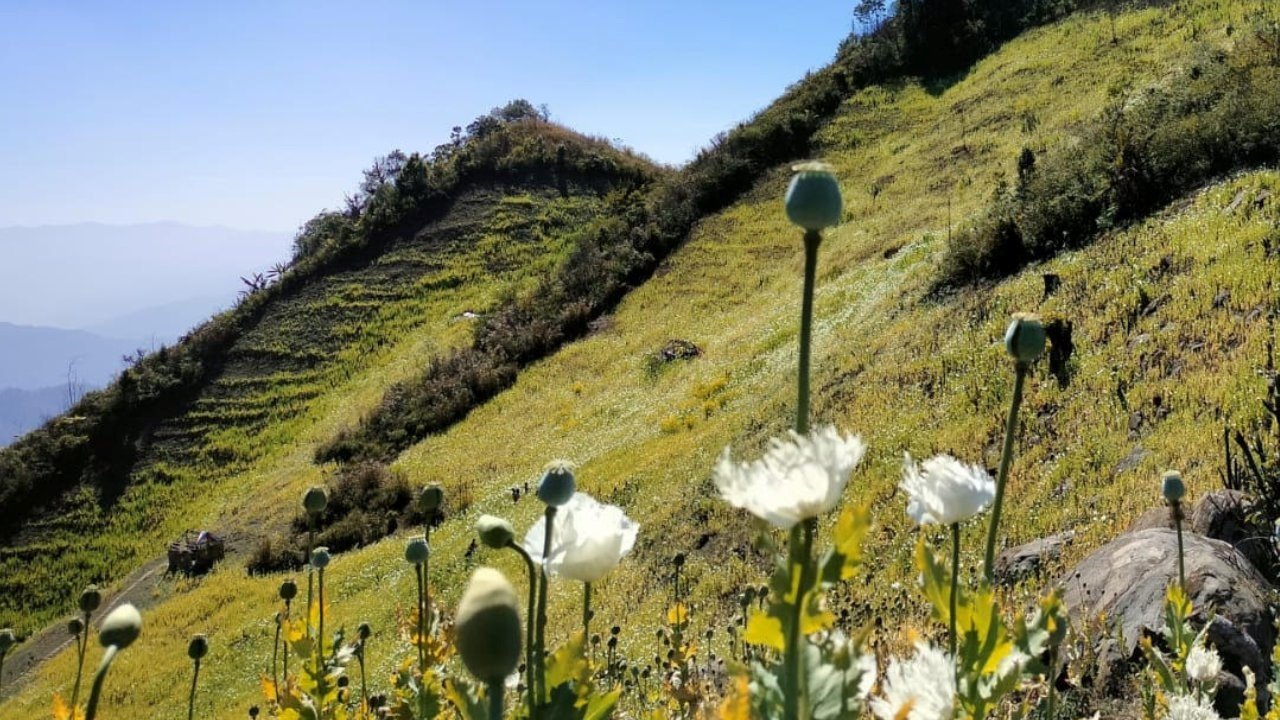
Economically, the black economy distorts markets, funds corruption, and hampers legitimate trade. Environmentally, illicit poppy cultivation (though limited in India) and chemical dumping degrade border ecosystems. The Golden Crescent’s shadow thus imperils not just territorial integrity but the foundational well‑being of citizens.
Economic losses are also significant. Reduced workforce participation, increased healthcare expenditure, and crime‑related costs collectively impose a heavy burden on state economies.
In Kashmir, the rise in drug abuse among youth is particularly concerning. Estimates suggest tens of thousands of users, with a growing number seeking treatment annually. This erodes the demographic dividend and increases susceptibility to both criminal and extremist recruitment.
Policy Response: Measurable Gains and Persistent Deficits
India’s enforcement efforts have yielded measurable outcomes. Narcotics seizures have increased significantly, indicating improved detection; thousands of trafficking networks have been disrupted, and arrests have risen correspondingly.
Technological interventions — such as smart fencing and drone detection — are being deployed, though not yet at scale. Financial investigations have improved, with increasing identification of money laundering networks.
The Golden Crescent is merging with the Golden Triangle via India’s unfenced 1,600 km Myanmar border. Methamphetamine tablet seizures run into hundreds of thousands, and insurgent groups like NSCN‑IM and ULFA are shifting from extortion to drug trafficking, replicating the Kashmir model.
However, conviction rates remain relatively low compared to arrests, indicating judicial and evidentiary challenges. Rehabilitation capacity remains inadequate, with treatment facilities unable to meet demand in high‑burden states.
International cooperation has produced limited results due to geopolitical constraints. While multilateral engagement exists, operational coordination with key source and transit countries remains restricted.
Integrated Border Management with Quantifiable Targets
India should aim to achieve near‑total surveillance coverage of high‑risk border sectors within five years. This includes 100 per cent deployment of smart fencing in vulnerable stretches of the Punjab and Jammu sectors, and at least 50 per cent fencing or technological coverage along the India–Myanmar border.
Counter‑drone systems must be scaled to cover all major infiltration corridors, with response times reduced to under five minutes for detected incursions. Investment in indigenous anti‑drone technologies should be increased substantially.
Maritime surveillance should target 100 per cent tracking of non‑registered vessels within India’s Exclusive Economic Zone using AIS (Automatic Identification Systems) and satellite integration.
Financial Disruption with Measurable Outcomes
India should set targets for asset seizures linked to narcotics cases, aiming for year‑on‑year increases of at least 25 per cent in confiscated proceeds. Integration of financial intelligence databases across agencies can improve detection rates.
Use of AI‑driven analytics to track suspicious transactions should be institutionalised, with dedicated units focusing on narco‑financing.
North‑East Focused Strategy
A dedicated “North‑East Narcotics Control Grid“ should be established, integrating state police, Assam Rifles, and central agencies. Surveillance infrastructure along the Myanmar border should be expanded, with priority to high‑traffic corridors. The FMR should be reviewed and calibrated to balance local needs with security imperatives. Pilot projects for biometric tracking and regulated crossings can be considered.
Demand Reduction with Capacity Expansion
India should aim to double its rehabilitation capacity within five years, particularly in Punjab and the north‑east. District‑level de‑addiction centres must be established in all high‑prevalence districts. Public health targets should include a measurable reduction in HIV prevalence among injecting drug users by at least 30 per cent over a decade.
Institutional Integration and Legal Reform. A unified Narco‑Terror Task Force should be operationalised with real‑time data sharing across agencies. Conviction rates in narcotics cases should be improved through fast‑track courts and enhanced forensic capabilities. Legal frameworks must be updated to address emerging technologies, particularly drone‑based smuggling.
Socio‑Economic Stabilisation
Targeted employment programmes in border districts should aim to reduce youth unemployment rates by at least 10–15 per cent over five years. Skill development initiatives must be aligned with local economic conditions. In Kashmir and the north‑east, community engagement programmes should be expanded to counter both drug abuse and insurgent recruitment.
International and Multilateral Engagement
India should intensify engagement with UNODC and regional partners, aiming for joint operations and intelligence sharing mechanisms. Even limited cooperation can yield incremental gains in disrupting transnational networks.
Takeaways
The Golden Crescent challenge is a systemic threat requiring a whole‑of‑state response. Quantitative indicators — rising seizures, increasing addiction rates, and expanding trafficking networks — underscore the urgency.
The addition of the north‑east dimension transforms the problem into a pan‑Indian security issue, linking two major global narcotics hubs — the Golden Crescent and the Golden Triangle — through Indian territory.
India’s internal security landscape is increasingly shaped by the narcotics economy emanating from the Golden Crescent. Kashmir, Punjab, and now the north‑east represent interconnected theatres of this challenge.
While enforcement efforts have improved, the scale of the problem demands a shift from reactive containment to proactive, data‑driven mitigation. There is a need to integrate border security, financial disruption, public health, and socio‑economic development.
The magnitude of the threat — measured in thousands of kilograms of narcotics, millions affected by addiction, and billions in illicit flows — makes this not just a law enforcement issue, but a defining national security priority for the coming decade.

-The author retired as Major General, Army Ordnance Corps, Central Command, after 37 years of service. A management doctorate and expert on defence modernisation, he is the author of four books, including the Amazon bestseller “Breaking the Chinese Myth,” and a frequent media commentator. He is affiliated with several leading defence and strategic studies institutions in New Delhi. The views expressed are of the writer and do not necessarily reflect the views of Raksha Anirveda
