

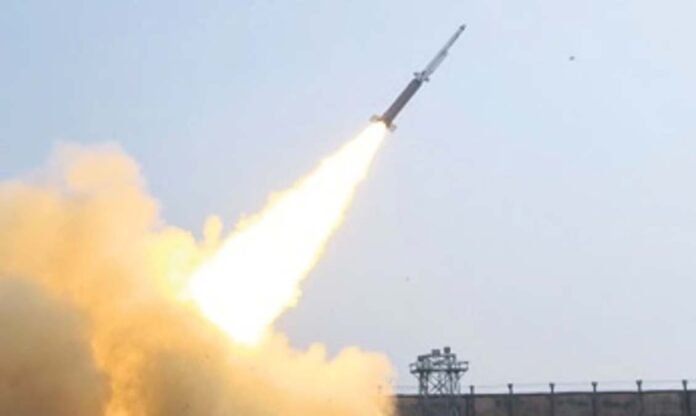
Bhubaneswar: The final round test of the solid fuel ducted ramjet (SFDR) propulsion-based missile system was conducted successfully by the Defence Research and Development Organisation (DRDO) from a defence facility off Odisha coast on December 13.
It was yet another technological accomplishment. This was the third successful mission involving three different classes of missiles with indigenous technologies in a month. The indigenously developed missile system was test fired from a static launcher at the launching complex-III of the integrated test range (ITR).

According to defence sources, the missile powered by SFDR met all mission objectives validating the advanced propulsion system and several other critical components. The missile flew in its intended trajectory at a speed of exceeding Mach 3 (thrice the speed of sound) and neutralised the aerial target at precision.
“The data captured by a number of range instruments, including telemetry, radar and electro-optical tracking systems has confirmed its performance. This could be the last developmental trial of the system as the flawless mission indicates that the system is ready for induction,” said a defence official.
Developed by Defence Research and Development Laboratory (DRDL), Hyderabad in collaboration with other DRDO laboratories like Research Centre Imarat (RCI), Hyderabad and High Energy Materials Research Laboratory (HEMRL), Pune, the cutting-edge SFDR technology will help develop long range air-to-air missiles capable of neutralising fast moving aerial targets at a distance of over 300 km at supersonic speed.
The SFDR will propel the country develop long range air-to-air missiles. Once fully developed, India will be the first country to possess such capability, former DRDO chairman G Satheesh Reddy had said earlier.

India had successfully test fired its first long-range hypersonic missile capable of destroying targets 1,500 km away on November 16. Later on November 27, the 3,500 km range K-4 missile was successfully flight tested from INS Arighaat submarine.

Raksha Anirveda's editorial desk team brings in the collective experience of creative professionals - a fine mix of senior copy editors, writers, proofreaders and designers. Working as a team, they continuously create, manage, and curate content to sustain the magazine's profile and reputation in line with market trends and achieve magazine's goal.

