

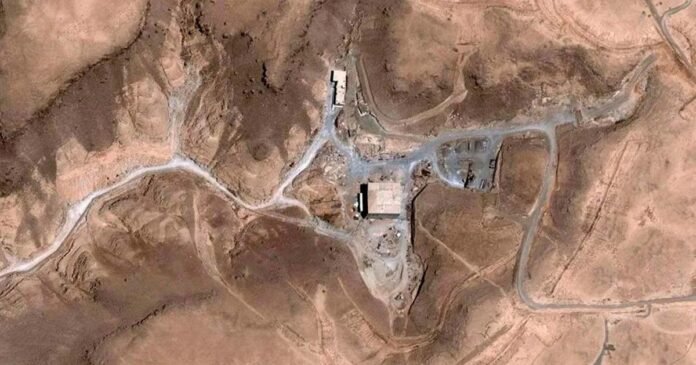
Tel Aviv: Traces of anthropogenic uranium have been discovered at a Syrian site in Deir al-Zor, which was destroyed by Israel in 2007 and long suspected of being an undeclared nuclear reactor facility.
The International Atomic Energy Agency (IAEA) reported finding a significant number of natural uranium particles, produced as a result of chemical processing, at one of three sites investigated near Deir al-Zor. While the uranium is classified as “natural”—meaning it was not enriched—the anthropogenic origin indicates human involvement in its processing.

The Deir al-Zor site was bombed by Israel in 2007 and has since been under investigation on suspicion it was an undeclared nuclear reactor, a suspicion the IAEA had already deemed “very likely” by 2011.
Syria’s previous government claimed the site was a conventional military facility, but increasing evidence—including uranium traces—has raised international concerns over a covert nuclear programme.
The IAEA’s latest report reflects renewed efforts and access granted by Syrian authorities in June 2025, including further environmental sampling and promises of increased transparency.
Syria denies knowledge of how such uranium traces appeared but has agreed to cooperate with the agency for additional analyses and documentation review regarding past nuclear activities.

The presence of uranium, even non-enriched, highlights unresolved questions about Syria’s past nuclear intentions and the broader challenge of nuclear nonproliferation in the region.
The IAEA intends further visits and analyses to clarify outstanding safeguards issues and fully determine the nature of Syria’s previous nuclear activities.


-The writer is an Israel-based freelance journalist. The views expressed are of the writer and do not necessarily reflect the views of Raksha Anirveda
