

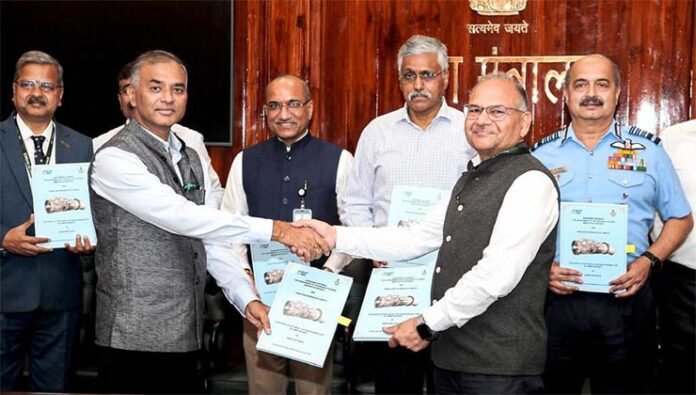
New Delhi: In a move to boost the air power of Indian Air Force in the light of China, the defence ministry has finalised a ₹26,000 crore agreement with Hindustan Aeronautics Ltd (HAL) for the procurement of 240 aero engines for Su-30MKI aircraft. These engines will be produced by HAL’s Koraput division to maintain the operational readiness of the Indian Air Force’s Su-30 fleet.
Defence Minister Rajnath Singh hailed the contract as a significant step in the Make in India campaign. “It will strengthen the aero-engine manufacturing in India and add momentum to our aim of Aatmanirbharta (self-reliance),” he stated on X.

The deal aligns with the Aatmanirbhar Bharat initiative, aiming to enhance domestic production capabilities.
The contract was signed by senior officials from both the defence ministry and HAL, in the presence of Defence Secretary Giridhar Aramane and Chief of Air Staff Air Chief Marshal V R Chaudhari.
According to the ministry, HAL will deliver 30 aero-engines annually under this agreement, completing all 240 engines over the next eight years.
During the manufacturing process, HAL plans to collaborate with India’s defence manufacturing ecosystem, including MSMEs and both public and private industries. By the end of the delivery programme, HAL aims to increase indigenisation content up to 63%, achieving an average of over 54%.

The ministry also noted that this initiative would boost indigenous content in repair and overhaul tasks for these aero-engines. This move is expected to enhance self-reliance in defence manufacturing significantly.
This engine deal comes amid concerns about the dwindling number of fighter squadrons in the Indian Air Force (IAF) and delays in Tejas jet deliveries by HAL. The IAF’s fighter squadron strength has reduced to around 30, compared to an authorised strength of at least 42.

The contract is seen as a crucial measure to sustain the operational capability of the Su-30 fleet. It is expected to mitigate some of the challenges faced by the IAF due to its depleting fleet.
The agreement marks a major milestone for India’s aerospace sector, reinforcing efforts towards self-reliance and boosting domestic manufacturing capabilities.

Raksha Anirveda's editorial desk team brings in the collective experience of creative professionals - a fine mix of senior copy editors, writers, proofreaders and designers. Working as a team, they continuously create, manage, and curate content to sustain the magazine's profile and reputation in line with market trends and achieve magazine's goal.
