
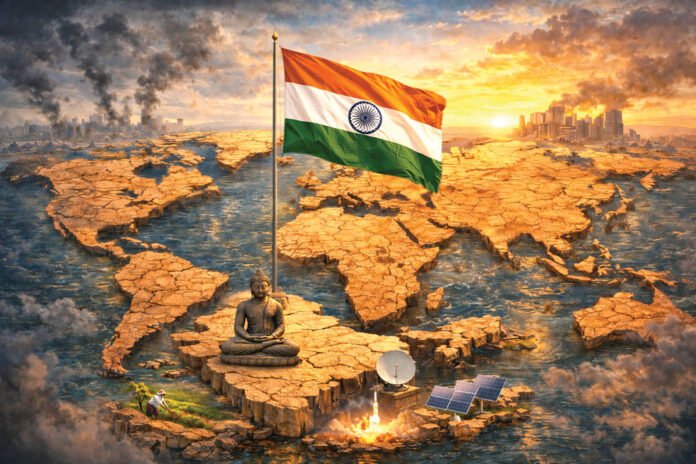
From India’s vantage point, the prevailing international order is deeply imbalanced and insufficiently representative of present-day power realities. While it is often described as a rules-based system, the formulation, interpretation, and enforcement of these “rules” remain dominated by a limited group of countries, many of which draw authority from historical privilege rather than contemporary relevance. As a result, regional power struggles are increasingly being internationalised, sustained through proxy alignments involving global power centres.
India views the emerging geopolitical contest—particularly between the US-EU combine on one side and Russia-China on the other—as symptomatic of this imbalance, where regional conflicts are amplified rather than resolved. From New Delhi’s perspective, such polarisation narrows diplomatic space and undermines the autonomy of middle and emerging powers, compelling them to choose sides even when such choices run counter to their national interests.

As a multi-aligned rising power, India has consciously resisted this dynamic. Rather than aligning permanently with any single bloc, it has positioned itself as a bridge—capable of engaging rival camps without being absorbed by them. This approach allows India to advocate dialogue as the primary instrument for dispute resolution and to push for reforms in global governance that better reflect demographic, economic, and strategic realities.
India has also emerged as a consistent voice for the Global South, arguing that sustainable global stability cannot be achieved if developing nations remain marginalised in international decision-making. Issues such as technology access, development finance, climate responsibility, and fair trade practices are central to India’s diplomatic agenda, not as abstract ideals but as practical necessities for global equilibrium.
As economic nationalism, de-dollarisation, and regional conflicts reshape the global order, traditional power centres are losing their monopoly over influence
Crucially, India seeks to pursue these objectives through diplomacy rather than coercion, and through institutional reform rather than institutional bypassing. This approach reflects a deliberate commitment to a rules-based international order, while simultaneously insisting that such rules must evolve to remain legitimate and effective.
The Trumpian Era
The United States under the Trump administration marked a sharp departure from traditional alliance-driven American foreign policy, replacing it with a transactional, domestically oriented approach. Tariffs became a central instrument of statecraft, employed not merely to correct trade imbalances but to exert political and strategic pressure on partners and competitors alike. The driving imperative was largely domestic—to demonstrate to the American electorate that the promise of Make America Great Again was being actively pursued.

At the same time, President Trump sought to project himself as a global peacemaker, particularly with respect to the Russia-Ukraine conflict. His administration promoted the economic isolation of Russia through sanctions and trade restrictions, viewing this as a necessary precondition for compelling Moscow into a ceasefire. Russia, however, interpreted these moves as strategic containment rather than conflict resolution.
From Moscow’s perspective, the conflict was inseparable from NATO’s eastward expansion and long-term security concerns, as well as the strategic necessity of maintaining access to warm-water ports in the Black Sea. Consequently, Russia remained resolute, showing little inclination to yield under economic pressure alone.

In West Asia, the situation was equally complex. Israel’s sustained military campaign against Hamas and the broader Palestinian conflict escalated into a wider regional confrontation, drawing in Lebanon, Iran, Hezbollah, and the Houthis operating from Yemen and Syria. Despite repeated claims of diplomatic breakthroughs, tangible progress toward lasting stability remained elusive.
The European Union found itself navigating a particularly precarious position. While supporting Ukraine militarily and politically, Europe’s motivations were shaped as much by existential anxiety as by normative commitment. The fear of Russian expansion, coupled with the risk of being drawn into a direct conflict, compelled European support—even as sanctions strained energy supplies and economic stability.
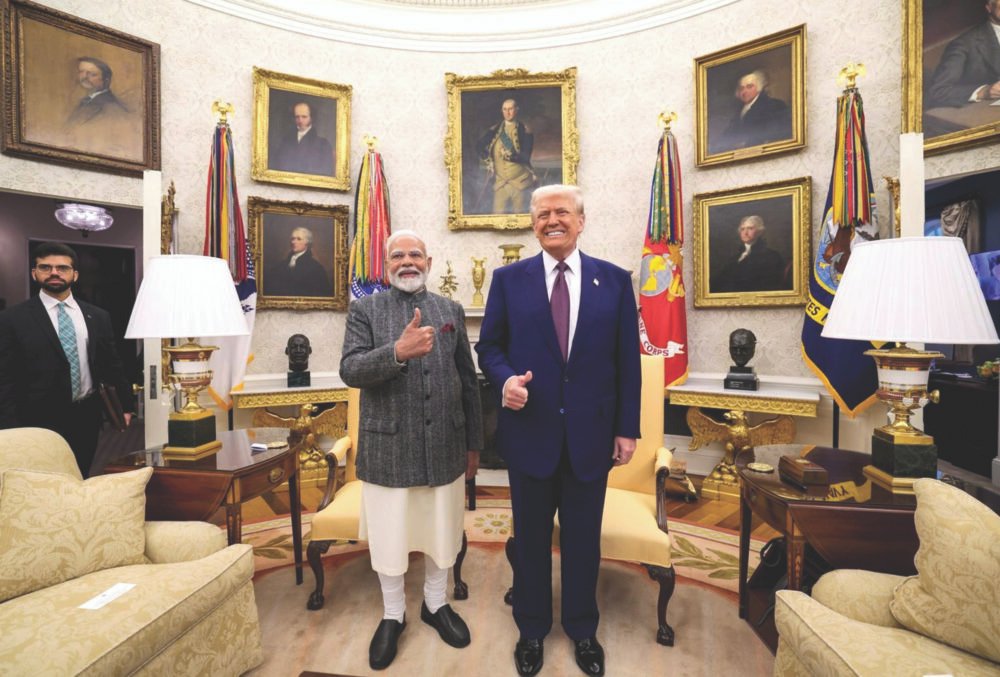
Compounding these pressures was uncertainty regarding sustained US commitment to NATO. Trump’s national security doctrine, rooted firmly in “America First,” signalled that allies would increasingly be expected to fend for themselves. As a result, NATO’s institutional credibility—especially without unequivocal US backing—came under unprecedented scrutiny.
Chinese Global Imprint
China’s re-emergence as a major global power represents one of the most consequential shifts in the contemporary international system. Backed by the world’s second-largest economy and a rapidly modernising military, Beijing has positioned itself as both a participant in and a challenger to the existing global order.
China pursues a carefully calibrated, multi-pronged strategy. It engages constructively with international institutions and agreements when they align with its interests—such as selective participation in multilateral financial institutions and climate frameworks. However, where existing norms constrain its strategic objectives, Beijing has shown a clear willingness to diverge from or reinterpret them.
Despite tariff pressure and diplomatic provocation from the United States, India has responded with restraint, focusing on domestic resilience, diversified trade, and strategic autonomy. Continued energy cooperation with Russia underlines India’s determination to safeguard national interest over external pressure
In emerging domains where norms are still evolving—particularly internet governance, digital infrastructure, and technological standards—China has actively collaborated with other authoritarian states, most notably Russia, to shape frameworks that reflect their preferences. This deliberate norm-shaping effort has widened ideological and institutional divides with democratic countries, complicating collective responses to global challenges.
The risk inherent in this divergence is the emergence of parallel systems of global governance, which would significantly weaken multilateral cooperation. In the military sphere, China’s expanding capabilities—particularly in the Indo-Pacific—pose challenges not only to US strategic primacy but also to regional stability, directly affecting India’s security environment.
Indo-US Relations
India entered 2025 with guarded optimism regarding the implications of a second Trump presidency. While trade frictions and immigration-related challenges were anticipated, there was an expectation that differences could be managed within the broader strategic partnership.
Instead, the United States imposed substantial additional tariffs on Indian goods, explicitly linking them to India’s continued purchase of Russian oil. This marked a significant escalation, transforming economic instruments into tools of overt geopolitical pressure.
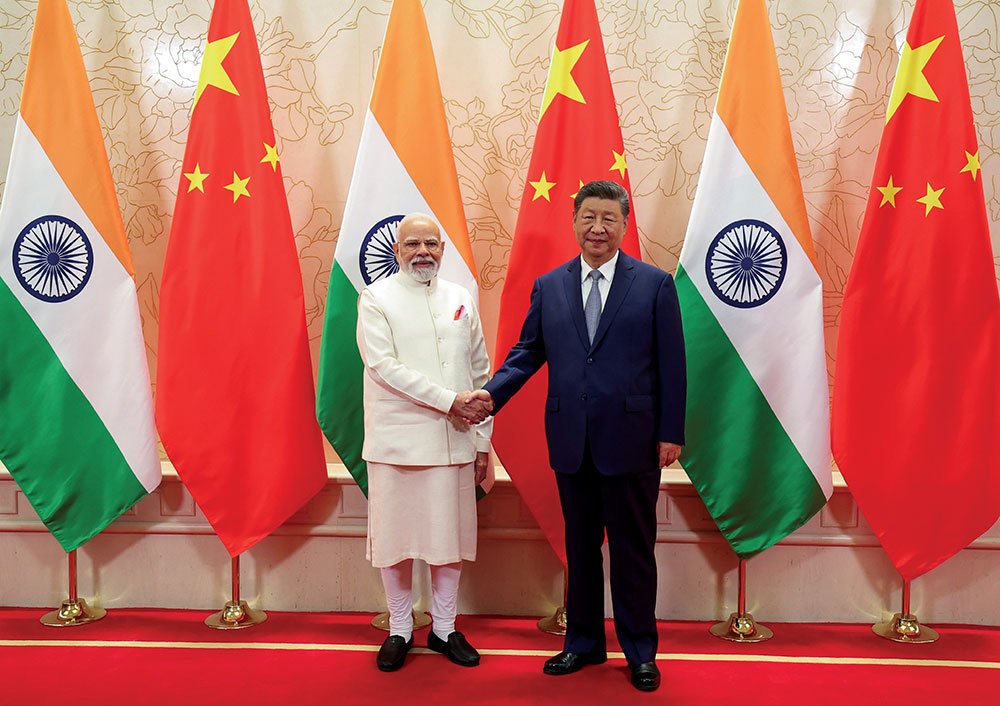
Trump also publicly claimed credit for de-escalating the India-Pakistan crisis of May 2025—a claim that New Delhi categorically rejected as factually incorrect. More troubling from India’s perspective was Washington’s renewed diplomatic engagement with Pakistan, which introduced strategic ambiguity into the regional balance.
Further strain emerged through restrictions on H-1B visas, directly affecting Indian professionals and the long-standing people-to-people dimension of Indo-US ties. While the Indian government responded with restraint, these actions collectively eroded US credibility as a predictable and reliable strategic partner.
Ironically, India’s long-term strategic value—its demographic dividend, expanding economy, military capability, and pivotal geography astride critical Indian Ocean sea lanes—had historically motivated successive US administrations to cultivate closer ties as a hedge against China. The second Trump administration, however, appeared largely indifferent to this potential, prioritising short-term leverage over strategic continuity.
Tariff Impact
The imposition of an additional 25 per cent ad valorem tariff, raising the cumulative burden on Indian exports to nearly 50 per cent, marked a decisive inflection point in bilateral economic relations. This move went far beyond routine trade adjustment, signalling a willingness to use economic pressure to influence India’s strategic choices.
India’s response was notable for its restraint. Rather than engaging in retaliatory tariffs or rhetorical escalation, New Delhi focused on strengthening domestic manufacturing, accelerating reforms aimed at self-reliance, and diversifying export markets. Continued energy imports from Russia served as a clear assertion of India’s strategic autonomy, demonstrating that national interest would not be subordinated to external intimidation.
President Vladimir Putin’s Visit
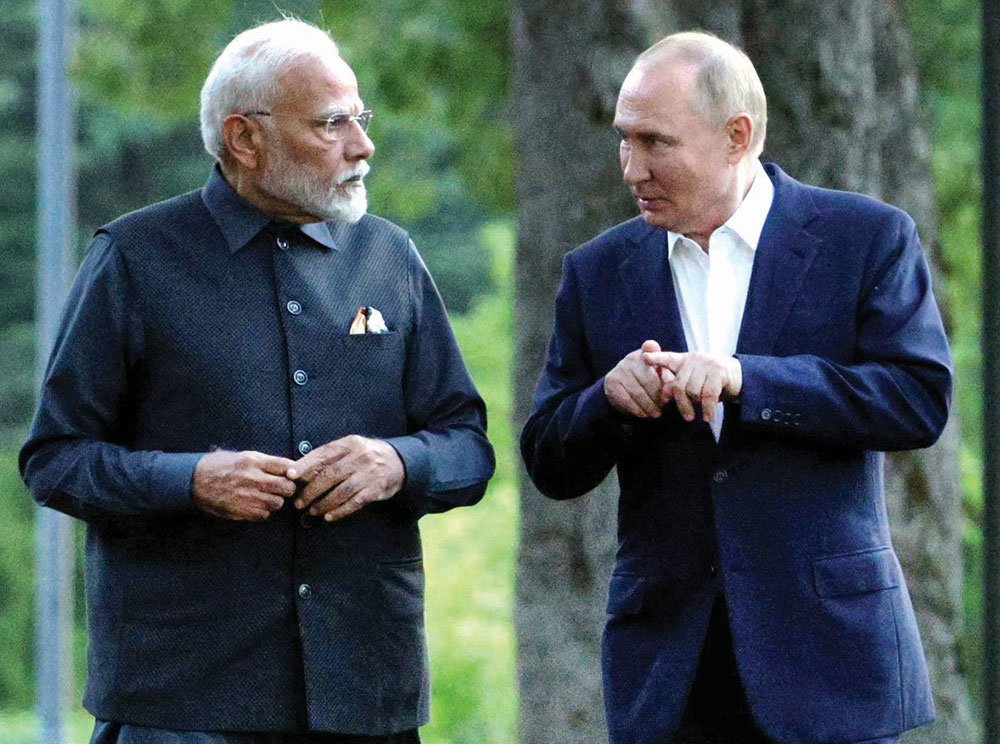
President Vladimir Putin’s December 2025 visit to New Delhi carried significance well beyond symbolism. It functioned both as a reaffirmation of enduring ties and as a recalibration of the Indo-Russian partnership in response to a changing global environment.
President Vladimir Putin’s December 2025 visit to New Delhi reaffirmed the depth of India-Russia ties, spanning energy, defence, technology, and long-term economic cooperation. The summit demonstrated how durable partnerships are built on practical interdependence rather than ideological alignment
The visit produced a comprehensive roadmap extending to 2030, encompassing cooperation across energy security, defence production, critical minerals, nuclear technology, connectivity, and alternative payment mechanisms. The emphasis on technology transfer and joint development—including advanced combat aircraft platforms—stood in stark contrast to conditional defence partnerships elsewhere.
Discussions on special currency arrangements and assured energy supplies reflected a shared intent to insulate bilateral cooperation from global financial volatility and sanctions pressure. For India, the visit demonstrated strategic balancing—maintaining a special relationship with Russia while sustaining multi-alignment. For Russia, it ensured continued engagement amid isolationary pressures.
Chinese Thaw and QUAD Dynamics
China’s military modernisation under the CCP’s 15th Five-Year Plan (2026–2030) signals a sustained push toward technological self-reliance and industrial upgrading. However, territorial assertiveness—particularly following the 2020 Galwan clash—fundamentally altered India’s threat perception.
India’s subsequent engagement with the QUAD—comprising Australia, India, Japan, and the United States—reflects a strategy of zone balancing rather than direct confrontation. By shaping the regional environment collectively, India has sought to constrain coercive behaviour along the Line of Actual Control and in the maritime domain.
Simultaneously, economic pressures arising from US tariff policies encouraged limited diplomatic engagement with China, aimed at stabilising trade channels and accessing new markets. This dual approach reflects India’s pragmatic blend of strategic caution and economic realism.
Elite Superclub ‘C5’
India’s refusal to yield under tariff pressure has coincided with reports of a proposed elite ‘C5’ grouping, bringing together the US, Russia, China, India, and Japan. This concept represents a significant departure from traditional forums such as the G7, prioritising population size, military capability, and economic weight over ideological alignment.
India’s evolving engagement with groupings such as the QUAD, alongside calibrated diplomatic engagement with China, reflects a strategy of regional balancing rather than confrontation. This approach allows India to shape its security environment while maintaining flexibility in a rapidly changing global landscape
The proposed agenda—beginning with West Asian security and Israel-Saudi normalisation—underscores the ongoing reconfiguration of global power engagement, where flexibility and transactional diplomacy increasingly trump institutional orthodoxy.
Bottom Line
India’s equanimity in a fractured world order must not be mistaken for passivity or indecision. It represents a deliberate, self-assured strategy rooted in strategic autonomy, diplomatic engagement, and national interest.
As one of the world’s fastest-growing major economies with expanding strategic influence, India is no longer merely navigating the global order—it is actively shaping it. Its emphasis on democracy, diplomacy, and dialogue reflects confidence, resilience, and a clear understanding of long-term interests.
In essence, India’s equanimity is an instrument of power, enabling it to promote a more inclusive, balanced, and stable international system amid unprecedented global disruption.

–The writer is a former GOC of the Indian Army and presently serves as a Strategic Consultant and Principal Advisor. The views expressed are of the writer and do not necessarily reflect the views of Raksha Anirveda
