

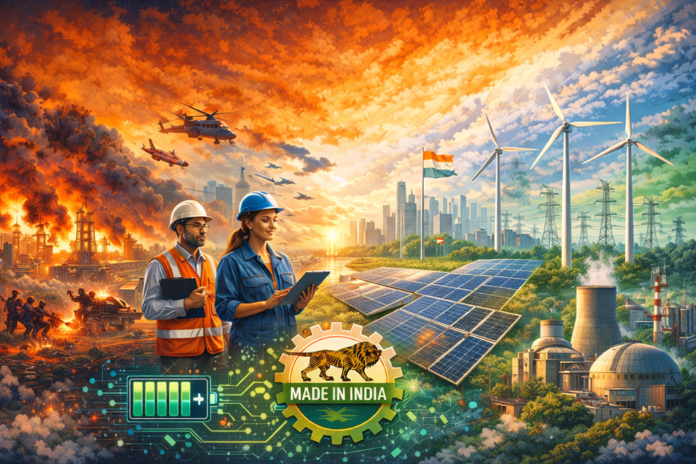
While much of the world remains fixated on the visible consequences of conflict — missiles, blockades, and geopolitical posturing — India focused on something far more enduring: building a resilient and diversified energy architecture.
This transformation did not happen overnight. Nor was it reactive. It is the result of years of calculated decisions, diplomatic outreach, and strategic foresight that are now paying dividends at a critical moment in global energy politics.

Two decades ago, India’s crude oil imports were concentrated among a relatively small group of suppliers. Today, that landscape has fundamentally changed.
India now sources crude from over 40 countries, a sharp expansion that reflects a deliberate effort to reduce dependence on any single geography. This diversification includes suppliers from the Americas and Africa, significantly widening India’s strategic options.
The significance of this shift becomes evident during global disruptions. Instead of scrambling for alternatives, India now has a broad supplier base to fall back on — ensuring continuity and bargaining power.
When traditional supply chains came under pressure, India did not react with panic. It responded with precision.

As one of the world’s largest refining hubs, India processes a wide range of crude grades and exports refined products across various continents. This capability allows India not just to meet domestic demand, but also to support global markets during times of stress
Russia emerged as a key partner, with crude imports rising significantly in a short span. What stands out is not just the volume, but the manner in which India secured these supplies — through pragmatic, commercially driven negotiations that prioritised national interest.
By leveraging global market dynamics, India ensured access to energy at competitive prices, even as many advanced economies faced rising costs and uncertainty. One of the most consequential aspects of India’s energy strategy has been its ability to reduce dependence on critical chokepoints.

A substantial share of India’s oil imports now bypasses traditionally vulnerable maritime routes. This shift enhances energy security, insulating the country from geopolitical disruptions that could otherwise destabilise supply chains.
In effect, India has transformed a structural vulnerability into a strategic strength. India’s energy policy also reflects a growing confidence in independent decision-making.
After years of adhering to external pressures on certain energy imports, India demonstrated its ability to act swiftly when circumstances changed. The resumption of previously restricted energy flows signals a pragmatic approach — one that is guided by national interest rather than external expectations.
India’s outreach to diverse energy-producing nations, combined with its ability to maintain balanced relations across competing global blocs, has enabled it to secure long-term advantages. In a world divided by conflict and competition, India has positioned itself as a nation that prioritises partnerships over confrontation
This is not defiance for its own sake, but a calibrated assertion of strategic autonomy. Perhaps the most underappreciated aspect of India’s rise is its transformation from a large consumer to a critical energy enabler.
As one of the world’s largest refining hubs, India processes a wide range of crude grades and exports refined products across continents. This capability allows India not just to meet domestic demand, but also to support global markets during times of stress.
From supplying fuel to neighbouring countries to contributing to international energy stability, India’s role has evolved significantly. It is no longer merely part of the system — it is helping sustain it.
This shift did not occur in isolation. It is deeply rooted in sustained diplomatic engagement across regions. India’s outreach to diverse energy-producing nations, combined with its ability to maintain balanced relations across competing global blocs, has enabled it to secure long-term advantages.
India’s energy architecture stands today as a testament to what long-term thinking and diplomatic maturity can achieve. While others respond to disruptions, India has quietly ensured that it is ready for them. And in doing so, it has redefined its place in the global energy order
In a world increasingly divided by conflict and competition, India has positioned itself as a nation that prioritises partnerships over confrontation. At a time when global attention is drawn to the immediacy of conflict, India’s approach offers a different lesson — one of patience, planning, and strategic clarity.
This is not a story of sudden success, but of consistent effort. Not a reaction to crisis, but preparation for it.
India’s energy architecture stands today as a testament to what long-term thinking and diplomatic maturity can achieve. While others respond to disruptions, India has quietly ensured that it is ready for them.
And in doing so, it has redefined its place in the global energy order.

The writer serves as the BJP Karnataka Spokesperson and Head of the Research Team.
