

Today, global aviation and travel ecosystems are far more sensitive to geopolitical shocks than they were in the pre-pandemic era, owing to tighter operating margins, elevated fuel costs, and supply chains that are yet to fully stabilise. Against this backdrop, the conflict in the Middle East has had far-reaching consequences, underscoring how closely interconnected modern mobility systems have become.
In fact, the turmoil has exposed the fragility and deep interdependence of global travel, energy, and economic systems. As of now, a tenuous ceasefire is holding between the United States and Iran, but the situation remains tense and unpredictable.

Disruption of Air Routes and Travel Behaviour
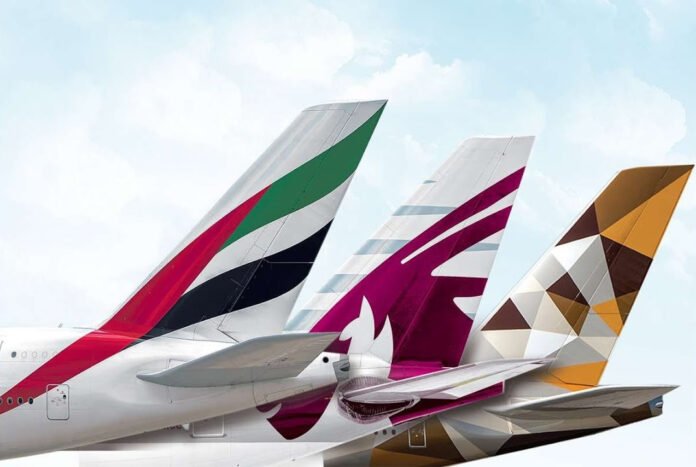
Millions of Indians depend on airlines such as Emirates, Qatar Airways, and Etihad Airways for affordable and efficient connectivity to Europe and North America. The India–Gulf–Europe corridor today represents one of the busiest and most strategically critical aviation networks in the world, handling millions of passengers each year and acting as a vital bridge between Asia and the West. However, the recent tensions involving Iran, the United States and Israel forced major carriers to reroute flights, often avoiding Iranian, Iraqi, and sections of Gulf airspace altogether. As a result, flights have increasingly been diverted via Central Asia, the Arabian Sea, and in some extended cases, even longer polar routes, significantly increasing travel time, operational complexity, and cost burdens.
The consequences of these disruptions are already becoming visible. Indian outbound travel demand has softened noticeably, with visa applications to Europe, the United Kingdom, Commonwealth of Independent States (CIS) —comprising former Soviet republics such as Russia, Kazakhstan, Uzbekistan, Belarus, Armenia, Azerbaijan, Kyrgyzstan, Moldova, and Tajikistan—and parts of the Gulf dropping by an estimated 60–65 per cent during peak phases of uncertainty. Travel industry data further suggests that booking volumes declined by 30–60 per cent during the most intense periods of tension, accompanied by a sharp rise in last-minute cancellations as travellers reassessed safety and cost concerns. More than 52,000 Indians are estimated to have either returned from the Gulf or deferred their travel plans during the height of the crisis, reflecting not merely financial considerations but a deeper sense of unpredictability and unease.
This shift in traveller sentiment is succinctly captured by Pragya Adiraj, founder of Joy-N-Crew, who observes that tourism thrives on confidence in safety, accessibility, and freedom of movement—elements that tend to erode rapidly when geopolitical tensions intensify. What is increasingly evident is that unpredictability, more than cost alone, is now shaping travel decisions in a world where disruptions have become common.
Operational Stress and Rising Aviation Costs
The operational strain on airlines has been immediate and significant. Temporary airspace closures and restricted flying corridors forced thousands of flights across the Middle East to be cancelled, delayed, or rerouted, placing enormous pressure on airline networks that are built around precision and high-frequency scheduling. Airports across the United Arab Emirates, Bahrain, and Kuwait experienced operational stress following retaliatory drone and missile activity in the region, further compounding the disruption.

For long-haul carriers, even minor deviations from planned routes carry substantial financial implications. Industry estimates indicate that rerouted flights typically add one to two hours of flying time, with each additional hour costing between USD 6,000 and USD 10,000 in fuel and crew expenses. For airlines operating hundreds of such flights daily, these incremental costs accumulate rapidly into millions of dollars each week. This financial strain is further exacerbated by volatility in global oil markets. Brent crude prices have shown fluctuations of 8–15 per cent during peak conflict periods, while aviation turbine fuel (ATF) prices—already elevated—have become even more unpredictable in response to geopolitical risk.
More than 52,000 Indians are estimated to have either returned from the Gulf or deferred their travel plans during the height of the crisis — reflecting not merely financial considerations, but a deeper sense of unpredictability and unease
The Strait of Hormuz, through which nearly 20 per cent of the world’s oil supply passes, remains a particularly sensitive chokepoint. Any perceived threat to this corridor tends to trigger immediate reactions in global energy markets, pushing up crude and fuel prices and, by extension, increasing the cost of air travel worldwide. Even relatively modest increases in oil prices can significantly erode airline profitability, especially in highly price-sensitive markets such as India.

Threat to Diaspora and Remittances from the Gulf
Beyond aviation, the crisis has serious implications for India’s vast diaspora in the Middle East. The region is home to over 9.6 million Indians, accounting for nearly 56 per cent of all Non-Resident Indians globally. India receives approximately USD 50 billion annually from Gulf Cooperation Council (GCC) countries, contributing around 38–40 per cent of its total remittance inflows. These remittances play a crucial role in sustaining household incomes, supporting rural economies, and maintaining India’s balance of payments.
Although there has been a gradual diversification in remittance sources in recent years, with increasing contributions from advanced economies such as the United States and the United Kingdom, the Gulf remains indispensable—particularly for blue-collar and semi-skilled Indian workers. The ongoing tensions pose multiple risks, including job insecurity arising from economic slowdown in the region, reduced mobility, and fewer opportunities for workers to travel home. Even short-term disruptions can have disproportionate consequences for remittance-dependent households, particularly in states such as Kerala, Uttar Pradesh, Bihar, and Telangana, where Gulf migration has long been an economic lifeline.
In more extreme scenarios, the possibility of large-scale evacuations cannot be ruled out, recalling past operations such as Operation Raahat and the Vande Bharat Mission. Such contingencies would not only pose logistical challenges but also underscore the vulnerability of millions of Indian workers whose livelihoods are closely tied to regional stability in West Asia.
Shift towards Domestic and Alternative Destinations
At the same time, the crisis has triggered a noticeable shift in travel preferences among Indian consumers. Domestic tourism has witnessed a strong resurgence, with increased demand for destinations such as Kerala, Rajasthan, Gujarat, Himachal Pradesh, Uttarakhand, Kashmir, Ladakh, and the northeastern states, alongside coastal destinations like Goa and the Andaman and Nicobar Islands. Industry estimates suggest that domestic leisure travel demand has risen by 20–35 per cent during periods of heightened international uncertainty.
The Strait of Hormuz, through which nearly 20 per cent of the world’s oil supply passes, remains a particularly sensitive chokepoint — and any perceived threat to this corridor triggers immediate reverberations across global energy and aviation markets
Travellers who continue to seek international experiences are increasingly turning towards safer and more predictable alternatives. Southeast Asia has emerged as a major beneficiary of this shift, with destinations such as Thailand, Vietnam, Malaysia, and Indonesia offering stable connectivity, competitive pricing, and relatively seamless entry processes. This trend reflects a broader recalibration of travel behaviour, where proximity, affordability, and geopolitical stability are becoming key decision-making factors.
As Bharat Malik of Yatra Online notes, demand for Southeast Asia remains strong, and increased flight capacity could help stabilise pricing and improve accessibility. Over time, this shift may also reduce India’s dependence on Gulf transit hubs and encourage the expansion of direct connectivity between India and Southeast Asian destinations, reshaping regional aviation dynamics.
Key Take aways
The broader strategic implications of the Iran war are both immediate and long-term. Airspace disruptions, volatility in energy markets, and uncertainties surrounding diaspora-linked economic flows have all highlighted the extent to which regional conflicts can reverberate across global systems.
In conclusion, the present situation marks a significant shift in how global travel, trade, and economic systems operate. For India, the stakes are particularly high given its deep reliance on the Gulf for connectivity, energy supplies, and diaspora-driven economic inflows. Travellers, airlines, and policymakers alike must now adapt to an environment where geopolitical risk is a constant variable rather than an occasional disruption. Flexibility in route planning, diversification of economic dependencies, and a stronger emphasis on resilience and preparedness will be critical in navigating this evolving landscape.
While the current ceasefire may offer temporary relief, the underlying uncertainties remain.

The author retired as a Senior Technical Officer at the Central Salt and Marine Chemicals Research Institute, Bhavnagar (Gujarat), and currently contributes articles to research journals and magazines. The views expressed are personal and do not necessarily carry the views of Raksha Anirveda.
