
Tokyo: In a defence white paper on security in the region, Japan has accused China of pushing its territorial claims amid the Coronavirus pandemic.

It highlighted the growing Chinese aggressiveness and its naval activities in the region and its plans to alert status quo unilaterally in several areas in Asia including India, Bhutan and South China.
Media reports quoting Japanese Defence Minister Tarō Kōno on Chinese aggressiveness said, “Bejing has been unilaterally enforcing its power on the border between China and India, the Bhutan border, in the South China Sea, the East China Sea and multiple places. We wrote specifically about its behaviour (in the white paper).”
According to the white paper by the Japanese Defence Ministry, “China has relentlessly continued unilateral attempts to change the status quo by coercion in the sea area around the Senkaku Islands, leading to a grave matter of concern.”
In the paper, Prime Minister Shinzo Abe’s government criticised Beijing for relentlessly attempting to undermine Tokyo’s administration of the Senkaku Island in the East China Sea. Explaining how the Chinese Navy and Air Force have in recent years expanded and intensified their activities in the surrounding sea areas and the airspace of Japan, and there are cases involving the one-sided escalation of activities.

Senkaku Islands in the East China Sea are administered by Japan but China claims them as their own and call it Diaoyu.
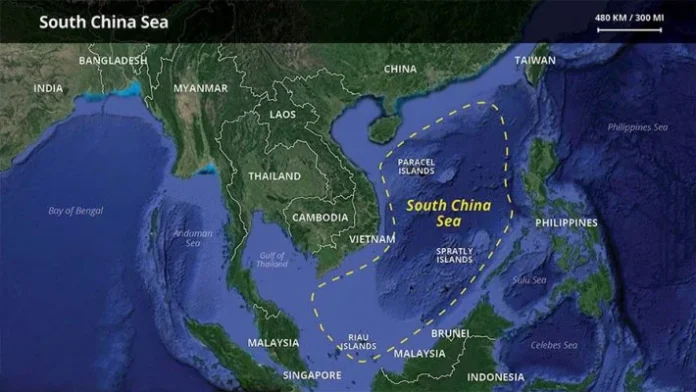
On the South China Sea issue, the Japanese defence white papers said, “China is moving forward with militarisation, as well as expanding and intensifying its activities in the maritime and aerial domains, thereby continuing unilateral attempts to change the status quo by coercion to create a fait accompli.”

On the increased capabilities by Chinese forces in more distant seas such as the Indian Ocean in recent years, the defence white papers said, “China’s support for the construction of port infrastructure in Indian Ocean countries as well as Pacific island countries could lead China to secure bases available for its military purpose.”
This is something that has been a worry for India, given China’s first overseas base in Djibouti and presence in Pakistan’s Gwadar port.
Both India and Japan have been increasing defence partnership. In September 2019, a Japan-India defence ministerial meeting was held followed by the first Japan-India 2+2 foreign and defence ministerial meeting in November of the same year.
On COVID-19, the white paper said, “The pandemic may expose and intensify strategic competition among countries intending to create international and regional orders more preferable to themselves and to expand their influence.”