

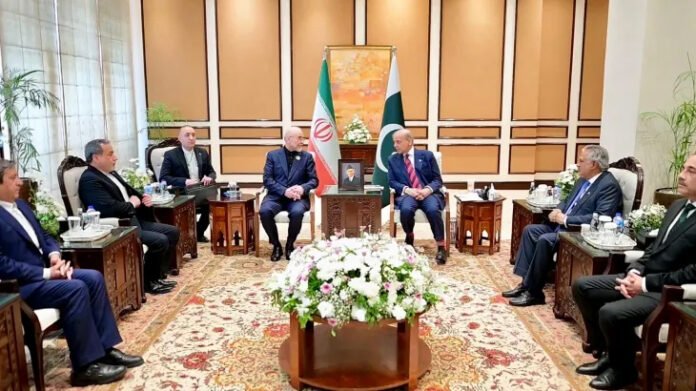
The Islamabad talks did not collapse in any dramatic sense. They slowed, narrowed, and then stopped. That quiet ending says more than a public breakdown would have. It points to a harder truth. The problem is no longer about bridging differences. It is about the lack of space even to attempt it.
Each side came with clarity. Each also had limits it could not cross without paying a domestic price. Under such conditions, compromise begins to look like risk rather than progress. When that happens, negotiations do not fail because of confusion or misreading. They fail because both sides understand exactly what is at stake. This is where West Asia stands now.

For a long period, the region functioned within a strained yet workable balance. It was not stable in the conventional sense, but it was contained. Pressure was absorbed through proxies. Messages were conveyed without provoking immediate retaliation. Even when direct force was used, it remained within bounds that avoided sustained escalation. The lines were not formal, but they existed. Those lines have weakened.
Recent exchanges have become more direct and more visible. Actions are acknowledged. Responses follow quickly. The interval between decision and consequence has shortened. There is less room for quiet adjustment and less time to reassess. In such conditions, escalation does not always require intent. It can emerge from the pace of events itself.
Each side came with clarity; each also had limits it could not cross without paying a domestic price. Under such conditions, compromise begins to look like risk rather than progress. When that happens, negotiations fail because both sides understand exactly what is at stake. This is where West Asia stands now
The Islamabad talks tried to interrupt that momentum. It failed. What it revealed, however, was more telling than any agreement could have been. Positions were firm and intended to remain so. One side pushed for verifiable limits to reduce future risk. The other resisted anything that could narrow its long-term options. These were not positions shaped for convergence. They were positions shaped to endure.
Yet the aftermath did not lead to a complete rupture. Communication did not cease. The tone remained controlled. There was no attempt to close the channel altogether. That restraint was deliberate, reflecting an understanding that the absence of dialogue carries its own dangers.

The two-week ceasefire that followed reflects a similar instinct. This time, all principal actors, including Israel, are part of the arrangement. That matters. A pause that excludes a central actor rarely holds for long. Inclusion does not create trust, but it does create a minimum condition for restraint. Still, this should not be mistaken for stability.
Each participant has entered the pause for their own reasons. Iran sees resilience. It has absorbed pressure without internal fracture and now seeks to convert that resilience into strategic space. The United States sees the need to step back from a situation that carries rising economic and political costs. Israel treats the pause cautiously, as a temporary measure rather than a shift in fundamentals. These positions intersect, but they do not align.

A ceasefire holds when restraint offers more advantage than action. At present, that balance remains uncertain. It depends on how each side interprets the next step. Differences in expectations can quickly strain the arrangement. In a compressed environment, even a single disputed incident can trigger a wider response.
There are structural constraints as well. There is no shared mechanism to assess violations in real time. Perception fills that gap. A drone sighting, a radar trace, a movement at sea. Each can be interpreted differently. In a setting where trust is limited, disagreement over events can become disagreement over intent. Once that happens, restraint becomes harder to sustain.
Positions adopted by rival sides at the talks were firm and intended to remain so. One side pushed for verifiable limits to reduce future risk, the other resisted anything that could narrow its long-term options. These were not positions shaped for convergence; they were positions shaped to endure
Internal pressures add another layer. In Iran, the pause will be judged by its outcomes. In the United States, engagement remains politically sensitive. In Israel, recent attacks have reinforced expectations of a decisive response. These pressures do not recede when the firing stops. They continue to shape choices in the background. The reality is the world prays for peace.
The deeper issue remains unchanged. The relationship between Iran and Israel continues to be defined by distrust and competing security concerns. The current pause does not alter that. It only creates a brief window in which it might be addressed.
Restraint, in this context, is often misunderstood. It is not a passive option. It is a deliberate act. It requires stepping back when escalation is possible, and at times, expected. It demands accepting outcomes that are incomplete and politically uncomfortable. It offers no immediate reward, only the avoidance of greater loss.
For Iran, the moment presents a narrow window of opportunity. It has demonstrated the ability to withstand pressure. However, that position has limits. Economic strain and the risk of wider escalation will intensify over time. Using the present pause to secure tangible gains would allow it to move from endurance to consolidation.
The deeper issue remains unchanged. The relationship between Iran and Israel continues to be defined by distrust and competing security concerns. The current pause does not alter that. It only creates a brief window in which it might be addressed
For Israel, the challenge is different. Its security concerns are immediate and real. At the same time, continued escalation without a defined endpoint risks reinforcing a cycle that fails to deliver lasting security. Engagement, even if gradual, may offer a more sustainable path.
In the United States, the requirement is to reduce exposure without appearing to retreat. Prolonged instability in the region has wider consequences when a cost-benefit model is applied. A controlled step back aligns with its broader interests, though managing that balance is not straightforward.
For India, the implications are direct. The region is central to its energy security. Disruption at the Strait of Hormuz affects supply and pricing with little delay. India’s economic and connectivity interests depend on a stable environment. At the same time, its relationships across the region require careful management.
India’s approach, therefore, must remain measured. It benefits from reduced tension and secure routes. Maintaining engagement with all sides while avoiding rigid alignment helps it protect its interests without becoming part of the conflict.
For India, economic and connectivity interests depend on a stable environment. India’s approach must remain measured. It benefits from reduced tension and secure routes. Maintaining engagement with all sides while avoiding rigid alignment helps it protect its interests without becoming part of the conflict
The period ahead will not settle easily. There will be strain, and there may be reversals. Conflicts of this nature rarely move in a straight line. The greater risk lies elsewhere, in a gradual narrowing of communication. As channels weaken, the possibility of miscalculation increases.
The Islamabad talks have shown how limited the scope for agreement has become. The ceasefire has created a brief opening, but it is not a solution. It is a pause, and a fragile one.
The region is not choosing between peace and war in any absolute sense. It is navigating degrees of escalation and restraint. That choice may appear narrow, but it is decisive.
Restraint will not be recognised as a success. It will not satisfy competing ambitions or resolve long-standing disputes. But it may prevent the conflict from crossing a threshold beyond which control is impossible. At present, that is not a modest outcome. It is the difference between a crisis that can still be managed and one that begins to define the region for years to come.

The author, a PVSM, AVSM, VSM has had an illustrious career spanning nearly four decades. A distinguished Armoured Corps officer, he has served in various prestigious staff and command appointments including Commander Independent Armoured Brigade, ADG PP, GOC Armoured Division and GOC Strike 1. The officer retired as DG Mechanised Forces in December 2017 during which he was the architect to initiate process for reintroduction of Light Tank and Chairman on the study on C5ISR for Indian Army. Subsequently he was Consultant MoD/OFB from 2018 to 2020. He is also a reputed defence analyst, a motivational speaker and prolific writer on matters of military, defence technology and national security. The views expressed are personal and do not necessarily carry the views of Raksha Anirveda
