

Over the years, the foreign policy of India has matured remarkedly. From the days of non-alignment during the Cold War days to multi-alignment in the second decade of the 21st century, Indian foreign policy has experienced a sea change. It is in this context that a broad analysis of the issues India faced in 2025 is necessary.
Ambassador Anil Trigunayat, a career diplomat and a foreign policy expert opines that one of the most important issues for India is the headwinds she is experiencing with the inauguration of the second Trump presidency. The rules-based liberal political order expects adherence to certain well-established rules and norms, such as trade cooperation, democratic coherence and a general policy of amity among nations. Unfortunately, President Donald Trump has upended the consensus that global political elites enjoyed for the past three decades, especially in the realm of trade and commerce.

Ambassador Trigunayat underlines that the American tariffs which are designed to “bring manufacturing jobs back to the US, reduce the trade deficits with American allies and reassert American dominance” have put the global trade order in complete chaos. Countries are rushing to sign trade deals and offer sweet terms to satiate the desires of the new American president. In doing so, however, the certainty that the liberal trading order enjoyed has become a thing of the past.
Amidst the chaos, Ambassador Trigunayat highlights that India stands as a force of stability. Through the time-tested policy of strategic autonomy, India has managed to independently deal with all major global powers, maintaining a cordial relationship.
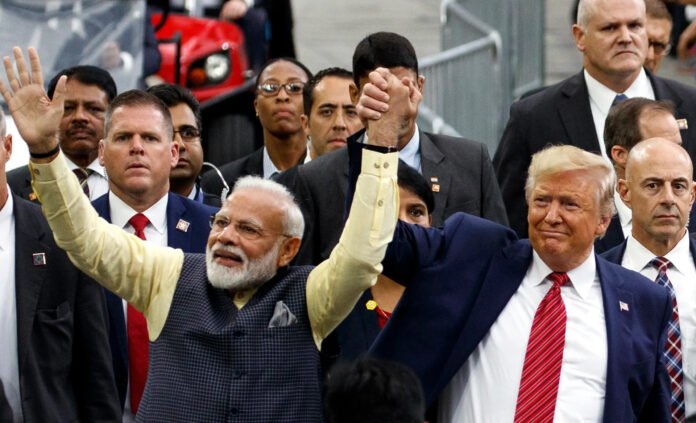
This was particularly evident from Prime Minister Narendra Modi’s visit to the US in February 2025 which saw major initiatives—a pledge to double the bilateral trade to $500 billion by 2030, iCET or Initiative on Critical and Emerging Technologies that has transformed into TRUST or Transforming the Relationship Utilising Strategic Technology Initiative and the need to conclude a mutually beneficial trade agreement at the earliest possible date.
Over the years, the foreign policy of India has matured remarkedly. From the days of non-alignment during the Cold War days to multi-alignment in the second decade of the 21st century, Indian foreign policy has experienced a sea change
However, of late the ties between both the countries are experiencing strain due to the imposition of 50% tariffs on Indian exports by the US as a “penalty” for buying discounted Russian oil. Nevertheless, both sides are working expeditiously to iron out the differences.

On the other side of the strategic spectrum are India’s ties with Russia. The visit of the Russian president Vladimir Putin to India in October 2025 saw both sides reiterating the solid status of their special and privileged strategic partnership. Both sides have pledged to address the burgeoning trade deficit and work in new areas like agriculture, pharmaceuticals and nuclear energy with the Russian side proposing Small Modular Reactors (SMR) and expanding cooperation on the Kundankulam Nuclear Power Plant. The talks also saw both sides pledging to conclude an FTA with the Eurasian Economic Union.
According to Ambassador Trigunayat, when it comes to India’s highly complicated neighbour China, 2025 has been a relatively calm year. Both sides have made progress on the need to dial down tensions and deescalate the hostilities.

It is in that vein that India has resumed direct flights to key destinations in China and both sides pledged to work towards addressing the mammoth trade deficit that puts India at a disadvantaged position and which casts a shadow over the ties.
One potential spoiler that complicates Sino-Indian ties is the overt support provided by China to Pakistan during the armed hostilities following Operation Sindoor. China, therefore, needs to rethink its strategy of supporting a country whose only virtue is the export of fundamentalism and religiously driven terrorism around the world.
On the security front, the foreign policy expert opined that India has taught its unruly western neighbour Pakistan, a stern lesson through Operation Sindoor. Carried out to avenge the loss of innocent lives during the dastardly terror attack at Pahalgam, Operation Sindoor destroyed, with clinical efficiency, several terror targets in Pakistan Occupied Kashmir and deep inside Pakistan.
India’s action and the subsequent declaration that any more terror attacks emanating from Pakistan against India will be considered an act of war, is reflective of India’s zero tolerance approach to terrorism.
One of the most important issues for India is the headwinds she is experiencing with the inauguration of the second Trump presidency. Unfortunately, President Donald Trump has upended the consensus that global political elites enjoyed for the past three decades, especially in the realm of trade and commerce
Despite routing Pakistan on the conventional battlefield, the need of the hour, Ambassador Trigunayat argues is to thwart the Pakistani deep state’s nefarious designs in the domain of grey zone warfare.
This necessitates strengthening India’s non-kinetic warfighting abilities, particularly in the interconnected fields of cognitive warfare, narrative warfare, and influence operations, which come under the broad rubric of psychological warfare.
This becomes all the more important as ties with India’s eastern neighbour Bangladesh have plummeted in recent months. This is all the more evident as the interim government led by Chief Advisor Mohammed Yunus is openly collaborating with Pakistan and is hell-bent on strengthening cooperation across a host of sectors, defence and technology being particularly important areas. This clearly necessitates, on India’s part, the need to prepare for a possible two and a half front war where Bangladesh acts as a proxy of Pakistan in general and China in particular.
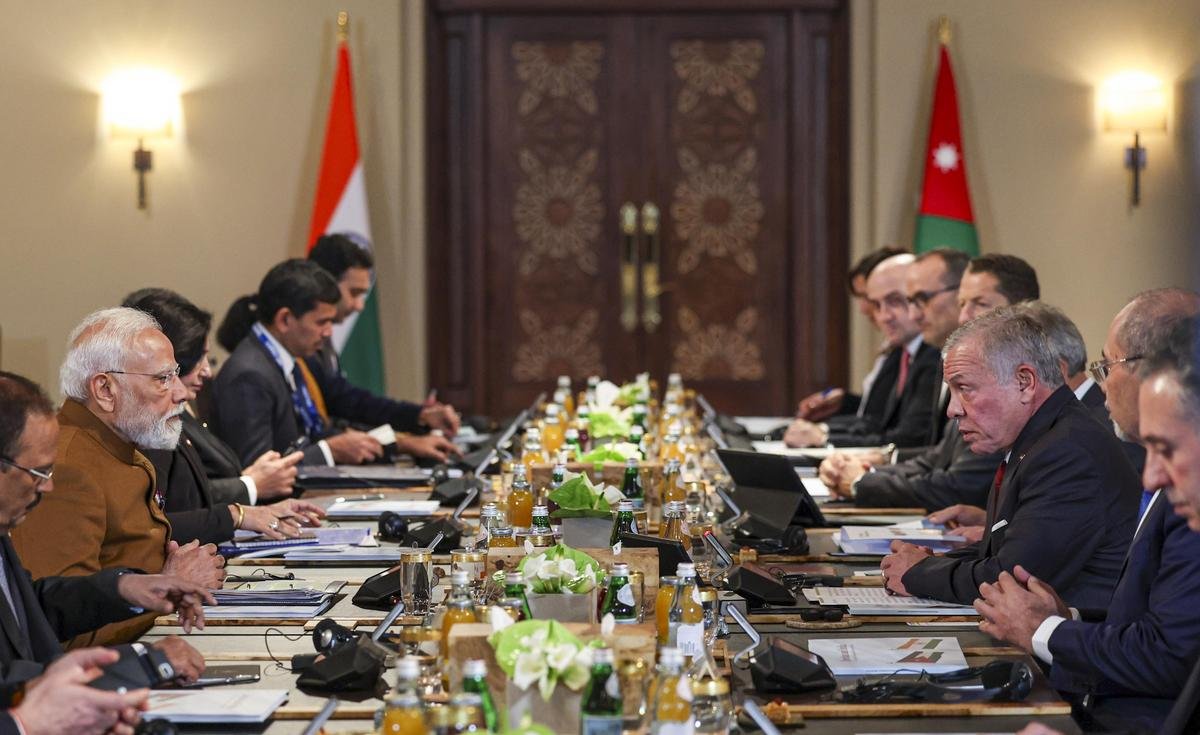
In West Asia, India has kept its foreign policy outreach, successfully intact. This is evident from a recent three-nation tour the Prime Minister of India, Narendra Modi recently undertook. Among them, Jordan and Oman were the destinations. What compounded the success of the visit was the signing of a Free Trade Agreement with Oman which shall pave the way for the diversification of India’s exports into the strategically important region and, in a way relieve the pressure of US tariffs.
However, he highlighted that the foreign policy mandarins of New Delhi also need to be cautious with the recently signed Saudi-Pakistan defence agreement that can bring an important ally like Saudi Arabia into the regional equation in South Asia, potentially constraining India’s neighbourhood actions.
In West Asia, another country which is trying to undermine India’s strategic choices is Turkey. The Erdogan regime’s open support to Pakistan during and after Operation Sindoor and his consistent attempts at raking up the Kashmir issue is reflective of the misplaced priorities of Turkey, which is trying to revive its neo-Ottoman dreams amidst attempts at playing a bigger role in both West and South Asia.
Hence, it is very clear that the year 2026 promises to bring myriad hopes and challenges for India. Regional challenges may be stated as balancing ties in its neighbourhood coupled with the need to create pro-India constituencies and counter the joint designs of China and Pakistan.
India stands as a force of stability. Through the time-tested policy of strategic autonomy, India has managed to independently deal with all major global powers, maintaining a cordial relationship
Further, during the year ahead, the retired diplomat argues, India is expected to play a highly important role as far as reaffirmation of the spirit of multilateralism is concerned. India will host the Impact AI Summit in early 2026, which undoubtedly will go on to shape India and the Global South’s perception of a disruptive technology like AI which is changing the very landscape of societies around the world.
On the other hand, it will also be hosting the Quad and BRICS summits, and that shall be an interesting demonstration of how India seeks to balance the occident and the orient in its foreign policy choices.
Further Amb Trigunayat opined that India’s outreach to Africa by hosting the India-Africa Forum Summit in 2026 shall demonstrate New Delhi’s attempt at reinforcing its Global South connection and also consolidate its position in a continent that has emerged as a battlefield of soft power between two Asian behemoths – India and China.
Overall, it can be concluded that India must look at 2026 with hope and aspiration but must also be cautious and nimble-footed in its diplomacy.

–The writer is currently working as a Research Associate at Defence Research and Studies (dras.in) and is a columnist. The views expressed are personal and do not necessarily reflect the views of Raksha Anirveda
