

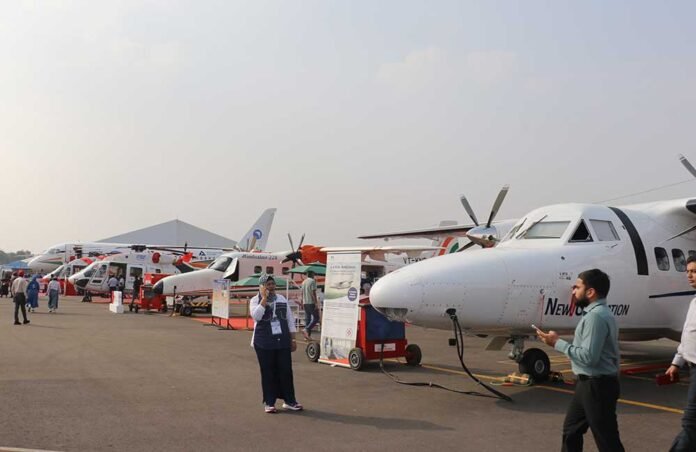
Hyderabad: India’s prestigious four-day civil aviation air show Wings India 2026 got off to a colourful start on January 28 at the Begumpet airport and have on display 131 firms, 34 aircraft giving an opportunity to these companies to attract major investment plans as India’s civil aviation sector eyes rapid growth.
Wings India 2026, South Asia’s largest civil aviation event, brings together global aerospace majors and domestic aviation players, even as the event was overshadowed by the plane crash in Baramati that claimed the life of Maharashtra Deputy Chief Minister Ajit Pawar.

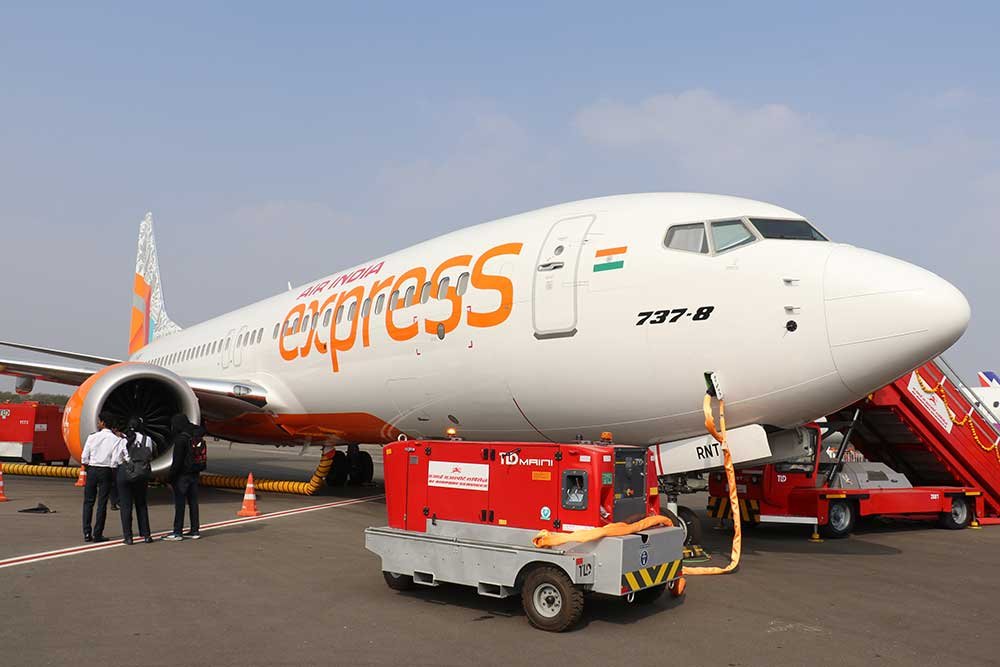
The event has drawn participation from leading companies, including global aircraft manufacturers Boeing, Airbus and Embraer, as well as Hindustan Aeronautics Limited (HAL) and leading airlines such as Air India and IndiGo.
A total of 34 aircraft and helicopters were showcased on the opening day for business visitors and delegates.
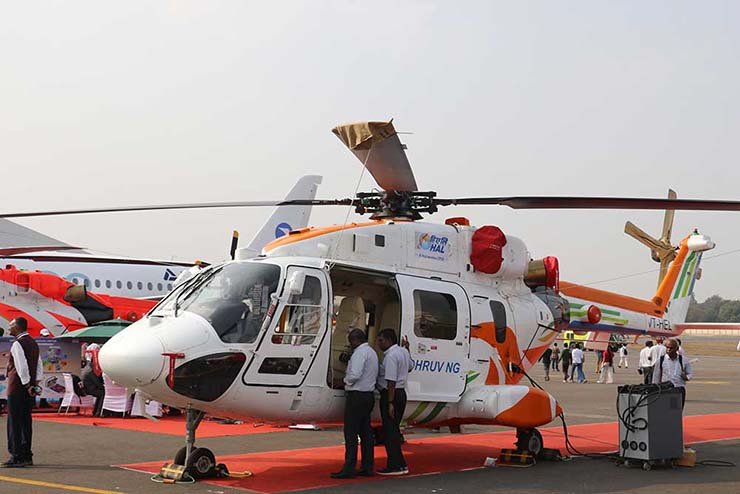
Among the aircraft on display were HAL’s Hindustan 228 aircraft, Dhruv ALH-NG helicopter and LUH civil helicopter, Dassault Aviation’s Falcon 6X, Airbus’s H125, H160 ACH, A321 Neo and A220, and Embraer’s E175 and E195-E2 Profit Hunter.
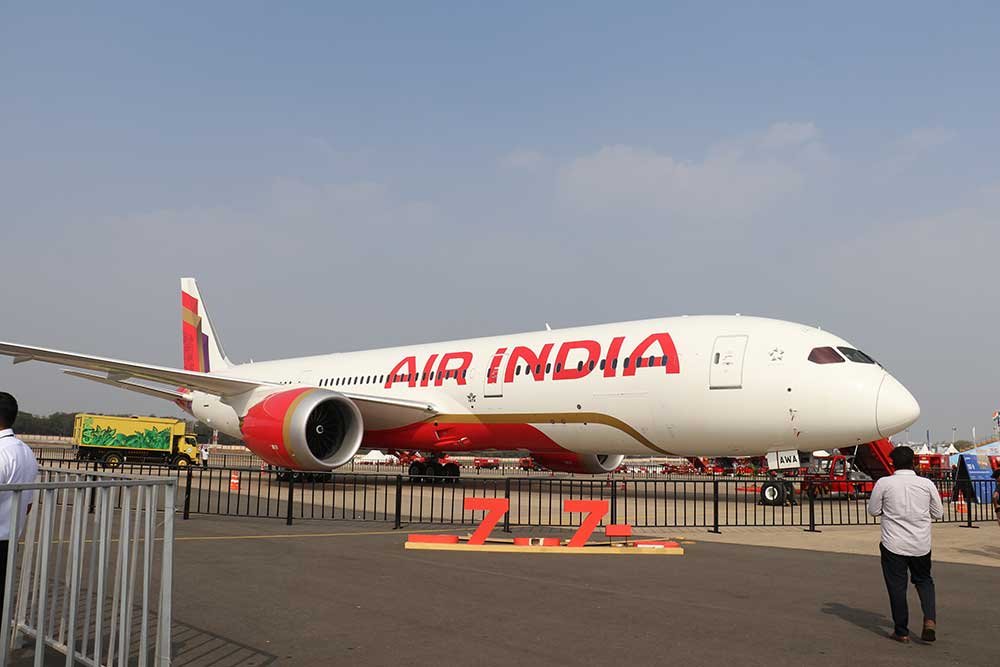

The focus at this prestigious air show focused on manufacturing and stressing on India’s growing civil aviation manufacturing capabilities with the goal to transform the country into global exporter of aviation products over the next decade.
The inaugural day featured strategic discussions on strengthening India’s aviation manufacturing ecosystem and integrating local MSMEs into global supply chains.

Civil Aviation Minister K Rammohan Naidu said efforts were underway to strengthen India’s aviation manufacturing ecosystem to position the country as a global exporter of aviation components and products. He underlined the need to build domestic manufacturing capacity to meet the growing demand expected over the next 10 to 20 years. 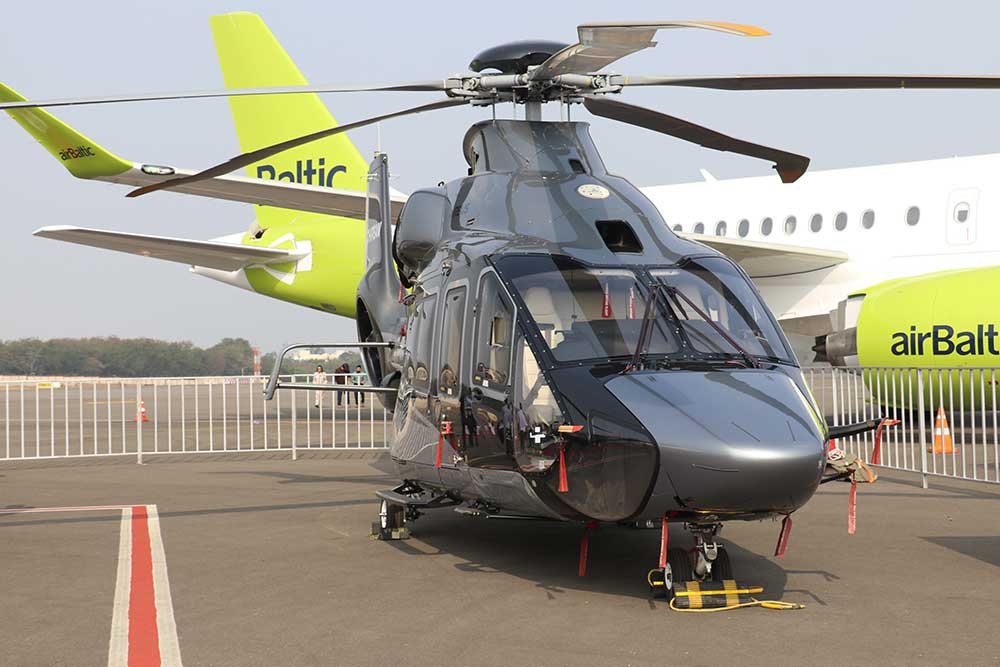
During the event, Airports Authority of India (AAI) Chairman Vipin Kumar announced that the AAI would invest ₹15,000 crore to upgrade air traffic control tower automation, navigational systems and other critical infrastructure. The upgrades are aimed at making India’s aviation infrastructure future-ready by 2028, he said.
Boeing, which has set up a dedicated stall at the exhibition, projected that passenger air traffic in India and South Asia would grow at an average rate of seven per cent annually over the next two decades. To cater to this growth, airlines in the region would require nearly 3,330 new aircraft by 2044, the company said.
Leading defence public undertaking, Hindustan Aeronautics Limited (HAL), which showcased several of its civil aviation platforms, outlined its strategy to significantly expand its presence in the civil aviation segment. The public sector aerospace major aims to increase its civil aviation footprint from the current five to six per cent to 25 per cent in the coming years through a diversified portfolio of civil aircraft.
According to analysts, Wings India 2026 is expected to serve as a key platform for industry leaders, policymakers and manufacturers to discuss the future trajectory of India’s rapidly expanding civil aviation sector.
An aerobatic display by UK pilots and a meticulously choreographed drone show turned the opening day of Wings India 2026 into a spectacle.
After a busy schedule on the opening day which saw strategic talks among leading aviation experts, the evening saw a spectacle in the sky. What was billed as an inaugural aerial display became a fitting finale to day one, drawing participants out of boardrooms and towards a celebration of flight.
Four Extra 330SC aircraft flown by UK pilots Mark Jefferies, Chris Burkett, Peter Wells and Chris Heames sliced through the twilight, their lights tracing sharp arcs overhead. Sweeping low over the venue, the aircraft left shimmering trails of coloured dust, from saffron to green.
Cheers erupted as the formation climbed into a tight spiral, releasing a plume of grey smoke in the team’s trademark “dotty” effect. At one point, the pilots etched two giant hearts more than 1,000 feet high. The tempo rose with a dramatic sequence in which aircraft peeled away, only to rush back towards each other in a series of opposition crosses, closing in at speeds of over 400 miles per hour before breaking cleanly apart.
Just as the last aircraft climbed out of view, the sky shifted roles again, becoming a screen for the drone show that followed. As sunset gave way to night, a cluster of green-lit drones assembled into a glowing rectangle, their colour intensifying against the deepening blue.

– The writer is a senior journalist and media consultant. The views expressed are of the writer and do not necessarily reflect the views of Raksha Anirveda.
