

Bangladesh occupies a unique and often underappreciated place in India’s strategic imagination. With a 4,096-kilometre-long border — the longest India shares with any country — Bangladesh is not just a neighbour but a determinant of India’s internal security, eastern connectivity, and regional diplomacy. For New Delhi, developments in Dhaka resonate far beyond bilateral relations, shaping outcomes in the northeast, the Bay of Bengal, and South Asia’s evolving balance of power.
As Bangladesh approaches its fifth decade of independence, India must reassess its assumptions. Dhaka today is no longer a fragile post-1971 state but an increasingly confident actor with economic ambitions, geopolitical options, and domestic political complexities. Understanding Bangladesh from an Indian perspective, therefore, requires moving beyond nostalgia and episodic diplomacy towards a long-term strategic prognosis.

The Weight of History
India’s decisive role in Bangladesh’s liberation in 1971 remains the emotional foundation of the relationship. The creation of Bangladesh eliminated Pakistan’s eastern wing and reshaped South Asia’s strategic geography. Yet, history has also bred sensitivities.
While India views 1971 as a moral and strategic triumph, sections of Bangladeshi political discourse have periodically portrayed India as an overbearing neighbour. The assassination of Sheikh Mujibur Rahman in 1975 and subsequent military-backed regimes shifted Bangladesh’s identity away from secular Bengali nationalism towards a more religion-inflected political narrative.
As historian Willem van Schendel observed, Bangladeshi nationalism has often been shaped by its effort to assert autonomy vis-à-vis India. For New Delhi, this underscores a hard truth: historical goodwill is not a substitute for contemporary relevance.
Historian Willem van Schendel notes that Bangladeshi nationalism has often been shaped by its efforts to assert autonomy vis-à-vis India. For New Delhi, this underscores a hard truth: historical goodwill is not a substitute for contemporary relevance
Politics in Dhaka: Why It Matters to India
Bangladesh’s domestic politics have a direct impact on Indian interests. The rivalry between the Awami League (AL) and the Bangladesh Nationalist Party (BNP) is not merely ideological; it has strategic implications.

Under Prime Minister Sheikh Hasina, Bangladesh has cooperated closely with India on counter-terrorism, denied sanctuary to Indian insurgent groups, and expanded regional connectivity. In contrast, previous BNP-led governments were more sceptical of India and cultivated closer ties with Pakistan and Islamist political forces.
From India’s perspective, political stability in Bangladesh is crucial. However, excessive identification with any single leader or party carries risks. Former Foreign Secretary Shyam Saran has cautioned that India must engage institutions and society, not personalities alone. A future political transition in Dhaka could otherwise generate backlash against perceived Indian preferences.

Security Cooperation: A Quiet Success Story
One of the most consequential yet understated achievements in India-Bangladesh relations has been security cooperation. Since 2009, Dhaka’s actions against insurgent groups operating from its soil have transformed India’s northeast.
Sanctuaries once used by groups like ULFA and NLFT were dismantled, enabling peace processes and economic integration. As a former Indian Army chief noted, Bangladesh’s cooperation contributed more to stability in the northeast than many military operations.
That said, border management remains a sensitive issue. Illegal migration, smuggling, and border fencing frequently spill into domestic politics on both sides. In Bangladesh, Indian political rhetoric on migration is often perceived as stigmatising. For India, the challenge lies in managing borders administratively rather than securitising them rhetorically.
Economics: Interdependence with Asymmetry
Bangladesh is India’s largest trading partner in South Asia, but the relationship is marked by asymmetry. Indian exports to Bangladesh far exceed Bangladeshi exports to India, fuelling perceptions of imbalance.
Yet, connectivity initiatives have reshaped economic realities. Transit routes through Bangladesh have reduced distances to India’s northeast, inland waterways have revived pre-Partition trade links, and power grid interconnections have deepened energy cooperation.
For India, political stability in Bangladesh is crucial. However, excessive identification with any single leader or party carries risks. A future political transition in Dhaka could otherwise generate backlash against perceived Indian preferences
Economist Amartya Sen once remarked that economic geography does not respect political borders. For India, facilitating Bangladeshi access to its markets is not charity — it is a strategic investment in regional stability.
The China Factor
China’s growing presence in Bangladesh is a central concern for Indian policymakers. Beijing is Bangladesh’s largest defence supplier and a major infrastructure financier. From ports to bridges, Chinese-funded projects have expanded rapidly.
However, viewing Bangladesh solely through the prism of India–China rivalry is misleading. Dhaka’s engagement with China reflects hedging, not alignment. Bangladesh seeks economic growth and strategic autonomy, not entanglement in great-power competition.
As one Bangladeshi diplomat put it, geography does not permit Bangladesh the luxury of choosing one neighbour over another. For India, heavy-handed responses would be counterproductive. The more effective strategy lies in offering credible alternatives and delivering on commitments.
Bay of Bengal and Maritime Stakes
The Bay of Bengal is emerging as a critical maritime theatre. Bangladesh’s location near major sea lanes enhances its strategic value. India’s acceptance of the international arbitration verdict on maritime boundaries in 2014 — largely in Bangladesh’s favour — strengthened New Delhi’s credibility as a rule-abiding power.
One of the most consequential yet understated achievements in India-Bangladesh relations has been security cooperation. Since 2009, Dhaka’s actions against insurgent groups operating from its soil have transformed India’s northeast
Future cooperation in coastal surveillance, disaster response, and the blue economy can anchor Bangladesh more firmly within India’s maritime vision without coercion.
People-to-People Ties: The Enduring Glue
Despite political ups and downs, societal ties remain resilient. Language, literature, culture, education, and healthcare exchanges bind the two countries. Indian hospitals treat thousands of Bangladeshi patients annually, while educational and cultural interactions continue across borders.
Yet generational change is significant. Younger Bangladeshis with no memory of 1971 judge India on contemporary experiences — trade access, border incidents, and media narratives. India’s soft power must therefore evolve from historical memory to present-day engagement.
The Road Ahead
From an Indian perspective, three broad scenarios are plausible: continued stability and cooperation; political transition with a more nationalist tone; or internal instability with regional spillovers. Each demands diplomatic agility rather than complacency.
For Bangladesh, a partnership with India must be beneficial, not constraining. And for India, a confident Bangladesh is not a strategic problem. Instead, it could become India’s valuable asset in shaping a stable and integrated eastern South Asia
India’s core objective should be clear: a stable, prosperous, and sovereign Bangladesh that sees partnership with India as beneficial, not constraining.
As Henry Kissinger once remarked in a different context, great powers must ensure that friendship is not perceived as domination. For India, the task is to make cooperation with New Delhi synonymous with opportunity.
A confident Bangladesh need not be a strategic problem for India. On the contrary, it could become one of India’s most valuable assets in shaping a stable and integrated eastern South Asia.

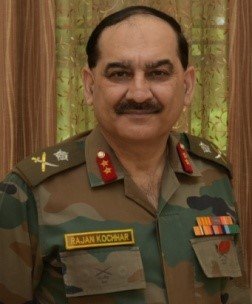
-The author retired as Major General, Army Ordnance Corps, Central Command, after 37 years of service. A management doctorate and expert on defence modernisation, he is the author of four books, including the Amazon bestseller “Breaking the Chinese Myth,” and a frequent media commentator. He is affiliated with several leading defence and strategic studies institutions in New Delhi. The views expressed are of the writer and do not necessarily reflect the views of Raksha Anirveda
