

For over seven decades, the Indian Army has stood as a symbol of discipline, sacrifice, and operational excellence. Rooted deeply in tradition, ethos, and regimental pride, it has successfully defended the nation across diverse terrains and complex geopolitical realities. Yet, as the character of war undergoes a profound transformation globally, the Army too has been steadily evolving, from a force shaped primarily by manpower and platforms to one increasingly defined by technology, data, autonomy, and decision superiority. This journey from tradition to transformation is not merely about acquiring new equipment; it is about reimagining how wars will be fought, won, and prevented in the decades ahead.
The Imperative of Modernisation
Modern warfare is no longer limited to physical battlefields. It now spans the electromagnetic spectrum, cyberspace, space, information domains, and autonomous systems. The Indian Army’s modernisation journey reflects a growing recognition that future conflicts will be faster, more precise, and increasingly non-contact in nature. Victory will not only depend on numerical superiority, rather more on situational awareness, speed of decision-making, precision engagement, and resilience of systems.

Over the past decade, the Army has embarked on a structured process of absorbing emerging technologies, sometimes cautiously, often pragmatically, but always with an operational lens. From digitisation of command and control to network-enabled operations, the emphasis has shifted towards creating a technology-enabled fighting force, capable of operating in contested and data-saturated environments.
Early Signals of Transformation: Swarm Drones at Army Day 2021
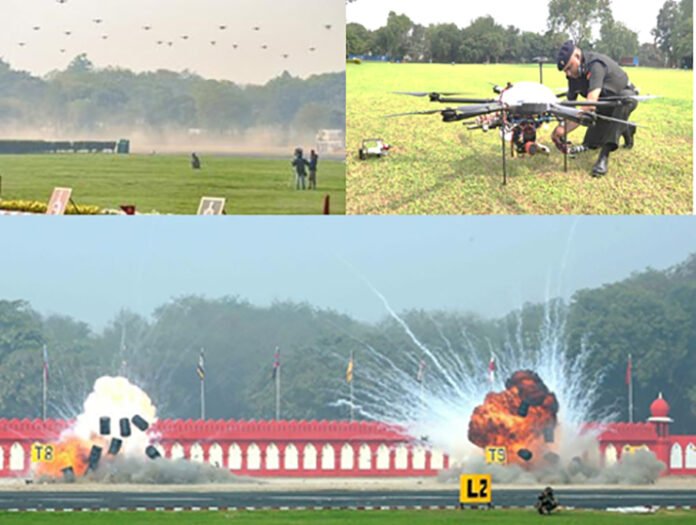
A defining moment in this journey was the swarm drone technology demonstration during the Army Day Parade 2021, where an indigenous swarm of heterogeneous drones showcased autonomous coordination, having distributed intelligence, and mission-oriented behaviour with redundancy. This was not merely a visual spectacle; it was a strategic signal, both internally and externally, that the Indian Army understood the disruptive potential of autonomy and was willing to place emerging technologies at the centre stage of its modernisation narrative.
That demonstration represented more than drones. It symbolised a shift in mindset: from viewing technology as an adjunct to combat power, to recognising it as a core determinant of future battlefield dominance.
In the tradition-to-transformation journey, a defining moment was the swarm drone technology demonstration during the Army Day Parade 2021, where an indigenous swarm of heterogeneous drones showcased autonomous coordination, having distributed intelligence, and mission-oriented behaviour with redundancy.
Critical Technologies Shaping the Future Army
- Unmanned and Autonomous Systems
The Indian Army has significantly expanded its fleet of indigenous unmanned aerial systems (UAS), reflecting how drones have moved from niche ISR roles to core battlefield capabilities. Recently, the Army placed orders worth over ₹5,000 crore for Indian-made drones, spanning short-range tactical systems, long-range precision platforms, and ISR UAS, many designed and manufactured domestically to operate under contested conditions such as signal jamming.

In another instance, the Army placed an emergency procurement order worth ₹137 crore for indigenous hybrid mini-UAVs, aimed at significantly enhancing ISR capabilities in counter-insurgency and counter-terrorism operations. The maturity and operational relevance of this capability were further highlighted during a recent capability demonstration at Ambala, which was showcased to the Chief of the Army Staff, featuring several unique and mission-oriented drone functionalities.
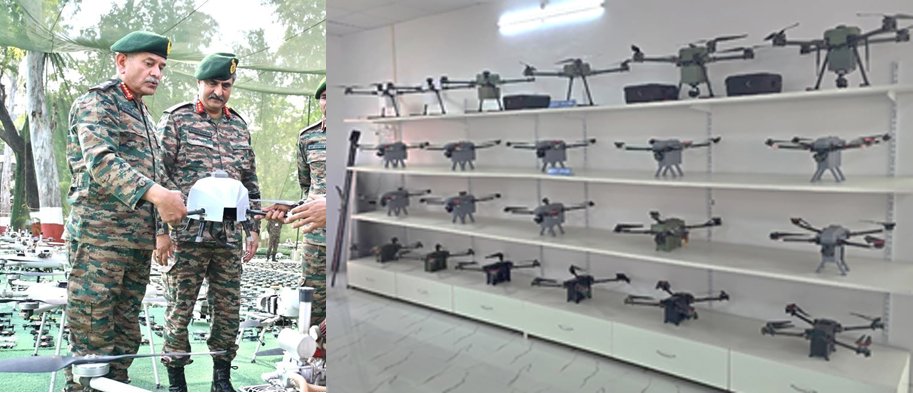
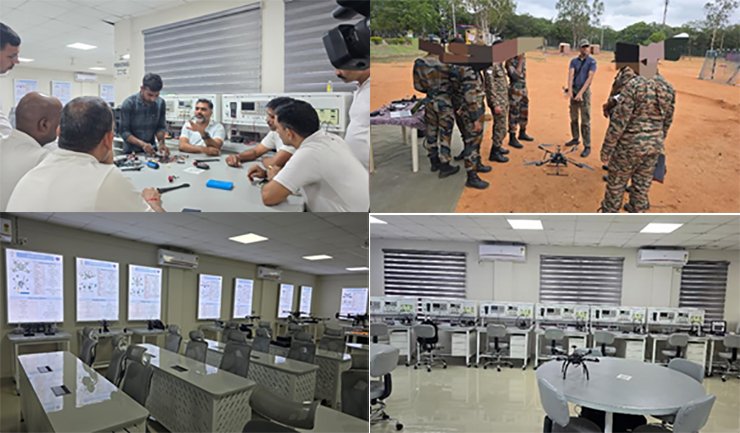
These developments clearly illustrate how unmanned systems have transitioned from experimental trials to mass-produced, mission-critical inventory. Importantly, the Army’s approach has extended well beyond procurement alone, with parallel emphasis on establishing the necessary infrastructure for training, sustainment, and long-term operational integration, ensuring that these capabilities are effectively absorbed and employed at scale.

- Artificial Intelligence and Data-Centric Warfare (Including Generative AI)
At its core, Artificial Intelligence is the ability to extract patterns, insights, and meaning from large volumes of data. In the military context, while several AI applications exist, the most impactful and transformative use cases for the Army lie in Generative AI and Computer Vision. Among these, Generative AI represents the next major leap that has the potential to be fully realised across the force.
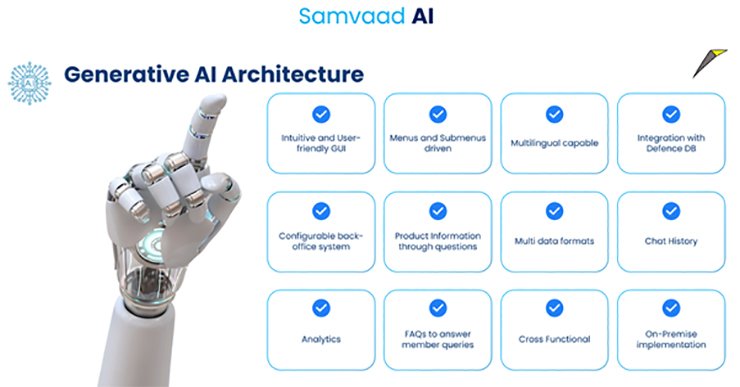
When deployed as a secure, on-premise capability, Generative AI can function as a trusted warfighting and staff assistant, capable of understanding natural language queries, synthesising information from vast repositories of operational data, SOPs, intelligence summaries, technical manuals, and lessons learnt. Such systems can automatically generate mission briefs, operational notes, comparative analyses, and decision-support documents, dramatically compressing planning cycles and reducing cognitive load on commanders and staff. In this role, AI moves beyond being a mere analytical tool and becomes a true decision multiplier. The iDEX DISC problem-statement-driven Samvaad AI project, currently being successfully developed and deployed by Zenerative Minds, Hyderabad, for the Indian Navy, demonstrates significant potential for addressing critical, data-intensive problem-solving requirements within the Indian Army as well. Its underlying architecture and operational philosophy make it equally suited for handling complex, secure, and mission-critical information challenges across land-based formations and command structures.
While current AI usage within the Army is largely embedded within larger platforms and systems, recent procurements already reflect the growing reliance on AI-driven capabilities. Systems such as the Integrated Drone Detection and Interdiction System (IDD&IS), developed by DRDO and produced by BEL, employ AI-enabled algorithms for real-time detection, classification, and response to hostile UAVs, marking a clear shift towards data-driven battlefield automation.
Looking ahead, the Army’s ongoing induction of software-defined communication and tactical systems under major approvals provides the digital backbone required for deeper AI and GenAI integration. These systems introduce computational layers that enable advanced analytics, intelligent decision support, and the future deployment of GenAI-powered knowledge and planning tools across operations, logistics, and staff functions.
The Indian Army has significantly expanded its fleet of indigenous unmanned aerial systems. The Army has placed orders worth over ₹5,000 crore for Indian-made drones, spanning short-range tactical systems, long-range precision platforms, and ISR UAS, to operate under contested conditions such as signal jamming
Importantly, the primary concern surrounding Generative AI in defence, data security and sovereignty, can be effectively mitigated through fully on-premise deployments, ensuring that sensitive operational data remains entirely within secure military networks, free from external cloud dependencies or foreign data exposure. With the right safeguards, GenAI has the potential to become one of the most consequential force multipliers for the Army in the coming decade, fundamentally reshaping how information is processed, decisions are made, and operations are planned.
- Network-Centric and Software-Defined Operations
The Defence Acquisition Council’s recent approvals, including software-defined radios (SDRs) and tactical communication systems under the ₹79,000 crore package, mark a decisive push towards strengthening the Army’s network-centric warfare capabilities. A notable example is the indigenous Manpack and Software Defined Radios developed by BEL in collaboration with DRDO, which are being inducted to replace legacy communication systems and provide secure, frequency-agile, and interoperable voice and data connectivity down to the tactical edge.
In parallel, the Army has conducted extensive trials and demonstrations of tactical communication systems (TCS) and battlefield management systems (BMS), aimed at enabling real-time situational awareness and seamless information flow between sensors, shooters, and command elements. More recently, networked air defence command-and-control systems such as Akashteer have demonstrated how sensor fusion and digital connectivity can drastically improve response times and coordination against aerial threats.
These procurements and demonstrations collectively underscore the Army’s shift towards software-defined, digitally networked operations, where communication systems are no longer standalone enablers but form the digital backbone of joint and integrated warfare. By enabling secure, adaptable, and resilient communication layers, these systems ensure that geographically dispersed forces can operate as a cohesive whole, an essential prerequisite for future conflicts characterised by speed, autonomy, and multi-domain integration.
- Electronic Warfare, Cyber, and Space Domains
Procurement priorities under the recent DAC approvals and battlefield requirements have emphasised low-level lightweight radars, loitering munitions, and indigenous counter-drone systems, which are critical electronic warfare and air defence components in contested spaces.
In addition, the Army’s adoption of Indigenous Counter-UAS grid systems like ‘SAKSHAM’ shows the push toward electronic warfare convergence, where detection, tracking, and neutralisation of aerial threats rely on integrated sensors, compute, and responsive effectors.
Space-based ISR and satellite-enabled communications, while led by joint services and DRDO/ISRO, are increasingly integrated into Army operations as well, enabling beyond-line-of-sight awareness.
- Robotics and Human-Machine Teaming
Beyond aerial platforms, the Indian Army has been actively inducting and upgrading radar and sensor-based systems that enable faster, more autonomous detection and response on the battlefield. A key example is the induction of the indigenous Swathi Weapon Locating Radar, which provides rapid and accurate localisation of enemy artillery, mortars, and rockets, significantly compressing sensor-to-shooter timelines and enabling automated or semi-automated fire response. In parallel, upgrades to surveillance radars and ground-based sensors are being integrated with digital command-and-control systems, laying the foundation for robotic ISR and algorithm-assisted targeting.
While large-scale induction of fully autonomous ground combat robots is still an evolving process, the Army has made steady progress in integrating robotic sub-systems for specific operational roles. Robots for Explosive Ordnance Disposal (EOD) are now routinely used to neutralise IEDs and unexploded ordnance, reducing risk to personnel. Similarly, the Army has conducted trials of unmanned ground vehicles (UGVs) for logistics support, perimeter surveillance, and patrolling in high-risk or high-altitude areas, including border deployments and sensitive installations.
AI helps in extracting meaning from large volumes of data. In the military context, the most impactful and transformative AI applications include Generative AI and Computer Vision. Among these, Generative AI represents the next major leap that has the potential to be fully realised across the force
In addition, robotic and sensor-based perimeter security systems, combining ground sensors, cameras, and autonomous monitoring tools, are being deployed at forward bases and critical installations to enhance early warning and force protection. When coupled with AI-enabled analytics and increasing levels of autonomy, these systems illustrate how human-machine teaming is gradually entering mainstream force structures, with machines handling detection, endurance, and hazardous tasks, while human operators retain command, judgment, and control.
Together, these procurements and trials reflect a deliberate and pragmatic approach by the Indian Army, adopting robotics incrementally, validating them under operational conditions, and integrating them where they deliver a clear tactical advantage, while preparing the ground for more advanced autonomous systems in the future.
The Most Critical Transformation: Change in Thinking
While platforms and technologies are important, the most critical transformation lies in mindset. Future wars are unlikely to be fought through massed infantry charges or prolonged face-to-face engagements. Instead, they will be characterised by stand-off engagements, precision strikes, autonomous systems, and information dominance. In many scenarios, there may be no visible enemy and no traditional frontline.
This reality demands that defence forces become as technology-centric in thinking as they are tactically sound. Officers and soldiers must not only operate equipment but also understand the logic, limitations, and possibilities of technology. Decision-makers must be comfortable with data-driven insights, simulations, and AI-assisted recommendations.
Equally, institutions must encourage experimentation, accept controlled failures, and reward innovation, because technological superiority is not achieved through rigid processes alone, but through adaptive thinking and continuous learning.
Global Military Transformations
Globally, several advanced militaries have demonstrated how technology-led transformation can redefine military power, not through isolated acquisitions but through institutionalised, long-term programmes anchored in national defence strategy. Nations leading in artificial intelligence, space, cyber, and autonomous systems today are also shaping the rules, norms, and operational concepts of future warfare.
In the United States, technology integration is driven through structured programmes such as DARPA’s OFFSET and ACE (Air Combat Evolution) programmes, which focus on autonomous swarming and AI-enabled air combat decision-making. The Joint All-Domain Command and Control (JADC2) initiative exemplifies how AI, cloud-edge computing, and secure networks are being fused to connect sensors, shooters, and commanders across services in real time. Parallel efforts like the Replicator Initiative (2023) aim to field large numbers of attributable autonomous systems at speed, deliberately prioritising scale, adaptability, and rapid iteration over traditional platform-centric acquisition cycles.
Israel’s defence ecosystem offers another powerful example. Programmes led by the Israel Defence Forces (IDF), in partnership with veteran-founded startups, have produced operationally proven systems in AI-enabled ISR, loitering munitions, counter-UAS, and autonomous border surveillance. Units such as Unit 8200 act as both operational formations and innovation engines, where technologies are developed, tested, refined, and redeployed in compressed cycles, ensuring constant alignment between battlefield needs and technological solutions.
Systems such as the Integrated Drone Detection and Interdiction System (IDD&IS), developed by DRDO and produced by BEL, employ AI-enabled algorithms for real-time detection, classification, and response to hostile UAVs, marking a clear shift towards data-driven battlefield automation
In China, military modernisation is guided by a clear strategic framework of Civil-Military Fusion (CMF). Long-term programmes explicitly integrate AI, quantum technologies, hypersonic, cyber, and space systems into force development plans. Large-scale investments in autonomous platforms, intelligent warfare concepts, and space-based ISR constellations reflect a strategy where technological dominance is treated as a prerequisite for future military superiority, not an optional enhancement.
Across Europe, countries like the United Kingdom and France have launched structured defence innovation initiatives to embed technology into force planning. The UK’s Defence AI Strategy, Future Combat Air System (FCAS / Tempest) programme, and Army Warfighting Experiment (AWE) provide mechanisms for continuous experimentation with AI, autonomy, digital twins, and human–machine teaming. France’s Scorpion Programme similarly integrates networked combat platforms, AI-assisted command systems, and digitised battlefield management into a cohesive operational doctrine.
A consistent lesson across these examples is that innovation ecosystems matter as much as platforms. These militaries have deliberately built defence startup accelerators, rapid capability offices, and experimentation units, enabling soldiers and commanders to influence design, validate concepts, and iterate solutions before formal induction. Importantly, emerging technologies are treated as strategic capabilities, supported by flexible funding, spiral development, and acceptance of controlled risk, rather than being constrained by lowest-cost procurement models.
The recent global experience makes one reality clear: future military advantage will accrue to forces that institutionalise technology adoption at the strategic level, integrate veterans and startups into capability development, and align innovation with long-term operational vision. Those who succeed will not merely field advanced systems; they will shape how wars are fought.
Moving Beyond L1: Strategic Procurement for Strategic Capability
One of the most important enablers of transformation is a shift away from a purely L1 (lowest-cost) driven procurement mindset, especially for emerging and disruptive technologies. While cost discipline remains essential, future capabilities cannot be built by treating technology as a commodity.
Emerging technologies demand:
- Iterative development rather than one-time procurement
- Close user–developer interaction
- Long-term partnerships rather than transactional contracts
In this context, defence startups, particularly those founded and guided by veterans, play a critical role. Veterans bring operational understanding, credibility, and an instinctive alignment with user needs. When supported by a clear strategic vision, such startups can deliver agile, mission-oriented solutions that traditional models struggle to provide.
Initiatives encouraging indigenous development, innovation challenges, and pilot deployments have already shown promise. The next step is to institutionalise this support and view startups not as vendors, but as strategic partners in capability building.
The Road Ahead: Institutionalising Transformation
To firmly position itself as a future-ready force, the Indian Army’s transformation must continue across three parallel tracks:
- Technology Absorption – Rapid induction, testing, and adaptation of emerging systems
- Human Capital Development – Creating technology-literate leaders and soldiers
- Ecosystem Enablement – Strengthening indigenous innovation through veterans, startups, and academia
Globally, several advanced militaries have demonstrated how technology-led transformation can redefine military power. Nations leading in artificial intelligence, space, cyber, and autonomous systems today are also shaping the rules, norms, and operational concepts of future warfare.
Centres of excellence, unit-level experimentation, and doctrine aligned with technology realities will ensure that innovation is not episodic, but institutional.
Conclusion
The Indian Army’s journey from tradition to transformation is both necessary and irreversible. Its proud legacy provides the moral strength and discipline required to embrace change, while its modernisation efforts demonstrate a clear understanding of future warfare realities. Technologies such as drones, AI, robotics, cyber, and autonomous systems are no longer optional; they are foundational.
However, the true measure of success will lie not in how much technology is acquired, but in how deeply it is understood, trusted, and operationalised. As future wars become increasingly non-contact and algorithm-driven, the Army’s ability to think, decide, and act technologically will define its edge.
By embracing innovation, nurturing indigenous ecosystems, supporting veteran-led startups, and moving beyond cost-centric procurement, the Indian Army is well on its way to remaining not just relevant but decisive in the wars of tomorrow.

–The writer is an SME and independent consultant in military technology. The views expressed are of the writer and do not necessarily reflect the views of Raksha Anirveda
