

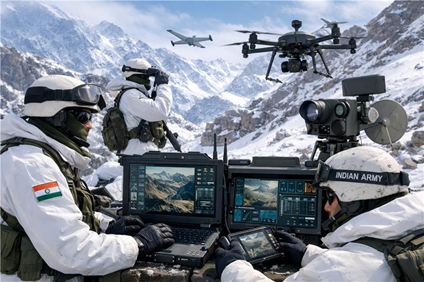
As India prepares to celebrate Army Day 2026, we stand at an inflection point in military history. The Indian Army, an institution steeped in 275 years of valour and tradition, is undergoing its most significant transformation since independence. This metamorphosis, from a force designed for territorial defence to a technology-enabled, agile military ready for multi-domain warfare, represents not an abandonment of tradition, but its evolution for 21st-century realities.
Having worked closely with all three services through developmental partnerships over the past seven years, I have witnessed this transformation from the ground up. What strikes me most is not just the scale of change, but the deliberate manner in which the Army is preserving its core ethos while embracing radical modernisation. This is tradition informing transformation, not being displaced by it.

Strategic Doctrine: From Reactive Defence to Proactive Deterrence
The Indian Army’s doctrinal evolution reflects a fundamental reassessment of our security environment. The Cold Start Doctrine, conceived in the early 2000s, has matured into the Integrated Battle Groups concept, lean, self-sufficient formations capable of rapid deployment and sustained operations. This shift recognises that future conflicts will be shorter, sharper, and fought across multiple domains simultaneously.
The Indian Army’s doctrinal evolution reflects a fundamental reassessment of our security environment. The Cold Start Doctrine, conceived in the early 2000s, has matured into the Integrated Battle Groups concept, lean, self-sufficient formations capable of rapid deployment and sustained operations
The theaterisation initiative, despite implementation challenges, represents the most ambitious restructuring of our military command structure in decades. The creation of integrated theatre commands, consolidating Army, Navy, and Air Force assets under unified operational control, addresses a critical vulnerability: our historical tendency towards service-specific planning. In an era where China operates through integrated theatre commands and Pakistan seeks tactical nuclear parity, we cannot afford operational silos.
More significantly, our strategic thinking has evolved from a Pakistan-centric posture to a genuine two-front challenge. The 2020 Galwan clash was a watershed moment, forcing an honest reckoning with Chinese intentions along the Line of Actual Control. The subsequent deployment of over 50,000 troops to eastern Ladakh, sustained through brutal Himalayan winters, demonstrated both capability and resolve. It also exposed gaps in high-altitude logistics, winter warfare equipment, and rapid mobilisation infrastructure, gaps that modernisation programmes are racing to fill.
Modernisation: Closing the Capability Gap
The modernisation challenge facing the Indian Army is staggering in scope. Approximately 68% of the equipment inventory predates 1990, with critical deficiencies in artillery, air defence, infantry combat vehicles, and night-fighting capabilities. The Aatmanirbhar Bharat push in defence, launched in earnest post-2018, represents both opportunity and urgency.

The artillery modernisation programme illustrates this dual challenge. After decades of neglect following the Bofors scandal, the Army has finally begun recapitalising its firepower. Indigenous Dhanush howitzers, M777 lightweight howitzers, and K-9 Vajra self-propelled guns have significantly enhanced strike capability. Yet the Advanced Towed Artillery Gun System and the Future Ready Combat Vehicle programmes remain mired in trials, while adversaries continue to field next-generation systems.
Infantry modernisation through the Future Infantry Combat Vehicle programme and the F-INSAS soldier modernisation initiative aims to transform the foot soldier into a networked, lethally equipped warfighter. The integration of night vision devices, modern assault rifles, ballistic protection, and communication systems represents a generational leap. However, equipping a 1.2 million-strong Army with these systems requires not just funding, but robust indigenous manufacturing at scale, a capability still maturing.

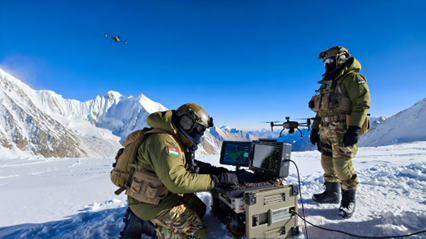
The drone revolution has fundamentally altered infantry operations. Through work with the Army on loitering munition systems and counter-drone technologies, it is evident how rapidly doctrine is evolving. Units that once relied on artillery and air support for precision strikes can now employ squad-level drones for reconnaissance and targeted engagement. This democratisation of precision firepower is among the most significant tactical transformations in decades, and the Army has adapted with remarkable speed.
Technology Absorption: The Innovation Imperative
Technology absorption, the ability to rapidly integrate emerging capabilities into operational frameworks, will determine military effectiveness in the coming decade. The Indian Army has traditionally struggled in this area, hampered by risk-averse procurement processes and a legacy preference for mature, proven systems.
India’s strategic thinking has evolved from a Pakistan-centric posture to a genuine two-front challenge. The 2020 Galwan clash was a watershed moment, forcing an honest reckoning with Chinese intentions along the LAC. The subsequent deployment of 50,000 troops in Ladakh demonstrated both capability and resolve
The Innovations for Defence Excellence programme has emerged as a critical bridge between innovation and adoption. As an early participant in iDEX, our experience developing electronic warfare systems, AI-enabled surveillance platforms, and nanotechnology applications revealed both the programme’s potential and its growing pains. The willingness of Army formations to co-create solutions with startups, iterate based on field feedback, and accept calibrated technology risk represents a cultural shift as significant as any hardware acquisition.
Artificial intelligence and machine learning are now embedded across Army operations, from predictive maintenance of armoured vehicles to autonomous border surveillance systems. The Northern Command’s deployment of AI-enabled intrusion detection systems along the Line of Control has reduced false alarms by over 60% while improving response times. These are not futuristic concepts; they are operational realities enhancing soldier effectiveness today.
Electronic warfare, once a niche capability, has become central to modern operations. In environments where adversaries can jam communications, spoof GPS signals, and conduct cyber attacks on battlefield networks, the ability to operate in a degraded electromagnetic spectrum is existential. The Army’s investment in indigenous electronic warfare systems, including counter-drone technologies and communication security solutions, reflects hard lessons drawn from recent conflicts in Ukraine, Nagorno-Karabakh, and Gaza.
Cyber warfare presents perhaps the most complex challenge. Unlike kinetic domains with established doctrines and clear command structures, cyber operates in grey zones below the threshold of armed conflict yet capable of inflicting strategic damage. The Army’s establishment of dedicated cyber units and the integration of cyber considerations into war-gaming exercises reflect growing recognition of this threat, although capabilities still lag behind both China and Pakistan in offensive cyber operations.
Nari Shakti: Completing the Transformation
No discussion of Army transformation is complete without addressing the integration of women into combat and command roles. This is not merely a social justice issue; it is an operational imperative. In an era of network-centric warfare where cognitive skills often outweigh brute physical strength, excluding half the talent pool is strategically unsound.
The Indian Army’s modernisation challenge is staggering in scope. Nearly 68% of the equipment inventory predates 1990, with critical deficiencies in artillery, air defence, combat vehicles, and night-fighting capabilities. The Aatmanirbhar Bharat push, launched in earnest post-2018, represents both opportunity and urgency
The Supreme Court’s 2020 decision granting permanent commission to women officers was a watershed moment, but cultural transformation inevitably lags policy change. While women now serve in fighter cockpits, man artillery guns, and lead infantry platoons in territorial Army units, the journey towards full integration continues. Resistance persists, rooted partly in legitimate concerns regarding physical standards, field conditions, and unit cohesion, but also in outdated assumptions about women’s capabilities.
What stands out in interactions with women officers is their determination to be judged solely on performance. When a woman officer leads her platoon through a gruelling mountain warfare course or troubleshoots a complex weapons system under field conditions, she advances integration more effectively than any policy directive. The Army’s challenge lies in creating an environment where such excellence becomes routine rather than exceptional.
The expansion of women’s roles in technical domains such as signals, aviation, air defence, and engineering has been particularly successful. In collaborative technology projects with military units, women officers consistently demonstrate attention to detail, adaptability, and strong communication skills, qualities indispensable in managing complex defence systems. As warfare becomes increasingly technology-driven, these strengths will matter more than ever.
The Road Ahead: Tradition as Foundation, Not Fetters
The Indian Army’s transformation is far from complete. Theaterisation remains contentious, procurement processes remain complex, and budgetary constraints limit the pace of modernisation. The Agnipath recruitment scheme, designed to create a younger and fitter force, has generated debate and faces implementation challenges. Full integration of women into combat arms will require sustained commitment beyond symbolic milestones.
Yet the trajectory is unmistakable. An Army that once took decades to field new weapon systems now iterates with startups in 12-month development cycles. An institution that resisted jointness now plans operations through integrated theatre commands. A force that excluded women from combat roles now has them commanding troops in forward areas.
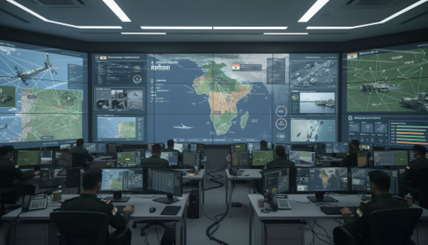
This transformation endures because it is rooted in the Army’s greatest tradition: adaptability under fire. From the heights of Kargil to the deserts of Rajasthan and the jungles of the Northeast, the Indian Army has consistently overcome adversity through innovation, courage, and resilience. That spirit, more than any platform or technology, will shape success in the conflicts ahead.
As we commemorate Army Day 2026, we honour not only 77 years of independent India’s military legacy, but also the vision to evolve that legacy for future challenges. Transformation is not about discarding tradition, but about ensuring that traditions of valour, sacrifice, and service before self-endure in an era defined by AI, drones, and cyber warfare.
No discussion of Army transformation is complete without addressing the integration of women into combat and command roles. This is an operational imperative. In an era of network-centric warfare where cognitive skills often outweigh brute physical strength, excluding half the talent pool is strategically unsound
The future Indian Army will be smaller, younger, more technologically sophisticated, and more gender-diverse. Yet it will remain, fundamentally, what it has always been: the sentinel of our sovereignty and the guardian of our way of life. That is a tradition worth preserving through every transformation.

The writer is Co-Founder of Big Bang Boom Solutions
