
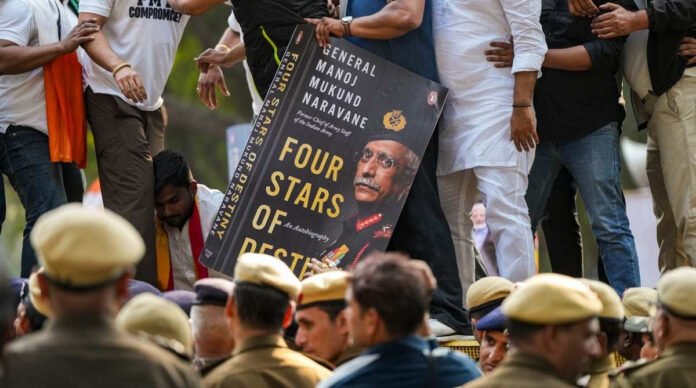
India’s Parliament was stalled for three consecutive days in the first week of February, not by a budgetary impasse, nor a constitutional crisis, nor a national emergency, but by a carefully sustained confrontation over an unpublished manuscript allegedly authored by a former Army Chief. On the surface, the issue appears narrow: excerpts from a book still under mandatory Ministry of Defence vetting, selectively quoted by a magazine and weaponised into a parliamentary spectacle.
Political realism has a longstanding tradition of recognising that politics rarely operates on the surface alone. As George Orwell observed, “Political language is designed to make lies sound truthful and murder respectable, and to give an appearance of solidity to pure wind.” In the realm of geopolitics, timing is often deliberate and significant. Within national security discussions, the prevailing narrative usually exerts greater influence than factual details.

To understand what is unfolding, one must step back from the daily outrage cycle and ask a more uncomfortable question: Why this issue, why now, and why at this moment in India’s strategic journey?
The Manufactured Crisis: Accountability or Narrative Warfare?
The parliamentary disruption led by the Opposition rests on claims attributed to an unpublished, unauthenticated manuscript, one that has neither completed statutory vetting nor been made available for public scrutiny. The attempt has been to portray the Prime Minister’s crisis-time delegation of operational discretion to the Army as an abdication of responsibility. This argument collapses under even minimal scrutiny.
In every functioning democracy, political leadership provides strategic intent while operational decisions remain with military commanders. To expect a Prime Minister to issue battlefield-level instructions is not only unrealistic, but it also violates the very principles of civil-military relations. If this logic were applied consistently, every elected executive would be guilty of dereliction whenever security forces act under standing orders or straining circumstances.
More troubling than the argument itself is its implication, as it subtly undermines trust between political leadership and the Armed Forces, suggesting disarray at the highest levels of command. This is not accountability; it is institutional destabilisation through allusion. And that raises the first major question: who gains when India’s civil-military equilibrium is publicly questioned using unverified material?

In the digital age, Information Operations often involve selective leaks, precise timing of disclosures and amplification through media ecosystems, designed to create political pressure that constrains political and diplomatic manoeuvrability. Democratic accountability does require transparency in civil-military relations. However, accountability mechanisms exist in the form of parliamentary committees, audits and post-facto reviews. What distinguishes legitimate oversight from destabilisation is the timing, process and the use of verified versus unverified material. In the present case, the controversy relies entirely on excerpts from an unpublished, unvetted manuscript, bypassing all established accountability norms.
The China Factor: Why Old Wounds Are Being Reopened!
The answer begins to emerge when this domestic disruption is placed against a seemingly unrelated but deeply consequential development: President Xi Jinping’s Republic Day message to President Droupadi Murmu. Xi described India and China as “good neighbours, friends and partners” and expressed hope that both countries would “expand exchanges and cooperation and address each other’s concerns to promote stability in diplomatic ties.” He specifically noted that “over the past year, the relationship between China and India has seen continued improvement and development, which he deemed ‘of great significance’ for maintaining and promoting world peace and prosperity”.

Diplomatic language matters. When Xi described India and China as good neighbours, friends and partners and invoked the metaphor of a “dance between the dragon and the elephant,” it was not poetic indulgence; it was a signal. Beijing was indicating an interest, however cautious, in stabilising relations after the deep freeze following the 2020 Galwan crisis. India, too, has consistently articulated that while it will not compromise on sovereignty, prolonged hostility with China serves no strategic purpose.
More troubling is the implication, as the issue subtly undermines trust between political leadership and the Armed Forces, suggesting disarray at the highest levels of command. This is not accountability; it is institutional destabilisation through allusion. This raises a major question: who gains when India’s civil-military equilibrium is publicly questioned using unverified material?
On the military front, India and China reached an agreement on October 21, 2024, on patrolling arrangements along the Line of Actual Control (LAC) in Depsang and Demchok, leading to disengagement from friction points. This agreement marked “the first step of a three-step process of disengagement, de-escalation and de-induction of troops” after the 2020 Galwan crisis. For certain global power centres, however, these step-ups are deeply unsettling. For over two decades, the United States and its Atlanticist allies have invested heavily in positioning India as a counterweight to China. India’s value, in this framework, lies less in its independent civilisational trajectory and more in its utility as a strategic balancer. And any India-China normalisation threatens this architecture.
The Quad (Quadrilateral Security Dialogue) has been characterised by some analysts as a strategic balancing mechanism rather than outright containment, though Beijing perceives it differently. National Security Advisor Robert O’Brien declared the Quad to be Washington’s “most important relationship” after NATO in January 2021. “As the only Quad country sharing a direct land border with China, India seeks to secure the Indian Ocean Region (IOR) as a sphere of strategic influence, even as it contributes to Indo-Pacific stability more broadly.” This highlights India’s unique vulnerability and why US-India alignment serves American containment objectives. History shows that the easiest way to sabotage rapprochement is to reignite memories of conflict. Reopen past wounds. Create political pressure that makes diplomatic recalibration impossible. The resurrection of a 2020 narrative in early 2026, about the time when conciliatory signals emerge, cannot be viewed in isolation.
While Parliament remained paralysed, another event quietly revealed the shifting global chessboard. Following the announcement of an interim India-US trade framework, the Office of the United States Trade Representative (USTR) released a map of India that unmistakably depicted Jammu & Kashmir and Ladakh as integral, undisputed parts of India
The Map that Spoke Louder Than Words
While Parliament remained paralysed, another event quietly revealed the shifting global chessboard. Following the announcement of an interim India-US trade framework, the Office of the United States Trade Representative (USTR) released a map of India that unmistakably depicted Jammu & Kashmir and Ladakh as integral, undisputed parts of India. J.B. Harley, a pioneering cartographic historian, once remarked, “Maps are never neutral: where they seem to be neutral it is the sly”. For decades, Washington has exercised extreme caution on India’s territorial claims, often deferring to diplomatic ambiguity. The United States has described Jammu & Kashmir as a disputed territory in official maps and statements, carefully maintaining neutrality in India-Pakistan relations. Against this backdrop, the USTR’s use of India’s full territorial map is being viewed by many as a powerful symbolic message. The map showed “Pakistan-occupied Kashmir (PoK) and Aksai Chin, both of which are disputed areas” as Indian territory, representing a significant departure from decades of US cartographic neutrality.
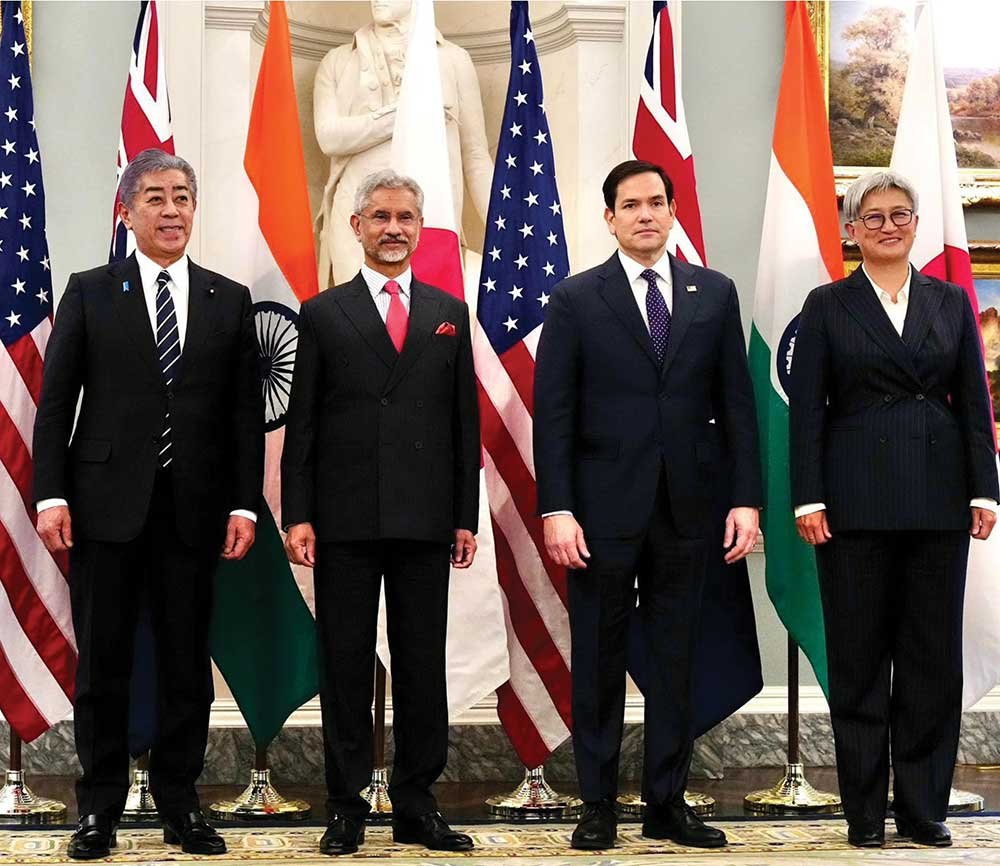
This sudden cartographic assertiveness was not accidental. It was a signal to both Pakistan and China that the United States is willing to visibly align with India’s sovereignty claims when it suits broader strategic objectives. The message was clear: economic partnership is now intertwined with geopolitical positioning. But this raises a second uncomfortable question: Is India being embraced as an equal strategic partner or as a piece in a larger containment strategy?”
Energy, Autonomy and the Russia Question
The same strain is visible in India’s energy diplomacy. Despite sustained Western pressure, India has reiterated that Russian oil will continue to flow as long as it serves national interests. This position is neither ideological nor defiant; it is pragmatic, as energy security is National Security. India’s stance underscores a consistent principle: diversification without submission. Yet this autonomy has come at a cost. Tariffs, moral pressure and not-so-subtle diplomatic signalling have all been deployed to push India towards alignment. It is to India’s credit that, while navigating a multipolar world, where loyalty is transactional, not permanent, India continues to resist.
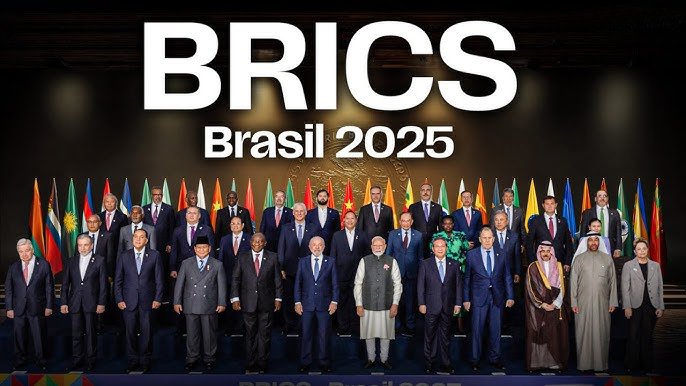
This leads to the third question: Can India sustain strategic autonomy while deepening economic integration with power blocs that demand alignment? Recent analysis notes that “India’s multi-alignment approach has helped it navigate geopolitical and geoeconomic challenges” and that “strategic autonomy is not about standing alone, but about standing tall”. As Arzan Tarapore wrote in International Affairs in his article titled ‘Zone balancing: India and the Quad’s new strategic logic’, ‘India strengthens ties with Indo-Pacific partners while participating in multilateral forums with China’ through BRICS and SCO, demonstrating zone balancing where India strengthens its position without directly confronting China’.
Normative Pressure and the Hypocrisy of Memory
There is a deeper contradiction at work beneath the present disruption, one that reveals how sovereignty is increasingly policed not through force, but through selective norms and convenient memory. As India’s strategic and economic weight grows, its internal debates, civil-military practices and political processes are subjected to an intensity of moral scrutiny rarely applied with equal consistency elsewhere. Actions that are accepted as sovereign discretion when exercised by other states are rapidly reframed as democratic backsliding or institutional failure when India asserts similar autonomy. This asymmetry is compounded by a striking historical irony.
The selective morality exposes the core weakness of the accountability argument. It suggests that the present paralysis is less about truth or oversight, and more about the instrumental use of norms and memory to generate pressure, narrow strategic choices, and delegitimise sovereign decision-making at a moment of geopolitical recalibration
The very political actors now invoking excerpts from an unpublished and unvetted military manuscript once defended the banning of Brigadier J.P. Dalvi’s Himalayan Blunder, suppressed Neville Maxwell’s India’s China War, and routinely deployed the Official Secrets Act to silence inconvenient scrutiny. Then, secrecy was justified as national interest; today, unverifiable disclosure is rebranded as transparency. This selective morality exposes the core weakness of the accountability argument. It suggests that the present paralysis is less about truth or oversight, and more about the instrumental use of norms and memory to generate pressure, narrow strategic choices, and delegitimise sovereign decision-making at a moment of geopolitical recalibration.
So, What Is the Big Picture?
When all these strands are read in sequence rather than isolation, a clear pattern takes shape:
- A manufactured parliamentary paralysis rooted in an unpublished and unverifiable manuscript, transforming institutional oversight into political theatre and diverting attention from substantive governance
- The deliberate revival of past conflict narratives at a moment of strategic sensitivity, coinciding with tentative India–China de-escalatory signals after years of heightened military tension
- Converging external signals from major power centres, where trade frameworks, diplomatic language and cartographic assertions reveal an effort to shape India’s strategic posture
- Mounting pressure on India’s core sovereign choices, energy security, foreign partnerships and defence autonomy, testing the durability of its multi-alignment strategy
- A tightening normative environment in which domestic political contestation and selective historical memory are leveraged to constrain India’s strategic space, narrowing the margin for independent decision-making under the guise of accountability
India’s response must involve three dimensions: First, insulating strategic decision-making from manufactured domestic crises built on unverified material. Second, maintaining consistent engagement across multiple power centres without permanent bloc commitments, and third, strengthening institutional safeguards against information operations that exploit democratic processes to constrain diplomatic flexibility
Is this a coincidence, or the turbulence of a world resisting multipolarity? India today stands at a rare historical juncture, too large to be coerced, too independent to be controlled, and too consequential to be ignored. That very position makes it a target, not of enemies alone, but of allies who prefer predictability over autonomy.
Which brings us to the only question that truly matters: Is this about accountability or about sabotaging India’s strategic choices by keeping it locked in permanent confrontation? If Parliament is to function meaningfully, and if national security is to be debated responsibly, India must confront this question honestly. Because what is at stake is not one book, one speech, or one session of Parliament. What is at stake is India’s right to choose its own place in a rapidly fragmenting world, without being destabilised from within.
India’s response must involve three dimensions: First, insulating strategic decision-making from manufactured domestic crises built on unverified material. Second, maintaining consistent engagement across multiple power centres without permanent bloc commitments, and third, strengthening institutional safeguards against information operations that exploit democratic processes to constrain diplomatic flexibility. The question is not whether India should engage China or align with the US; it is whether India can sustain making the choices based on national interest, rather than external pressure disguised as domestic accountability.
Parliament was disrupted over an unpublished, unauthenticated manuscript that has not undergone statutory vetting. An attempt has been made to portray the Prime Minister’s crisis-time delegation of operational discretion to the Army as an abdication of responsibility. This argument collapses under minimal scrutiny. In a democracy, political leadership provides strategic intent while operational decisions remain with military commanders.

The writer, Kirti Chakra, AVSM, VSM, is an Indian Army veteran. He has also served as the Indian Military Attaché in Moscow. He is the Founding Director and CEO of ThorSec Global. An accomplished scholar, he specialises in Geopolitics with a focus on Russian Studies and is currently pursuing his PhD in the field, further enriching his depth of knowledge and global perspective. He can be reached at deepakmehra67@yahoo.co.uk and deepak.mehra@thorsecglobal.com

The writer is a legal academic with a PhD in Law, working at the intersection of gender justice, public policy, and national security. She is presently serving as Assistant Professor (Gr II) of Law at Amity University, Noida. She can be contacted at sunandini.arun@gmail.com. The views expressed are personal and do not necessarily carry the views of Raksha Anirveda
