
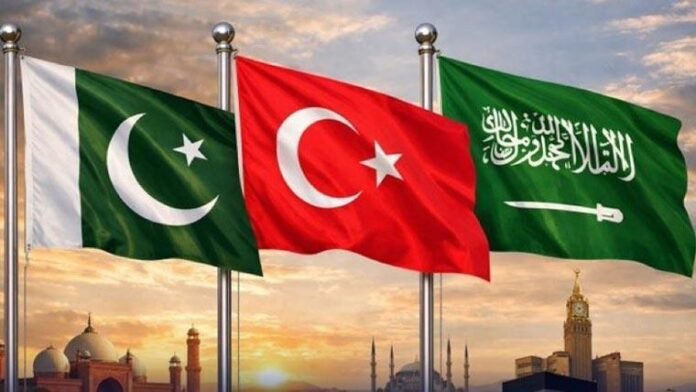
Defence pacts rarely emerge in a strategic vacuum. They are products of threat perception, alliance uncertainty, and evolving power hierarchies. The Pakistan-Saudi Strategic Mutual Defence Agreement (SMDA), signed in 2025, and subsequent reports of Turkey seeking to join this framework, must therefore be understood as part of a broader search for autonomous security arrangements among middle powers dissatisfied with over-dependence on traditional patrons.
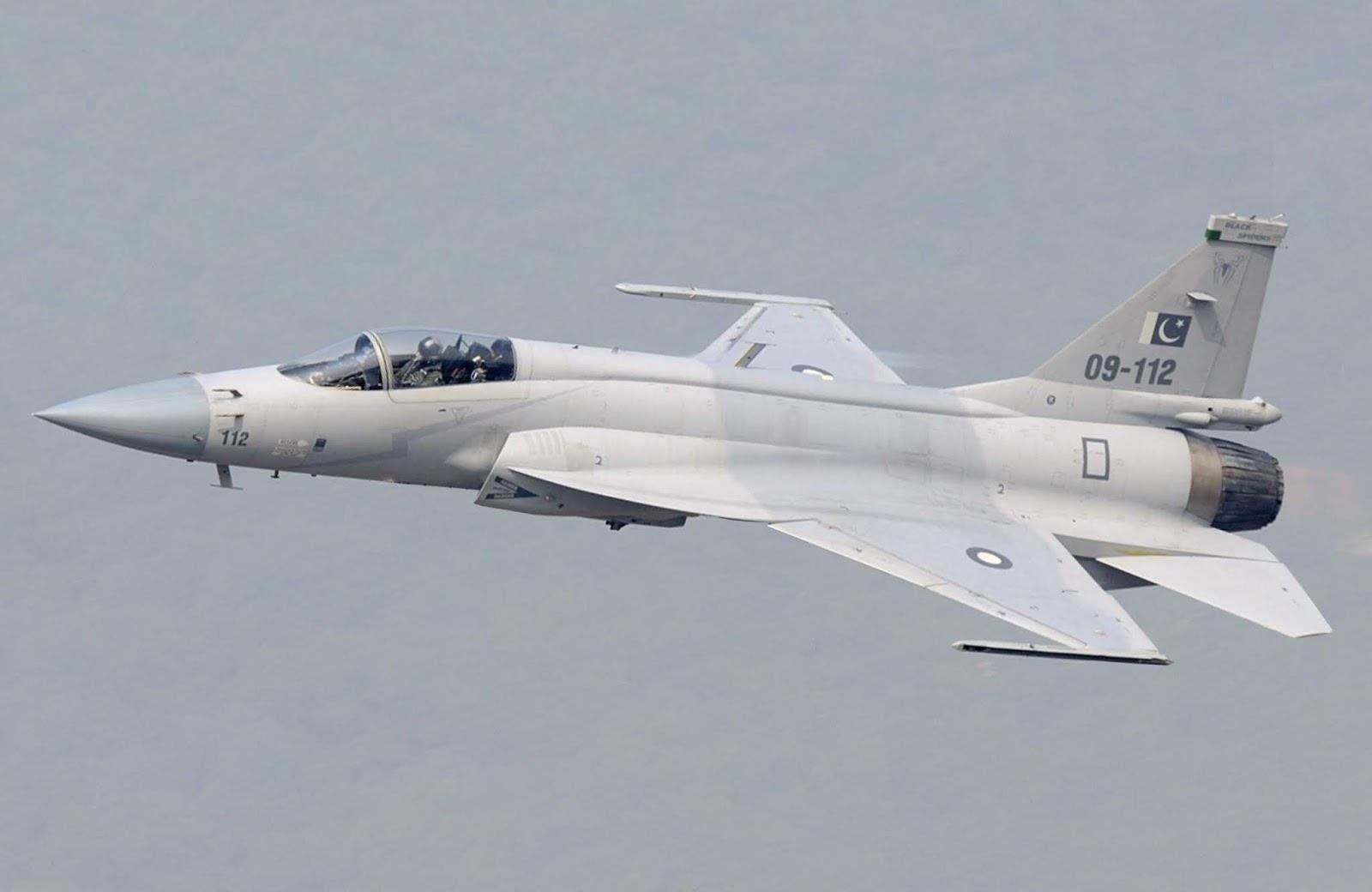
Parallel to this diplomatic evolution is Pakistan’s intensified efforts to market the JF-17 Thunder, a jointly developed Pakistan-China lightweight fighter, as a cost-effective, politically flexible alternative for air forces constrained by financial limitations, sanctions, or Western export controls. Together, the defence pact and arms exports form two sides of the same strategic coin: security alignment and defence diplomacy reinforcing each other.

Genesis of the Pakistan-Saudi Defence Pact
Pakistan and Saudi Arabia have enjoyed decades of close security cooperation encompassing troop deployments, training, intelligence sharing, and financial assistance. However, the 2025 SMDA represented a qualitative leap by formalising mutual defence obligations, including language suggesting a collective response to external aggression.
For Saudi Arabia, the pact reflects persistent concerns about Iranian regional influence, lessons drawn from perceived limits of Western security guarantees and a desire to diversify defence partnerships under Vision 2030.
For Pakistan, the agreement reinforces strategic relevance beyond South Asia, signals political backing from a major Gulf power and opens pathways for defence-industrial cooperation and arms sales.
Importantly, the pact institutionalises what had long existed informally, transforming transactional cooperation into a structured security commitment.

A trilateral alignment would bring together Saudi Arabia’s financial capital, energy leverage, and Gulf influence; Turkey’s defence manufacturing, UAV, and hybrid warfare experience; and Pakistan’s manpower and nuclear deterrence credibility with South Asian military expertise. It does not amount to a NATO-like alliance, but it would constitute a transregional security network with symbolic and practical implications
Turkey’s Prospective Entry: From Bilateral Pact to Trilateral Alignment
Reports in early 2026 indicated that Turkey was in advanced discussions to join the Pakistan-Saudi defence framework. While not yet formalised, Ankara’s interest is strategically coherent. Turkey’s motivations include reducing over-reliance on NATO amid strained relations with Western allies, expanding influence across the Islamic world and leveraging its growing defence-industrial base through cooperative security frameworks.
A trilateral alignment would bring together Saudi Arabia’s financial capital, energy leverage, and Gulf influence; Turkey’s defence manufacturing, UAV, and hybrid warfare experience; and Pakistan’s manpower and nuclear deterrence credibility with South Asian military expertise. Such convergence does not amount to a NATO-like alliance, but it would constitute a transregional security network with symbolic and practical implications.

Regional Security Implications: West Asia and the Gulf
In West Asia, a Pakistan-Saudi-Turkey alignment would be widely perceived as a counter-weight to Iran, even if officially framed as defensive. Enhanced intelligence sharing, joint exercises, and interoperability could improve deterrence but also intensify regional security dilemmas. The alignment underscores a broader trend: middle powers seeking strategic autonomy through mini-lateralism. Rather than rejecting existing alliances outright, states are hedging by building parallel frameworks that reduce vulnerability to external political pressure.
The JF-17 Thunder: From National Fighter to Diplomatic Instrument
Evolution of Pakistan’s Defence Export Strategy. The JF-17 was conceived as a pragmatic solution to Pakistan’s fighter shortfalls under sanctions and fiscal stress. Over time, it has evolved into the centrepiece of Pakistan’s defence export ambitions. Its key attributes underpin its export appeal with relatively low acquisition and operating costs, absence of stringent Western end-user restrictions, compatibility with Chinese, Western, and indigenous weapons, and Pakistan’s willingness to bundle sales with training, financing, and political support.
Pakistan conceived the JF-17 as a solution to fighter shortfalls under sanctions and fiscal stress. Over time, it has evolved into the centrepiece of Pakistan’s defence export ambitions. Its key attributes underpin its export appeal with relatively low acquisition and operating costs, absence of stringent Western end-user restrictions, compatibility with Chinese, Western, and indigenous weapons, and Pakistan’s willingness to bundle sales with training, financing, and political support
Target Markets and Strategic Logic. Pakistan’s JF-17 outreach has focused on: Africa (Sudan, Libya), states seeking affordable airpower amid limited access to Western platforms; South Asia (Bangladesh), reinforcing regional influence and defence ties; and the Middle East (Saudi Arabia), converting financial dependencies into defence-industrial cooperation. These sales are rarely commercial transactions alone; they are embedded in broader diplomatic and security relationships.
Defence Exports as Statecraft. Pakistan’s JF-17 strategy reflects a clear understanding that arms exports generate foreign exchange, long-term military-to-military dependencies, and diplomatic leverage in multilateral forums. This approach mirrors practices historically employed by major arms exporters, albeit on a smaller scale. The aircraft becomes not merely a weapon system, but a relationship-locking mechanism.
Integrated Implications for India
Pakistan’s Enhanced Strategic Depth: The most significant implication for India is not a sudden shift in military balance, but Pakistan’s expanded strategic depth beyond South Asia. Alignment with Saudi Arabia and potentially Turkey reduces Pakistan’s diplomatic isolation and provides a political cushion during crises. This could embolden Pakistani decision-makers below the nuclear threshold and complicate crisis management by introducing external stakeholders with vested interests.
India’s Gulf Calculus: India has invested heavily in deepening ties with Saudi Arabia, the UAE, and other Gulf states, transforming energy relationships into strategic partnerships. The Pakistan-Saudi defence pact introduces a dual-track Saudi approach, balancing India economically and Pakistan militarily. While Riyadh is unlikely to jeopardise its partnership with India, its neutrality in an Indo-Pak crisis can no longer be assumed automatic.
Turkey’s close defence ties with Pakistan, spanning UAV cooperation, naval projects, and diplomatic alignment on Kashmir, add a new dimension to geopolitics in South Asia. Turkish participation internationalises Pakistan’s security narrative and introduces an actor experienced in hybrid warfare and drone-centric operations
Psychological and Deterrence Effects: Symbolism matters in deterrence. The perception of Pakistan being backed, politically if not militarily, by influential Muslim-majority powers could strengthen Pakistan’s domestic and international narrative and increase risk-tolerance in grey-zone activities such as proxy warfare or information operations.
Defence Industrial Competition: Pakistan’s politically bundled JF-17 exports contrast with India’s more commercially oriented defence export model. In regions where geopolitics outweighs performance metrics, this places India at a disadvantage unless it adapts its approach. The implication is not that Indian platforms are inferior, but that defence diplomacy must complement defence manufacturing.
Turkey as a Complicating Factor: Turkey’s close defence ties with Pakistan — spanning UAV cooperation, naval projects, and diplomatic alignment on Kashmir — add a new dimension. Turkish participation internationalises Pakistan’s security narrative and introduces an actor experienced in hybrid warfare and drone-centric operations.
Military Balance: Continuity Amid Change. From a purely military standpoint, India retains decisive conventional and economic superiority. The pact does not imply Saudi or Turkish military involvement in an Indo-Pak conflict, and nuclear deterrence dynamics remain unchanged. However, strategic environments are shaped as much by context and confidence as by capabilities.
Strategic Opportunities for India: The emerging alignment also presents opportunities for India. Accelerating defence partnerships with the UAE, Oman, Greece, France, and Israel, reinforcing its role as a net security provider in the Indian Ocean and reforming defence production to prioritise scale, speed, and exportability. India’s advantages — market size, industrial depth, diplomatic reach — remain structural, provided they are leveraged coherently.
The emerging alignment presents opportunities for India as well. Accelerating defence partnerships with the UAE, Oman, Greece, France, and Israel, reinforcing its role as a net security provider in the Indian Ocean and reforming defence production to prioritise scale, speed, and exportability. India’s advantages — market size, industrial depth, diplomatic reach — remain structural, provided they are leveraged coherently
Conclusion
The prospective Pakistan-Saudi-Turkey defence alignment, combined with Pakistan’s JF-17 export strategy, does not herald a dramatic shift in the balance of power. It does, however, signal a reconfiguration of strategic relationships that enhances Pakistan’s diplomatic insulation and transregional relevance.
For India, this represents a manageable but non-trivial strategic development. The challenge lies not in countering a new military bloc, but in adapting to a more networked security environment where defence diplomacy, arms exports, and political signalling increasingly intersect.
Ultimately, the episode underscores a broader truth of contemporary geopolitics: middle powers are no longer content to be passive recipients of security — they are actively shaping their own strategic ecosystems.

-The author retired as Major General, Army Ordnance Corps, Central Command, after 37 years of service. A management doctorate and expert on defence modernisation, he is the author of four books, including the Amazon bestseller “Breaking the Chinese Myth,” and a frequent media commentator. He is affiliated with several leading defence and strategic studies institutions in New Delhi. The views expressed are of the writer and do not necessarily reflect the views of Raksha Anirveda
