

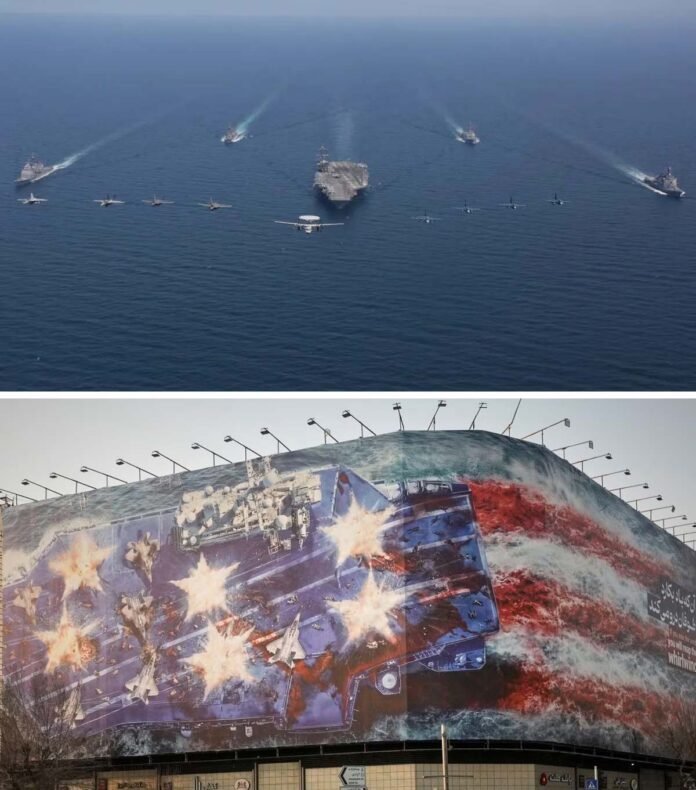
The international order that emerged in the aftermath of the Second World War was neither accidental nor idealistic. It was a conscious response to the catastrophic consequences of unrestrained power politics, designed to prevent repetition through institutions, norms, and legal frameworks that could impose restraint on sovereign behaviour. Multilateral organisations, collective security mechanisms, and codified international law were intended to act as buffers between ambition and aggression. While the system was imperfect and often skewed in favour of the victors, it nonetheless provided predictability, procedural legitimacy, and a shared vocabulary for managing conflict. The contemporary global environment, however, is witnessing a systematic retreat from this architecture, signalling a transformation in how power perceives obligation and accountability.
Recent decisions by major powers, most notably the United States’ withdrawal from several international organisations, conventions, and treaties, represent more than domestic political recalibration. The Trump administration’s 2026 withdrawal from the WHO, UNESCO, and Paris Agreement re-negotiation, following the 2017-2021 precedent of TPP abandonment and Iran nuclear deal termination, exemplifies this retreat. It signifies a deeper philosophical shift away from multilateralism as a governing principle of global affairs. Such withdrawals are emblematic of a broader trend in which international engagement is increasingly evaluated through a narrow lens of immediate national advantage rather than long-term systemic stability. The consequences of this shift extend far beyond the institutions being exited; they strike at the very foundations of the UN Charter framework or the ‘rules-based international order’ as propounded by many Western countries.

Multilateral institutions historically functioned as stabilising mechanisms that moderated state behaviour through norms, dialogue, and institutionalised cooperation. They created spaces where competition could be managed without escalation and where disputes could be addressed through process rather than force. Their erosion weakens the collective capacity to respond to transnational challenges such as climate change, pandemics, humanitarian crises, arms proliferation, and peacekeeping operations. In the absence of robust multilateral frameworks, global governance becomes fragmented, reactive, and increasingly transactional, with outcomes shaped more by power asymmetries than by negotiated consensus.
The erosion of multilateral frameworks weakens the collective capacity to respond to transnational challenges. Global governance becomes fragmented, reactive, and increasingly transactional, with outcomes shaped more by power asymmetries than by negotiated consensus
One of the most destabilising consequences of this retreat is the normalisation of selective adherence to international law. The January 2026 US operation in Venezuela exemplifies this selective legality. It was a violation of Article 2(4) of the United Nations Charter, justified through ‘law enforcement’ reframing, while simultaneously condemning Russia for equivalent actions in Ukraine. When powerful states choose selective compliance only when it aligns with their short-term interests, the universality of legal norms is fundamentally compromised. International law, which was designed to constrain power, risks being reduced to an optional instrument applied asymmetrically. This selective legality erodes predictability, undermines institutional credibility, and weakens the moral authority of global governance. For middle powers and developing nations, which rely on legal frameworks to mitigate coercion, this trend creates profound strategic vulnerability.
The weakening of institutional commitment also generates strategic vacuums that are quickly exploited. Enforcement mechanisms lose credibility, deterrence stability erodes, and the space for grey-zone activities expands. Cyber operations, information warfare, economic coercion, and proxy conflicts flourish in environments where institutional response is delayed, fragmented, or absent. These dynamics increase the risk of miscalculation and unintended escalation, particularly in regions characterised by unresolved disputes and power asymmetries. The global system thus moves closer to a state of managed disorder rather than cooperative stability.
India occupies a particularly sensitive position within this evolving landscape. Geographically, India confronts simultaneous pressures: a 3,488 km contested China border, Pakistan’s nuclear shadow, Malacca Strait chokepoint vulnerability (80 per cent energy imports), and Houthi disruptions to 30 per cent of global container shipping through Bab-el-Mandeb. Politically, it is a major democracy navigating a world increasingly indifferent to normative consistency. Strategically, it faces persistent border tensions, non-traditional security threats, and technological competition. For India, therefore, the consequences of a fracturing world order are not theoretical abstractions but lived realities that directly impact national security and development.

India’s response to this transformation cannot be reactive or alignment-driven. The era of predictable alliances and stable institutional guarantees is receding. In its place is an environment characterised by fluid partnerships, transactional diplomacy, and shifting power equations. Strategic autonomy, long a cornerstone of India’s foreign policy, must now evolve from principle into practice. It must encompass not only diplomatic flexibility but also defence capability, economic resilience, technological sovereignty, and institutional robustness. In a fragmented system, autonomy is not isolation; it is the capacity to engage without dependence and to cooperate without vulnerability.
The weakening of global norms also necessitates a reassessment of national preparedness. A rules-light international environment places greater emphasis on self-reliance, deterrence, and internal resilience. India must prepare for scenarios in which treaty obligations fail to restrain aggression and institutional mechanisms prove inadequate. This requires sustained investment in military modernisation, indigenous defence production, cyber and space capabilities, and intelligence integration. Credible deterrence, in this context, is not a tool of provocation but a stabilising instrument that reduces incentives for coercion and adventurism.

For India, the consequences of a fracturing world order are not theoretical abstractions but lived realities that directly impact national security and development. It confronts simultaneous geographic pressures, from a contested China border to vulnerable energy import chokepoints
At the same time, national security in the contemporary era extends far beyond conventional military preparedness. External instability increasingly manifests internally through cyber intrusions, supply chain disruptions, financial coercion, radicalisation networks, and information warfare. The distinction between external and internal security has blurred, demanding a holistic approach that integrates diplomacy, defence, economic policy, and internal governance. Border management, critical infrastructure protection, and technological sovereignty are now central components of strategic preparedness.
India’s expanding role in the international system, however, is not limited to defensive consolidation. India occupies a unique strategic and moral position as a civilisational state that has neither sought to dominate the global order nor withdraw from it. It has consistently advocated sovereignty, non-intervention, and peaceful resolution of disputes while engaging constructively with international institutions. This positioning enables India to act as a stabilising force in an increasingly polarised world, offering principled leadership without ideological rigidity.
India’s potential contribution lies in advocating reform rather than rupture. The current crisis of multilateralism does not render institutions obsolete; it exposes the need for adaptation and inclusivity. India’s long-standing calls for reform of global governance structures, including the United Nations, gain renewed relevance in a context where legitimacy and representation are increasingly contested. By championing balanced reform, India can help preserve the normative foundations of the international system while acknowledging shifts in power realities.
The erosion of multilateralism also places greater responsibility on capable states to act as anchors of stability. In a world where institutional authority is contested, the conduct of states becomes paramount. India’s credibility stems from its consistent support for international law, its restraint in the use of force, and its commitment to dialogue even in adversarial contexts. Such conduct reinforces norms at a time when they are under strain and demonstrates that power need not be exercised irresponsibly.
The domestic implications of global fragmentation further underscore the need for comprehensive preparedness. Economic globalisation without institutional safeguards exposes states to supply chain shocks, technology denial regimes, and financial volatility. India’s pursuit of self-reliance in critical sectors must therefore be viewed not as protectionism but as strategic insulation. Economic resilience, technological capacity, and industrial security are integral to national sovereignty in an interconnected yet unstable world.
The international system is entering an era where power increasingly precedes process and interest often overrides institution. This does not imply the end of rules, but their uneven application and contested legitimacy. In such a landscape, stability will depend less on formal architectures and more on the behaviour of states capable of exercising power responsibly. India’s expanding role is that of a system stabiliser rather than a disruptor, a nation that anticipates disorder and prepares comprehensively to protect its strategic space while contributing to broader equilibrium.
In a fragmented system, autonomy is not isolation; it is the capacity to engage without dependence and to cooperate without vulnerability. Strategic autonomy must evolve from principle into practice, encompassing defence capability, economic resilience, and technological sovereignty
India’s strategic imperative, therefore, is twofold. Internally, it must strengthen resilience across military, economic, technological, and institutional domains. Externally, it must articulate and uphold principles that preserve balance without entanglement. This dual approach allows India to navigate uncertainty without succumbing to isolation or dependency. It positions India not as a passive recipient of global shifts but as an active shaper of outcomes within its strategic capacity.
The choices India makes in this transitional moment will shape not only its own security trajectory but also the contours of the emerging global order. Strategic foresight, self-reliance, institutional adaptability, and principled leadership will determine whether India merely adapts to fragmentation or helps mitigate its excesses. In an era where uncertainty is structural rather than episodic, preparedness becomes the ultimate expression of power. India must be prepared not only to defend its interests but also to exercise restraint, responsibility, and vision in an increasingly fractured world.

The writer is a legal academic with a PhD in Law, working at the intersection of gender justice, public policy, and national security. She is presently serving as Assistant Professor (Gr II) of Law at Amity University, Noida. She can be contacted at sunandini.arun@gmail.com. The views expressed are personal and do not necessarily carry the views of Raksha Anirveda
