
At the age of 18, I came to this side of the erstwhile ‘Iron Curtain’ at the height of the Cold War and since then, I have been witness to the developments in the divided continent and analysing their impact on my motherland India.
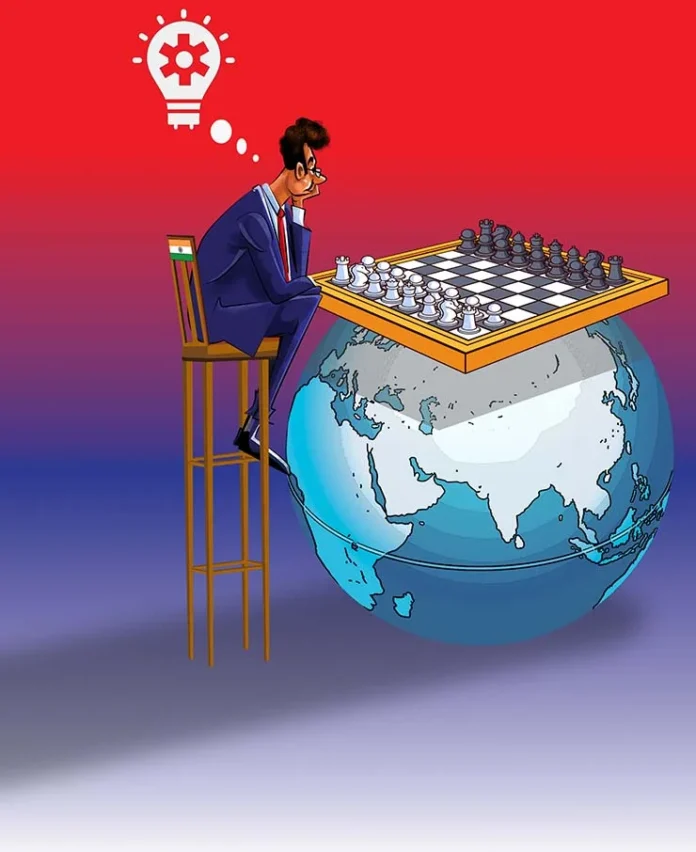
By going through two bloody World Wars and the Cold War, the European civilisation has developed strategic thinking as an indispensable tool for survival and progress. To be a great power, India would have to cultivate strategic thinking at a mass scale.

Exactly thirty years from now, the bi-polar global order was crumbling as the result of the former USSR’s internal political, economic and social crisis taking the form of a ‘perfect storm’ leading to the collapse of the world’s second nuclear superpower and fragmentation of the giant Soviet Union that was spread over a huge Eurasian landmass into 15 independent states.
In the absence of truly independent think-tanks capable of forward-looking strategic thinking, India was a hapless onlooker of the events that posed serious challenges as well as presenting opportunities in the uncharted road.
Diplomats posted in Moscow and their bosses in South Block were at a loss in reading the power struggle between Soviet President Mikhail Gorbachev and his rival Boris Yeltsin—Russian Federation’s first elected president by a direct popular vote.
Stories filed by Moscow-based Indian correspondents were not in unison with the diplomatic dispatches. It is natural that it was a huge unpleasant surprise for the top political leadership when the Communist Party hardliners staged an abortive coup in August 1991 against Gorbachev and eventually the power landed in Yeltsin’s camp.

Even then, the official view was that Gorbachev as the Soviet president continued to control the reins of power from the Kremlin although his hands were already tied in taking crucial decisions and making key appointments without the consent of Boris Yeltsin.
Finally, when the disbandment of the Union of Soviet Socialist Republics in December 1991 by three founding members—Russian Federation, Ukraine and Belarus—came as a bolt out of blue, the Indian polity remained petrified at a time when active diplomacy was required.

The new dispensation in the Kremlin, heading westwards with the swelling sails of liberal values and free market economy, was deemed as a comfortable partner to deal with. But the foreign policy logic of new foreign minister Andrei Kozyrev raised quite a few challenges as he refused to look at Pakistan through Indian goggles.
Unfortunately, that was the time when India did not have any influential, independent think-tanks which could have spearheaded the national debate and this task left to the government in seat and bureaucracy.
Post-Soviet Russia, under the influence of Western mainstream media, was seen as a lost case and at least two decades were lost along with the new opportunities, which were opening for India’s engagement in the burgeoning market economy.
However, there were some exceptions too that were related to long-term defence and scientific cooperation. The BrahMos cruise missile JV and development of multirole Sukhoi Su30MKI and launching production of polio vaccine at BIBCOL in Bulandshahr, Uttar Pradesh are due to personal involvement of Dr APJ Abdul Kalam and some other senior officials of the S&T ministry.
Restricted list of items allowed for export to Russia against rupee debt payment and requirement of opening Letters of Credit by importers became stumbling blocks in sustaining and developing trade with Moscow, where the government had withdrawn from trading, which had been given to private companies.
As a result, China and Turkey with streamlined logistics filled the void left by India. There never was any serious and open debate in the country except suggestions to refuse to repay Soviet debt to Russia. Thanks to the wisdom of Prime Ministers PV Narasimha Rao and Atal Bihari Vajpyee that no such steps were taken by the government.
After Chanakya, India gradually lost the strategic culture due to various reasons including foreign invasions and colonisation, which were the result of betrayals and treacheries. The task of strategic thinking was left to outside rulers.
It is noteworthy that the various think-tanks have emerged of late. But most of them are following the school of thought inherited from the British rulers or their Transatlantic American allies. Probably, because grants and funds do come from the Western partners while there is absolutely no debate on how to chalk India’s long-term strategy beyond current rivalries between the USA, China, and Russia.
Even the so-called privately founded think-tanks are deprived of independent discussions due to hefty government grants and funding. There is nothing odd in it if they promote the government’s line in academic discourse. Today’s agenda is for seeking closest partnership with the US to counter China.
But nowhere in public domain do you see the discussions on the obvious decline of the world’s about-250-year-old superpower due to the inherent contradictions. Nobody is asking what will we do if the US based on lofty liberal ideology fails like the USSR that was based on Communist ideology. A similar challenge could be in store for China.
Russia staged a comeback thirty years after Soviet Empires collapsed thanks to its conservative, traditional values enshrined in its over 1,000-year-long history of statehood. China made a meteoritic rise on the basis of values enshrined in its over 5,000 year old civilisation. India currently is looking towards its past civilizational heritage to regain a global power status. These are some of the issues which should be the focus of Indian strategic thinking.
A wise man learns from other’s mistakes. We need to grow beyond the ‘mohalla’ mentality and our think-tanks should be guiding force like the ‘ashrams’ of ‘Rishi-munis’ in the ancient times.
– The writer is a Moscow-based independent analyst. The views expressed are personal and do not necessarily reflect the views of Raksha Anirveda

–The writer is a Moscow-based independent defence analyst. The views expressed are personal and do not necessarily reflect the
views of Raksha Anirveda
