
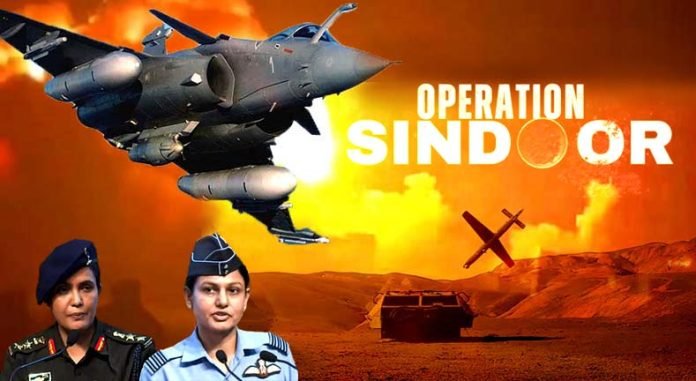
Sindoor as Precedent, Not Episode: Operation Sindoor was not a momentary spike in the India-Pakistan conflict. It altered the grammar of force in the region. For the first time, India demonstrated the political resolve and operational depth to strike across Pakistan on a wide front, absorb escalation risk, and retain control of the ladder. Targets previously declared untouchable were hit. Air defence myths were punctured. Platforms marketed as strategic deterrents underperformed when exposed to real pressure. Nuclear signalling failed to freeze Indian decision-making. What followed was not an impulsive escalation, but a recalibration shaped by precedent. Sindoor did not close a chapter. It reset the baseline.
Crisis as Currency in Rawalpindi
For Pakistan’s power structure, crisis is no longer an aberration. It is the business model. External fund-raising tours, emergency defence deals, and diplomatic theatrics have become routine instruments for liquidity extraction. Troops are offered for distant theatres. Minerals are displayed as collateral. Strategic access is leased in exchange for short-term relief. As 2026 begins, Pakistan resembles less a state correcting course and more a rented entity, held together by external cheques and borrowed narratives. The question is no longer whether Pakistan has learned from Sindoor, but whether it has learned to survive by monetising its aftermath.

The Military State Consolidates
Pakistan’s civil-military imbalance predates Sindoor, but the operation accelerated an ongoing decay. Civilian governments continue to perform administrative rituals while authority, revenue, and strategic choice remain concentrated within the military’s commercial and coercive apparatus. Constitutional amendments and the elevation of the army chief to Field Marshal status were not symbolic gestures. They formalised a reality where political power is no longer contested. The army’s property empires, overseas deployments, and defence ventures operate with insulation from scrutiny. Governance persists. Sovereignty does not.
For Pakistan, the crisis is no longer an aberration; it is the business model. External fund-raising tours and emergency defence deals have become routine instruments for liquidity extraction. As 2026 begins, Pakistan resembles less a state correcting course and more a rented entity, held together by external cheques and borrowed narratives
Sovereignty as Collateral
Foreign partners understand this structure well. Engagement increasingly bypasses Islamabad and runs directly through Rawalpindi. Compliance is secured through liquidity. Accountability thins. National interest becomes negotiable. Sovereignty is not defended as a principle. It is leveraged as an asset. The state survives, but only by shrinking its own decision space. This is not resilience. It is managed erosion.
IMF Discipline and the Return of Coercion
The IMF sits at the centre of Pakistan’s dependency web. The December 2025 tranche under the Extended Fund Facility was sold domestically as stabilisation. In practice, it tightened external supervision while leaving the military’s economic interests untouched. Fiscal compression and political paralysis created permissive conditions for dormant jihadist networks to be repurposed. Pressure tools resurfaced alongside austerity. Economic fragility and securitisation now move in parallel, reinforcing a cycle where brinkmanship remains rewarded. External actors sustain Pakistan differently, but none alter the incentives that prize escalation without consequence.

Washington’s Habit of Arming Instability
Layered onto this is Washington’s enduring belief that military assistance still buys leverage in Rawalpindi. In late 2025, the United States cleared a $686 million upgrade package for Pakistan’s F-16 fleet, extending service life and networked strike capability, despite these platforms having featured during Operation Sindoor. Officially framed as sustainment, the decision reflected habit more than strategy. The Gaza debate revived familiar scripts of multinational stabilisation forces, again placing Pakistani troops in the service of Western priorities. Pakistan gains reassurance. India absorbs friction. China benefits from American reluctance to abandon legacy assumptions. The result is not balance, but managed instability.
In late 2025, the United States cleared a $686 million upgrade package for Pakistan’s F-16 fleet, extending service life and networked strike capability, despite these platforms having featured during Operation Sindoor. Officially framed as sustainment, the decision reflected habit more than strategy
China’s Contractual Grip
China’s role is more structural and more binding. Post Sindoor, Beijing deepened intelligence sharing, accelerated weapons transfers, and reinforced its footprint across Pakistan’s western and maritime corridors. Pakistan’s defence inventory is now overwhelmingly Chinese, locking it into supply chains, doctrines, and upgrade cycles it does not control. Economic corridors have translated into long-term liabilities. Security obligations tied to Chinese assets have reshaped internal deployments. Sindoor exposed vulnerabilities in this ecosystem, but it also reinforced dependence. What is described as a partnership increasingly resembles a contract where exit costs outweigh operational flexibility. Stability, for Beijing, means control without responsibility.

Pakistan Army: A Force to Service Provider
The mercenary turn compounds this erosion. Arms sales, training contracts, and deployments in foreign theatres have transformed the Pakistan Army into a service provider. Gulf arrangements, energy concessions, and deferred payments flow directly into military-controlled channels. Civilian oversight erodes further. Strategic choices reflect financiers’ preferences rather than national calculus. The reuse of jihadist assets is not doctrinal renewal. It is an institutional habit persisting after policy failure.
Bangladesh and the Opening of a New Seam
Bangladesh’s recent defence overtures add a regional dimension. Intelligence cooperation, exercises, and defence engagement introduce variables into India’s eastern theatre. For Pakistan, the appeal lies in symbolic rehabilitation and strategic distraction. For Dhaka, the calculus is internal stability and external balancing. The convergence is transactional, but the implications are not trivial. This is less about scale than intent, probing seams rather than frontlines.
China’s role is more structural and binding. Post Sindoor, China deepened intelligence sharing, accelerated weapons transfers, and reinforced its footprint across Pakistan’s western and maritime corridors. Pakistan’s defence inventory is now overwhelmingly Chinese. Economic corridors have translated into long-term liabilities
India Under Strategic Compression
India confronts this environment without illusion. A Pakistan underwritten by patrons is not a restrained Pakistan. Insulation from consequences can breed adventurism. Reconstituted terror infrastructure, enhanced by drones and digital cover, remains a live threat. Maritime friction in the Arabian Sea is rising. The eastern theatre is more crowded. Pressure along the northern frontier persists. The cumulative effect is compression across time, space, and decision bandwidth.
The Misreading of Restraint
As mid-2026 approaches, the risk calculus is unstable. A calibrated provocation, plausibly deniable and theatrically amplified, would be designed to test whether Sindoor was an anomaly or baseline. Pakistan’s leadership risks mistaking restraint for exhaustion, particularly if external sponsors signal tolerance rather than caution. In such a scenario, India’s response is unlikely to replicate Sindoor. It would be broader, deeper, and integrated across domains. Escalation management would be harder. Red lines would blur faster.
Denial Through Dominance: Rewriting the Rules of India’s Proxy War
India cannot prevail in a long war with Pakistan’s proxy apparatus through episodic retaliation or symbolic strikes. Victory lies in denial backed by sustained dominance. Denial ensures that proxy actions fail before they gather momentum. Dominance keeps the adversary permanently reactive. This demands a security architecture where infiltration routes collapse early, radical narratives fail to root, digital mobilisation is intercepted at inception, and subversion networks are dismantled before they mature.

The objective is not containment at the border but displacement of pressure inward, forcing Rawalpindi to defend its own ecosystem rather than manage escalation abroad. Such an approach rests on integrated intelligence that treats internal and external threats as one continuum, layered LoC systems that terminate infiltration cycles rather than individuals, aggressive counter-radicalisation that suffocates recruitment pipelines, and a covert doctrine that degrades Pakistan’s deep state so persistently that regeneration becomes expensive and uncertain.
India cannot prevail in a long war with Pakistan’s proxy apparatus through episodic retaliation or symbolic strikes. Victory lies in denial backed by sustained dominance. This demands a security architecture where infiltration routes collapse early, radical narratives fail to root, digital mobilisation is intercepted at inception, and subversion networks are dismantled before they mature
Military posture must reinforce this logic by keeping Pakistan unsettled, stretched, and compelled to respond. Denial in this context is not defensive restraint. It is a quiet, systematic offence executed below the threshold of spectacle. The key to capability lies in defence modernisation, transformation, and technology induction, which must cut through bureaucratic lag and be at par with the technology cycle.
Sindoor as Baseline, Not an Extension
History does not announce its inflexion points. It reveals them after choices harden into outcomes. As 2026 approaches, the trajectory suggests that Operation Sindoor was not closed. It was calibration. Sindoor exposed the cost of misreading India. It was not the warning. It was the baseline. Preparation for Sindoor 2.0 must be at a different level than a continuum of Sindoor 1.0. India doesn’t need another operation. It needs a permanent posture, one that denies Pakistan the terrain, the networks, the narratives, and the opportunity to wage proxy war at all. It must put Pakistan on the back foot today and every day.

The author, a PVSM, AVSM, VSM has had an illustrious career spanning nearly four decades. A distinguished Armoured Corps officer, he has served in various prestigious staff and command appointments including Commander Independent Armoured Brigade, ADG PP, GOC Armoured Division and GOC Strike 1. The officer retired as DG Mechanised Forces in December 2017 during which he was the architect to initiate process for reintroduction of Light Tank and Chairman on the study on C5ISR for Indian Army. Subsequently he was Consultant MoD/OFB from 2018 to 2020. He is also a reputed defence analyst, a motivational speaker and prolific writer on matters of military, defence technology and national security. The views expressed are personal and do not necessarily carry the views of Raksha Anirveda
