

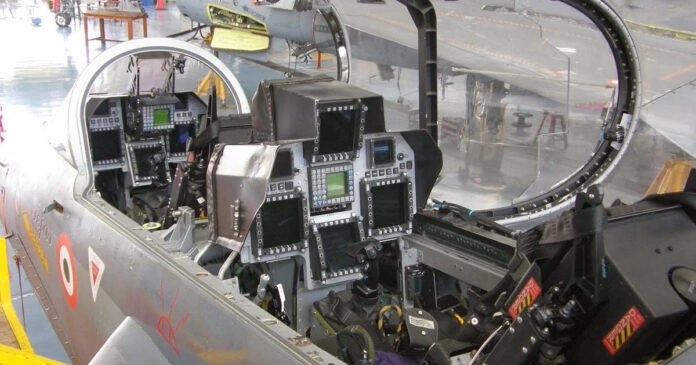
India’s effort to market the LCA Tejas Mk1/Mk1A to Argentina revealed the extent to which British technology — particularly Martin-Baker ejection seats — limits New Delhi’s fighter export ambitions under London’s post-Falklands embargo on Buenos Aires. The recent DRDO high-speed rocket-sledge test of an indigenous escape system, along with concurrent efforts to replace British components on Tejas, demonstrates India’s initiative to transform this vulnerability into an opportunity for enhanced strategic autonomy.
How British Tech Blocked a Tejas Breakthrough
When Argentina expressed interest in approximately a dozen Tejas fighters, Indian officials swiftly realised that ‘Made in India’ did not necessarily imply that they could be exported solely by India. Although Tejas is promoted as an indigenous light combat aircraft, approximately one-third to one-half of its systems are sourced from foreign suppliers, and several of the most sensitive components — including the Cobham refuelling probe, radome of British origin, and Martin-Baker Mk16 IN16G ejection seat — are subject to export controls by a third country.

For London, Argentina represents a unique case: in the aftermath of the 1982 Falklands War, the United Kingdom enforced a comprehensive embargo on the provision of lethal defence equipment and critical subsystems that could augment Buenos Aires’ military aviation capabilities. Martin-Baker equipment has already led to the termination of several Argentine fighter aircraft negotiations; most notably, the proposed acquisition of former French Super Étendards disintegrated when the United Kingdom declined to release the essential ejection seats, rendering the aircraft effectively obsolete before they could undergo operational deployment.
When Argentina expressed interest in Tejas fighters, Indian officials realised that ‘Made in India’ did not imply that they could be exported solely by India. Although Tejas is promoted as an indigenous light combat aircraft, one-third to one-half of its systems are sourced from foreign suppliers
The Tejas–Argentina Proposal and its Political Challenges
For India, the sale of Tejas to Argentina represented more than a modest export agreement; it would have demonstrated a flagship ‘Make in India’ product within a Western Hemisphere air force, emphasising New Delhi’s transition from a purchaser to a competitive supplier. Argentine interest emerged at a time when Buenos Aires was considering alternatives beyond the conventional Western suppliers, having previously assessed JF-17s from Pakistan and China, as well as the Swedish-British Gripen, but encountered persistent issues related to British-origin subsystems and financing.
Nevertheless, the same pattern reemerged. Argentine authorities emphasised that any fighter aircraft procurement must be entirely free of British components, as the United Kingdom retains the unilateral authority to veto or delay spare parts and upgrades — an intolerable vulnerability for a nation seeking to restore its fighter fleet amid fiscal and political limitations. For New Delhi, this posed a dilemma: either withdraw from a promising customer or undertake a comprehensive re-engineering of Tejas to meticulously remove all UK-controlled hardware, along with the associated costs, delays, and certification risks such a process involves.
For India, the sale of Tejas fighter aircraft to Argentina represented more than a modest export agreement; it would have demonstrated a flagship ‘Make in India’ product within a Western Hemisphere air force, emphasising New Delhi’s transition from a purchaser to a competitive supplier
Re-Engineering Tejas: From Martin-Baker to K-136
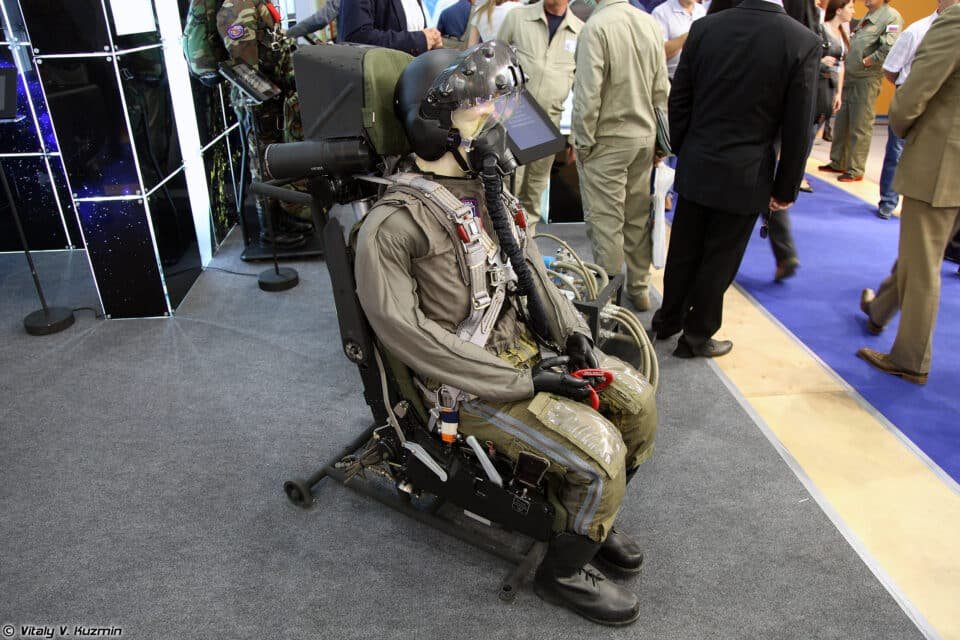
Hindustan Aeronautics Limited (HAL) and the Indian defence establishment opted for the more challenging approach: proposing modifications to the Tejas aircraft specifically tailored for Argentina. Officials have publicly and privately affirmed that efforts have commenced to replace British components, beginning with the most politically sensitive emblem of the embargo — the Martin-Baker ejection seat. HAL engaged in negotiations with Russia’s NPP Zvezda to incorporate the K-136 family of zero-zero ejection seats, which are currently fitted on Indian-built Su-30MKI fighters and are renowned for their outstanding global safety record.

Technically, exchanging seating is a task that is far from straightforward. The K136 differs from the Martin-Baker unit in terms of mass, centre of gravity, structural interface, and firing envelope; therefore, integrating it into Tejas necessitates modifications to the cockpit structure, canopy design, avionics cabling, and safety logic. Each modification subsequently requires new structural and aerodynamic analysis, ground qualification, and in-flight ejection testing before getting certification for operational deployment by any export customer or India’s regulatory authority.
At the same time, HAL has been actively engaged in indigenising or replacing other British components: the Cobham quartz radome is being phased out in favour of Indian-developed units, air-to-air refuelling probes can be omitted for customers without such requirements, and even Dunlop tyres are being replaced with domestic alternatives. Over fifteen line-replaceable units of UK origin are now designated as targets for Indian industry, with public sector titans such as BEL and BHEL being engaged to develop alternatives that will be unaffected by British end-use vetoes in future export initiatives.

DRDO has initiated the development of the technological foundation for a completely indigenous ejection and escape system infrastructure. A recent high-speed rocket sledge test showcased a domestically developed fighter escape system operating at controlled speeds
DRDO’s Indigenous Ejection Seat Initiative
Simultaneously, the Defence Research and Development Organisation has initiated the development of the technological foundation for a completely indigenous ejection and escape system infrastructure. A recent high-speed rocket sledge test showcased a domestically developed fighter escape system operating at controlled speeds, confirming essential safety criteria such as structural integrity and complete aircrew recovery under ground-simulated high-G conditions. Indian officials and analysts regard this achievement as more than simply a laboratory milestone; it represents a vital step towards the certification of an Indian-designed ejection seat for future aircraft such as the Tejas Mk2 and the Advanced Medium Combat Aircraft (AMCA).
Senior officers of the Indian Air Force have expressed their approval of this development, while emphasising that transitioning from a successful rocket-sledge test to a completely certified, combat-proven seat will necessitate several years of biomechanical modelling, iterative human-in-the-loop trials, qualification testing, and international certification. For the foreseeable future, the Indian Air Force is likely to keep using Martin-Baker or equivalent foreign seats on frontline platforms such as Tejas Mk1 and Rafale, based on the principle that there is no incentive to “repair what isn’t broken” when pilot safety is at risk, even as domestic programmes advance in the background.
Strategic Insights: Autonomy, Export Strategies, and the Path Forward
The Tejas–Argentina affair highlights several fundamental aspects of India’s defence industrial development. First, true export autonomy necessitates not just building an ‘indigenous’ aircraft but also maintaining control over the intellectual property and export rights of all essential subsystems, ranging from engines and radars to tyres and ejection seats. Tejas currently depends on an American GE-404 engine, Israeli AESA radar and EW systems, and a diverse array of European components; each supplier introduces its own political considerations, licensing conditions, and veto rights into any export negotiation.
Secondly, even a comparatively small armament transfer can become subject to great-power politics when a third nation, such as the United Kingdom, uses export approvals as leverage in longstanding disputes — specifically, over sovereignty concerning the Falklands/Malvinas. For Argentina, the episode underscores an important point learned from the unsuccessful Super Étendard and other acquisitions: any fighter incorporating British components risks being grounded not due to combat issues but due to bureaucratic obstacles in Whitehall.
India’s need to indigenise defence equipment extends beyond import substitution or achieving self-reliance in warfare; it encompasses harnessing the complete commercial and diplomatic potential of defence exports without the risk of scrutiny or doubt from foreign governments
Third, for India, its need to indigenise extends beyond import substitution or achieving self-reliance in warfare; it encompasses harnessing the complete commercial and diplomatic potential of defence exports without the risk of scrutiny or doubt from foreign governments. By systematically replacing British components, testing Russian K-136 seats on Tejas aircraft, and advancing DRDO’s own escape systems, New Delhi is gradually developing options that will enable future fighters to be tailored to the political sensitivities of each client — whether that involves reducing Western content for clients concerned about sanctions or providing mixed configurations when suitable.
In this context, the Martin–Baker controversy concerning Tejas and Argentina may serve as a pivotal moment. What initially started as an obstacle caused by a British embargo has now compelled India to enhance its aerospace design capabilities, diminish essential dependencies, and adopt a more strategic approach to export initiatives concerning component sourcing and end-user politics. If these lessons are thoroughly internalised, subsequent Tejas variants — and the subsequent AMCA — could be positioned not as dependent on another nation’s export restrictions, but as genuinely sovereign combat aircraft customised to the geopolitical circumstances of each purchaser.

The writer is the Publisher of Frontier India and the author of the book Foxtrot to Arihant: The Story of Indian Navy’s Submarine Arm.
