


India’s emergence as a consequential maritime power in the Indo-Pacific region is underpinned by its vast coastline, strategic geographic location, and growing geopolitical influence. As global attention pivots to the Indo-Pacific theatre, the Indian Navy (IN) stands at the forefront of the nation’s strategic vision, projecting power, securing trade routes, and safeguarding the country’s maritime sovereignty.
Over the past decade, the Indian Navy has undergone transformative modernisation, encompassing technological upgrades, doctrinal shifts, and a renewed emphasis on indigenisation. The convergence of strategic imperatives and industrial collaboration has culminated in the development of a powerful, networked, and self-reliant naval force.

India’s Strategic Naval Expansion
India’s maritime doctrine has evolved from being a defensive coastal force to a proactive blue-water navy. The Indian Ocean Region (IOR), which accommodates nearly 90% of the global trade and over 70% of the world’s oil shipments, is increasingly seen as a theatre of strategic competition. China’s naval assertiveness, expanding PLA Navy’s presence, and its Belt and Road Initiative have galvanised India’s maritime calculus.
The Indian Navy has adopted a dual-pronged strategy: first, to secure its immediate maritime interests in the Arabian Sea, Bay of Bengal, and the Indian Ocean; and second, to expand presence and influence from the Strait of Hormuz to the Strait of Malacca and beyond. This expansion is manifest in the Navy’s increasing patrols, bilateral and multilateral exercises (like MALABAR, MILAN, VARUNA), forward base agreements, and the commissioning of high-endurance platforms.
Builders’ Navy: Industrial Partnerships and Self-Reliance
India’s naval modernisation journey is closely intertwined with its push for Aatmanirbhar Bharat. The Indian Navy is the most indigenised of the three services, with over 60 of the 67 ships and submarines currently under construction being built in the Indian shipyards. The Indian Navy is often referred to as a “Builder’s Navy” because of its proactive role in conceptualising, designing, and overseeing the construction of indigenous warships.
Through partnerships with defence public sector undertakings (DPSUs), private shipyards, and DRDO laboratories, India has developed a formidable warship building ecosystem. This has made the Navy a central driver of India’s defence manufacturing ambitions. This ecosystem has led to the emergence of a “Builders’ Navy”—one that is designed, built, and maintained indigenously, in partnership with Indian technology firms and MSMEs.

Advances in Modular Construction
Modular construction has revolutionised Indian naval shipbuilding by significantly reducing build times and enhancing quality control. Instead of constructing warships in a linear sequence, modules or blocks are fabricated simultaneously and integrated later. Modular construction’s benefits include:
Faster timelines: Modules can be built in parallel; Quality and safety: Construction in covered facilities ensures better precision; Upgrade flexibility: Easier retrofits of systems in discrete modules, and Scalability: Modular architecture supports future UAV, UUV, and AI upgrades.

Warship Design Bureau (WDB)
The transformation of the Directorate of Naval Design into the Warship Design Bureau (WDB) marks a key milestone in indigenisation. The WDB leads all future warship projects, coordinates with shipyards, DRDO, BEL, and foreign tech partners. The Bureau also integrates user-driven design, simulation modelling, and virtual prototyping. WDB is currently steering design for Project 18, next-gen OPVs, and unmanned surface vessels.
Projects 18 and 17B
Project 18 is the Indian Navy’s most ambitious surface combatant program to date, envisioned as a class of Next Generation Stealth Guided Missile Destroyers (NGD). Designed by the Warship Design Bureau, these vessels will displace 13,000 tonnes, potentially qualifying as cruisers. It will be approximately 180 meters in length, propelled by an Integrated Electric Propulsion (IEP) system for silent operations and energy efficiency, along with advanced shaping and radar-absorbent materials to reduce RCS.
The cruiser will be armed with 144 Vertical Launch System (VLS) cells, with 32 cells of PGLRSAM (250 km range) for long-range air and ballistic missile defence, 48 cells: consisting of BRAHMOS-ER and Indigenous Cruise Missiles for land-attack and anti-ship roles and 64 cells of VL-SRSAM for close-in air defence, in addition to 8 Slant Launchers armed with BRAHMOS-II hypersonic missiles, possible SMART Missiles for anti-submarine warfare and Project Kusha integrating all anti-ballistic missile systems.
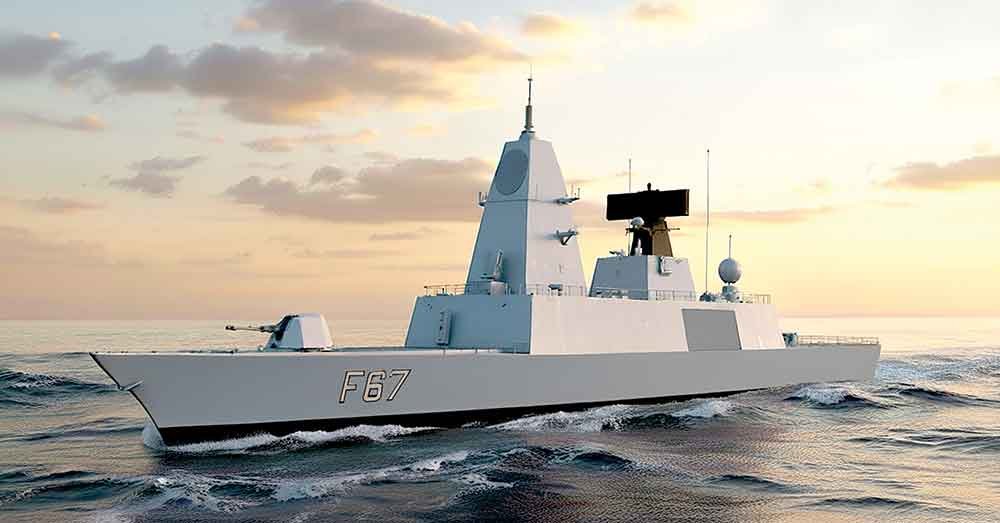
The Sensor Suite of the cruiser will be equipped with four AESA Radars, consisting of S-band primary radar, Volume search radar, and a Multi-sensor Stealth mast, with a surveillance range exceeding 500 km, enabling multi-domain tracking.
The cruiser will also be equipped with a dual helicopter capability with enclosed hangar and rail-less traversing system, along with autonomous underwater drones for mine detection and anti-submarine warfare.
Aligned with the Aatmanirbhar Bharat initiative, 75% content of the cruiser will be indigenous and will supports the Navy’s target of 175 warships by 2035. MDL and GRSE are leading contenders for construction of this cruiser.
Project 17B, also known as the Next Generation Frigates (NGF), marks a bold evolution from the Nilgiri-class (Project 17A) frigates, promising to be the most technologically advanced warships ever built in India. With a projected cost of ₹70,000 crore, the Indian Navy plans to induct 7–8 stealth guided-missile frigates, each displacing up to 8,000 tonnes, and featuring enhanced firepower, survivability, and automation.
These frigates will be equipped with 48+ Vertical Launch System (VLS) cells, capable of deploying Barak-8, BRAHMOS, Project Kusha SAMs, and indigenous cruise missiles. The sensor suite is expected to include indigenous fire control radars, replacing foreign-origin systems, and advanced electronic warfare capabilities.
In their strategic role, Project 17B frigates will serve as: fleet escorts, area air defence platforms, with anti-submarine warfare capability and land strike assets besides serving as independent blue-water patrol vessels.
They will be designed to complement the Project 18 destroyers and Next-Gen Corvettes, forming the backbone of India’s future surface fleet and countering regional threats, especially in the Indian Ocean.
These will be stealth guided-missile frigates, with a displacement of ~6,700 to 8,000 tonnes and 150–160 meters in length with a speed of 30+ knots and a range of approx. 5,500 nautical miles, its propulsion will likely be CODAG or Integrated Electric Propulsion, and manned by a crew of 250-300 sailors.
They will be designed to complement the Project 18 destroyers and Next-Gen Corvettes, forming the backbone of India’s future surface fleet and countering regional threats, especially in the Indian Ocean.
Frigates (Project 1135.6)
The Talwar-class Batch IV frigates, part of Project 1135.6, represent a strategic blend of Russian design and Indian customisation. These stealth guided-missile frigates are based on the Admiral Grigorovich subclass of the Krivak III lineage, tailored for multi-domain warfare with a focus on low radar cross-section, enhanced automation, and indigenous systems integration.
With a full load the frigate will have a displacement of 4,035 tonnes full load, and 124.8 m length × 15.2 m beam × 4.5 m draught, it will be propelled by a COGAG (Combined Gas and Gas) system using Ukrainian Zorya-Mashproekt turbines. I will have a maximum speed of 32 knots max and could travel upto 4,850 miles at 14 knots, with an endurance of 30 days and will be manned by a crew of approximately 180 sailors.
The frigates missile arsenal will include 8-cell VLS for BrahMos or Klub-N anti-ship missiles, 24 Shtil-1 SAMs (SA-N-12) for medium-range air defence and RBU-6000 ASW rocket launchers, Its artillery will include a 100mm A-190E stealth gun and 2 × Kashtan CIWS with GSh-30k Gatling guns and SA-N-11 missiles, besides being armed with twin 533mm launchers for SET-65E / 53-65KE torpedoes. It will also be equipped with a BEL HUMSA NG sonar and DRDO Shakti and BEL Varuna EW suites, along with a towed-array sonar and upgraded surface-search radar.
The frigate will support Ka-28, Ka-31, or HAL Dhruv helicopters, and thus will be capable of anti-air, anti-surface, and anti-submarine operations besides being equipped with for humanitarian missions and maritime diplomacy.
The first two ships of this project (INS Tushil & INS Tamala) will be built in Russia and the rest two (INS Triput & INS Tavasya) launched at Goa Shipyard Limited (GSL).
The indigenous content of the frigate will exceed 56%, including BrahMos, sonar, and auxiliary systems. Derived from the Russian Krivak III design, these ships offer a balance of affordability and capability. Two ships are being built at Yantar Shipyard, Russia, and two at Goa Shipyard Limited (GSL) under technology transfer.
The Triput-class Batch IV frigates, an evolution from the Talwar-class lineage, mark a significant leap in indigenous naval engineering and multi-role combat readiness. Built by Goa Shipyard Limited, these stealth frigates embody modern maritime warfare with optimized weapon systems and advanced electronics—all rooted in the Aatmanirbhar Bharat mission.
The frigates will be powered by Zorya gas-turbine engines in a COGAG configuration, with an advanced AC, steering, and stabilizer systems designed and built in India and an Integrated Platform and Bridge Management System for centralized command and diagnostics.
ASW-SWC (Arnala and Mahe-class) Shallow Water Craft
These shallow water corvettes are designed for: Subsurface surveillance in littoral zones; Search-and-Attack Unit (SAU) missions; Coordinated ASW operations with aircraft; Mine-laying, SAR, and low-intensity maritime ops. They will replace the aging Abhay-class and are optimised for operations within 200 nautical miles of the coastline—ideal for the shallow Arabian Sea and complex sonar environments.
This class addresses a longstanding gap in shallow-water ASW capability, particularly in India’s vulnerable littoral zones. The highlights of the design include: Stealth features: Low radar, acoustic, and IR signatures; Waterjet propulsion: Enables high agility and shallow draft ops; and Data link networks: Share sub-surface threat info with aircraft and other vessels. Named after historic coastal towns, ships like INS Arnala and INS Mahe will guard naval harbours and vital installations from mini-submarines and divers.
Next-Gen Missile Vessels (NGMV)
The NGMV programme seeks to replace aging Veer- and Khukri-class corvettes with fast, agile, and heavily armed missile platforms. These vessels are optimised for: Maritime strike operations, acting as sea access denial at choke points, enhancing local naval defence and offshore asset protection and engage in high-speed offensive missions.
The NGMV are a class of anti-surface warfare corvettes being built for the Indian Navy under the ‘Buy Indian – Make Indian’ initiative. These ships are designed to deliver high-speed, high-impact maritime strike capabilities while maintaining a low radar and acoustic signature—ideal for sea denial, coastal defence, and choke-point control.
They will be the first Indian Navy platforms to integrate VL-SRSAM, offering 360° aerial threat coverage with rapid vertical launch capability. A total of six ships has been awarded to the Cochin Shipyard Ltd. (CSL).
India’s Next-Generation Offshore Patrol Vessels (NGOPVs) represent a major leap in maritime capability, combining endurance, versatility, and indigenous innovation to safeguard the nation’s vast maritime interests. Designed under the Aatmanirbhar Bharat initiative, these vessels are tailored for multi-role operations, ranging from anti-piracy and coastal surveillance to humanitarian assistance and mine warfare.
Indian Navy’s Future Programmes
Project 75i
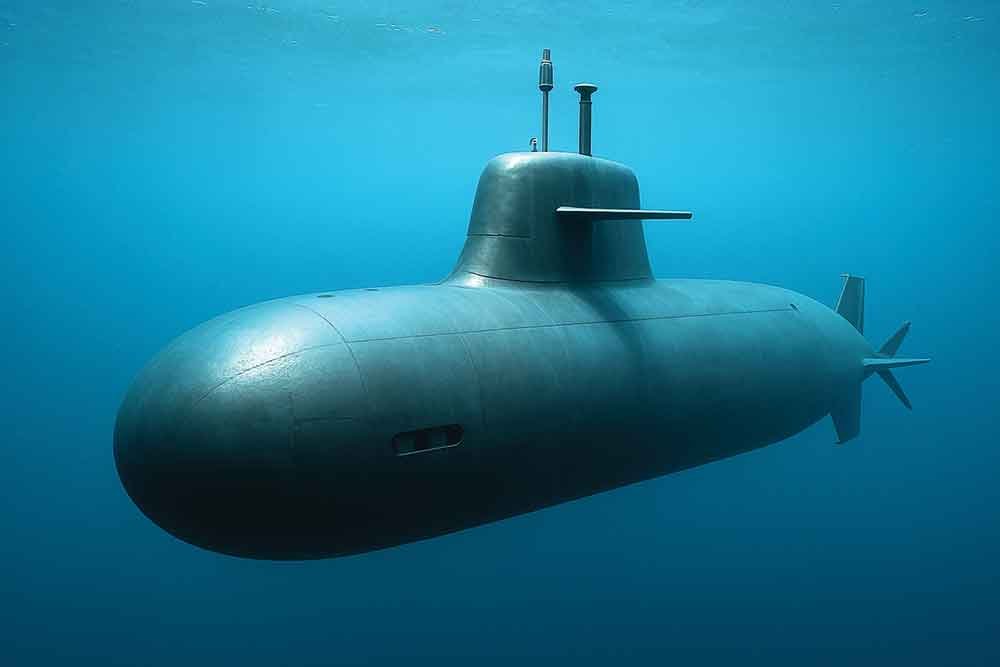
Project 75i is a stopgap modernisation effort, bridging the capability gap until indigenous solutions mature. It is a foreign design, with quicker deployment, but limited long-term strategic autonomy. Project-75i, comprises of building six Next-Gen AIP Submarines, with an estimated Cost of ₹43,000+ crore. It will have indigenously developed DRDO AIP system (PAFC-based), with a land-attack cruise missile (LACM) capability, along with advanced sonar and torpedo systems.
Project-76
Project 76 is a transformative initiative by the Indian Navy aimed at developing a new class of indigenously designed diesel-electric attack submarines. The purpose is to build 12 next-generation conventional submarines with advanced stealth, strike, and endurance capabilities. Indian Navy’s WDB and DRDO are the lead agencies to develop these submarines.
The prototype construction is expected to begin by 2028, and the first submarine launch is targeted by 2037. It would also integrate lessons from Project 75 and 75i while pushing the envelope in stealth, endurance, and strike capabilities. Slower timeline, but a game-changer in indigenous capability and future-proofing India’s submarine fleet.
Project 77: SSN – Nuclear-Powered Attack Submarines
Six SSN were sanctioned to be built at an estimated cost of ₹1.2 lakh crore+. They are designed by the Directorate of Naval Design (DND), BARC, and DRDO, and being built by the Shipbuilding Centre, Visakhapatnam. Their detailed design phase was near completion (as of 2024), steel cutting for the first hull is expected by end-2025 and the first SSN is expected to be inducted by 2035.
Future Fixed-Wing Aviation Capability
India’s aspirations to build a next-generation naval air wing are centred around the induction of advanced, carrier-capable fixed-wing aircraft that can ensure aerial dominance, fleet defence, and maritime strike capability well into the 2040s. With aging MiG-29K platforms nearing obsolescence and increasing maritime challenges across the Indo-Pacific, the Indian Navy is investing in indigenous and international options to modernise its fixed-wing fleet.
Roadmap to 2040+
By 2040, the Indian Navy envisions a formidable transformation into a blue-water force with 175–200 warships and 500 aircraft. Central to this roadmap is the expansion of its aircraft carrier fleet to three or four vessels, including the indigenous INS Vishal. Carrier-based airpower will be bolstered by 171 advanced fighters like Rafale M and TEDBFs.
The Navy is prioritising indigenisation, with over 60 ships under construction across various Indian shipyards. Strategic upgrades in the Andaman & Nicobar and Lakshadweep islands will enhance maritime reach, while nuclear deterrence capabilities continue to evolve with SSBN patrols and SLBM tests.
But to overcome advanced technologies in development, the Indian Navy needs integrating AI-powered Combat Management Systems for real-time threat analysis and decision-making, besides predictive maintenance systems to reduce downtime and improve operational readiness.

–The writer is an Architect by profession with 36 years of experience with leading corporates in the Indian real estate industry. However, his passion is matters Naval! Probably due to his family ties with the Indian Navy. He has been drawing warships since the age of 12, and has been following warship design in the Indian Navy for a considerable time. Recently, he completed a study for designing new MCMVs adopting the modular design technology, which is both cost and time effective.
The views expressed are of the writer and do not necessarily reflect that of Raksha Anirveda
