

In 2025, the Army utilised lessons from real-world operations to enhance its structure, strategy, and capabilities, demonstrating how combat experience can help to strengthen the force. These reforms mirror global military trends, where advanced technology plays an integral role in operational strategies.
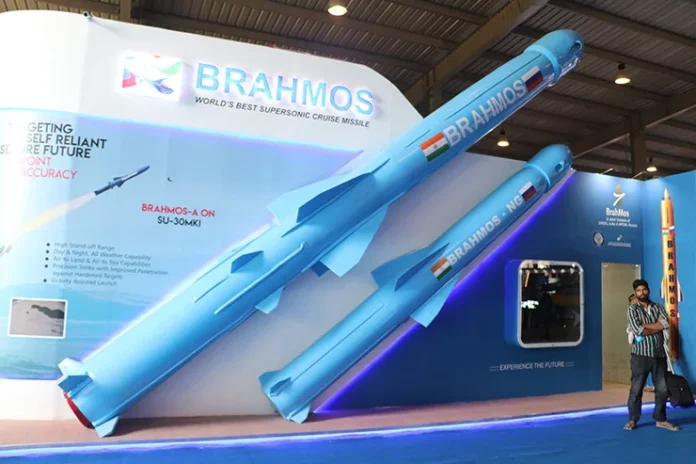
The Army continued its improvement of BRAHMOS and Pinaka systems. On December 1, a BRAHMOS unit of Southern Command, with elements of the Andaman and Nicobar Command, conducted a combat missile launch validating high-speed flight stability and terminal accuracy under simulated battle conditions.

Further, two additional Pinaka rocket regiments were operationalised in June, and on December 29, the Pinaka Long Range Guided Rocket was successfully tested, marking progress in precision deep-fire capability.
In aviation, the Army Aviation Corps completed the induction of six AH-64E Apache attack helicopters during the year.
The Indian Army also fielded new battlefield structures in 2025, including Bhairav Battalions and Ashni Platoons. A capability demonstration held in Rajasthan in October showcased the integrated deployment of these units along with newly inducted technological assets. New Shaktibaan regiments and Divyastra batteries equipped with unmanned aerial vehicles, including loiter munitions, were introduced to address future operational challenges
Battlefield Innovations
The Indian Army also fielded new battlefield structures in 2025, including Bhairav Battalions and Ashni Platoons. A capability demonstration held in Rajasthan in October showcased the integrated deployment of these units along with newly inducted technological assets. New Shaktibaan regiments and Divyastra batteries equipped with unmanned aerial vehicles, including loiter munitions, were introduced to address future operational challenges.
On procurement and capability building, the Army reported achieving 91 per cent indigenisation of its ammunition. A large number of unmanned aerial systems were inducted during the year, including remotely piloted aircraft, tethered drones, swarm drones, logistics drones for high-altitude areas and kamikaze drones.

Edge data centres were established to enable faster data-to-decision cycles, and multiple in-house software applications were developed to support equipment management and soldier-facing services.
Strategic and doctrinal issues were reviewed at the Army Commanders’ Conference held in Jaisalmer in October 2025, where senior leadership deliberated on grey zone warfare, jointness and self-reliance.

Compared to regional adversaries, the Indian Army’s approach stands out for its focus on integrating indigenous technology and fostering partnerships, making it a formidable force in South Asia. The Indian Army has acquired advanced, long-range weapons and creating new units that leverage technology to boost combat power
Technology Adaptation
Compared to regional adversaries, the Indian Army’s approach stands out for its focus on integrating indigenous technology and fostering partnerships, making it a formidable force in South Asia. The Indian Army has acquired advanced, long-range weapons and creating new units that leverage technology to boost combat power.
These systems require substantial infrastructure for deployment and integration. Budget constraints may also impact the pace of future developments. Overcoming these challenges is vital to maintaining the strategic advantage these technologies offer for India’s defence forces.
The Army Aviation Corps also improved with the addition of Apache AH-64E attack helicopters. The first three arrived in July. These helicopters will significantly enhance the Army’s effectiveness in battle environments. The change from thinking about reform to actually making it happen with new organisational structures is really important.
The Indian Army also embarked on a major modernisation drive under its “Decade of Transformation” initiative, focusing on automation, digitisation, and the adoption of emerging technologies such as Artificial Intelligence (AI) and Big Data Analytics to enhance operational readiness.
Lieutenant-General Rajiv Kumar Sahni, Director General of Electronics and Mechanical Engineers (DG, EME) say that the years 2024–2025 were declared the “Year of Technology Absorption”, aimed at ensuring technological upgrades reach soldiers on the ground, not just higher headquarters. The initiative runs in parallel with the Ministry of Defence’s “Year of Reforms”, designed to accelerate institutional change and strengthen joint capabilities, he further said.
Army and the AI
Gen Sahni earlier served as Director General of Information Systems (DGIS), during his tenure as DGIS, the Army achieved a 1,200% increase in digital users and a 620% rise in data storage capacity, creating a more connected and efficient digital ecosystem to support faster decision-making.
“AI has become a force multiplier for the Army, demonstrated during Operation Sindoor, where AI-based tools enhanced surveillance, intelligence, and precision targeting. Key systems include the Electronic Intelligence Collation and Analysis System (ECAS), TRINETRA (integrated with Project SANJAY), and predictive modelling and weather forecasting tools, all of which improved coordination and situational awareness,” he said.
The Indian Army also embarked on a major modernisation drive under its “Decade of Transformation” initiative, focusing on automation, digitisation, and the adoption of emerging technologies such as Artificial Intelligence (AI) and Big Data Analytics to enhance operational readiness
He further said that the Army is pursuing responsible and phased AI adoption, focusing on areas that reduce risk to personnel and improve decision making, while maintaining meaningful human control and strong ethical governance.
To sustain this digital shift, personnel are being upskilled in AI and data science, and a Defence AI Governance Council is being established to align practices with international standards.
Unified AI Platform, an indigenous initiative, is also under development to integrate operational, intelligence, logistics, and training applications. Together, these initiatives aim to make the Indian Army a technology-driven, future-ready force, supporting the vision of Viksit Bharat 2047.
Further advancements
However, in addition to these forays, the Indian Army still needs Advanced Weapon Systems, with the focus to develop ultra-fast and highly manoeuvrable weapon systems, including hypersonic glide vehicles, hypersonic air-breathing engines (HEBs), and advanced fourth, fifth, and sixth-generation missiles.
A need to transition from conventional dump category ammunition to smart, precision-guided munitions such as loitering munitions is needed. In addition, advancing efforts in directed energy weapons, such as high-energy lasers and microwave systems, for counter-drone operations, missile defence, and anti-satellite capabilities, are also required.
The Indian army also needs to enhance its Cyber & Electronic Warfare (EW) capability, focussing on spectrum dominance by developing next-generation cyber defence tools, autonomous EW solutions, and resilient satellite systems.
A need to transition from conventional dump category ammunition to smart, precision-guided munitions such as loitering munitions is needed. In addition, advancing efforts in directed energy weapons, such as high-energy lasers and microwave systems, for counter-drone operations, missile defence, and anti-satellite capabilities, are also required
In addition, one of the key focus areas should be Soldier-Centric Modernisation, to better equip soldiers with exoskeletons, human augmentation systems, smart body armour, and augmented reality-based battlefield management systems. In addition to introducing integrated AI-powered helmets, smart apparel, and real-time health monitoring to enhance battlefield effectiveness.
For improved logistics & infrastructure building, modernising supply chains through AI, blockchain, and IoT integration to create green, sustainable, cyber-resilient logistics systems is also needed.

Looking ahead in 2026
Meanwhile, the Indian Army has officially declared 2026 as the “Year of Networking & Data Centricity” as part of its decade-long transformation initiative, aiming to enhance digital integration, real-time decision-making, and combat effectiveness through seamless connectivity and data-driven operations.
This strategic move, announced by Chief of the Army Staff (COAS) General Upendra Dwivedi in his New Year message, emphasises indigenisation, jointness, self-reliance, and innovation as core pillars of India’s military modernisation.
The initiative treats data as a critical operational asset, enabling real-time information sharing across soldiers, command centres, sensors, weapons, intelligence, and logistics units to improve situational awareness and coordination.
It supports interoperability among the Army, Navy, and Air Force by establishing integrated, secure, and indigenous communication systems and Battlefield Management Systems.
The focus on data centricity marks a shift from traditional platform-centric warfare to network-centric operations, allowing faster targeting, efficient troop movement, and better resource allocation.
This declaration follows the 2024-25 as “Year of Technology Absorption” and builds on prior efforts to operationalise adopted technologies, with the goal of making the Army more resilient, agile, and future-ready.
The Indian Army has officially declared 2026 as the “Year of Networking & Data Centricity” as part of its decade-long transformation initiative, aiming to enhance digital integration, real-time decision-making, and combat effectiveness through seamless connectivity and data-driven operations
The Army Chief also confirmed that Operation Sindoor remains active, underscoring the force’s vigilance and readiness in the face of evolving security challenges.
Overall, the Indian Army also needs to evolve a synergistic working relationship between the three key stakeholders, i.e. the Military, which must clearly define operational needs, Policymakers, who must create enabling frameworks, and Industry, which must innovate and deliver tailored solutions.
However, amidst a doctrinal shift towards joint theaterisation and greater synergy between the different arms of the forces, the Indian Army in 2025 moved further towards its stated mission of building a “modern, agile, adaptive, technology-enabled, and self-reliant future-ready force” as part of its Vision@2047.
Technological absorption and operational digitisation were prioritised by the Army in 2025 in a visible effort to induct niche technology into its wider apparatus. Structural changes were aimed at technological integration and making the Army future-ready.
The year concluded with a focus on innovation with the Inno-Yoddha 2025–26 programme, aimed to boost the entrepreneurial and technological mindset of the Indian soldiers.

-The writer is a New Delhi-based senior commentator on international and strategic affairs, environmental issues, an interfaith practitioner, and a media consultant. The views expressed are personal and do not necessarily carry the views of Raksha Anirveda
