


The battles in future will not be won by navies which have the biggest ships, maximum number of submarines or long-range missiles, but by those who have the smartest team – of humans and machines – that think together, decide together, and, if needed, fight together. The question is not whether machines will replace humans but how humans and machines will work together in tandem to win wars and dominate the sea.
We’ve Seen this Before
Every time a new autonomous vessel is commissioned into service, someone asks – will machines replace the human admirals and sailors? But if you look at things in perspective, you will see the trend. Every major leap in naval technology began as a fear, then became a partnership for example:

- Steam Power vs Sail: Sail-era admirals feared that steam engines would make ships vulnerable and dependent on coal. Within a few decades, every major navy relied on steam-driven fleets where engines and seamen worked in tandem.
- Ironclads and Steel Hulls: Traditionalists saw iron and steel warships as clumsy and unseaworthy compared to wooden ships of the line. Once tested in battle, ironclads rewrote naval architecture—and sailors learned to fight with armour, not against it.
- Submarines and Anti-submarine Warfare: Early submarines were dismissed as dishonourable and unpredictable. In both World Wars they became decisive weapons, forcing surface fleets to develop sonar, depth charges and hunter–killer groups that paired surface ships with undersea hunters.
- Aircraft Carrier’s vs Battleships: Battleship admirals initially treated carriers as fragile auxiliaries. After Taranto and Pearl Harbor, air power at sea became central, and surface fleets reorganised themselves around carrier–air group partnerships.
- Radar and Sonar: At first, many officers distrusted the strange electronic “blips”. Over time, radar and sonar became indispensable partners to human lookouts, fusing machine detection with human interpretation to transform naval tactics.
Today’s debate about AI at sea is just the latest replay of the same old anxiety—only louder and faster. Once again, we worry that machines will replace sailors, hollow out command, or trigger disasters we can’t control. Yet, as history shows, the real story is rarely replacement; it is renegotiation. Just as steam, steel, submarines, carriers, radar and sonar shifted from threats to trusted partners, AI and autonomous systems are poised to become the next layer in that long human–machine partnership, not its endpoint.
Every time a new autonomous vessel is commissioned into service, people ask – will machines replace humans? But if you look at things in perspective, you will see the trend. Just as steam, steel, submarines, carriers, radar and sonar shifted from threats to trusted partners, AI and autonomous systems are poised to become the next layer in that long human–machine partnership, not its endpoint
The Present: Drones, Ghost Fleets and Software-defined Seas
Look closely at today’s oceans and you can already glimpse the future navy taking shape. Uncrewed surface vessels and underwater drones now scout, patrol and sometimes strike in waters once dominated only by grey hulls and white wakes. Experimental “ghost fleets” of unmanned ships are sailing transoceanic routes, launching missiles and feeding data into combat networks – with a handful of humans supervising them from distant control rooms. In the Black Sea, low-cost explosive sea drones have forced a much larger fleet to rethink how close it can safely operate, proving that software, sensors and remote operators can punch far above their weight.
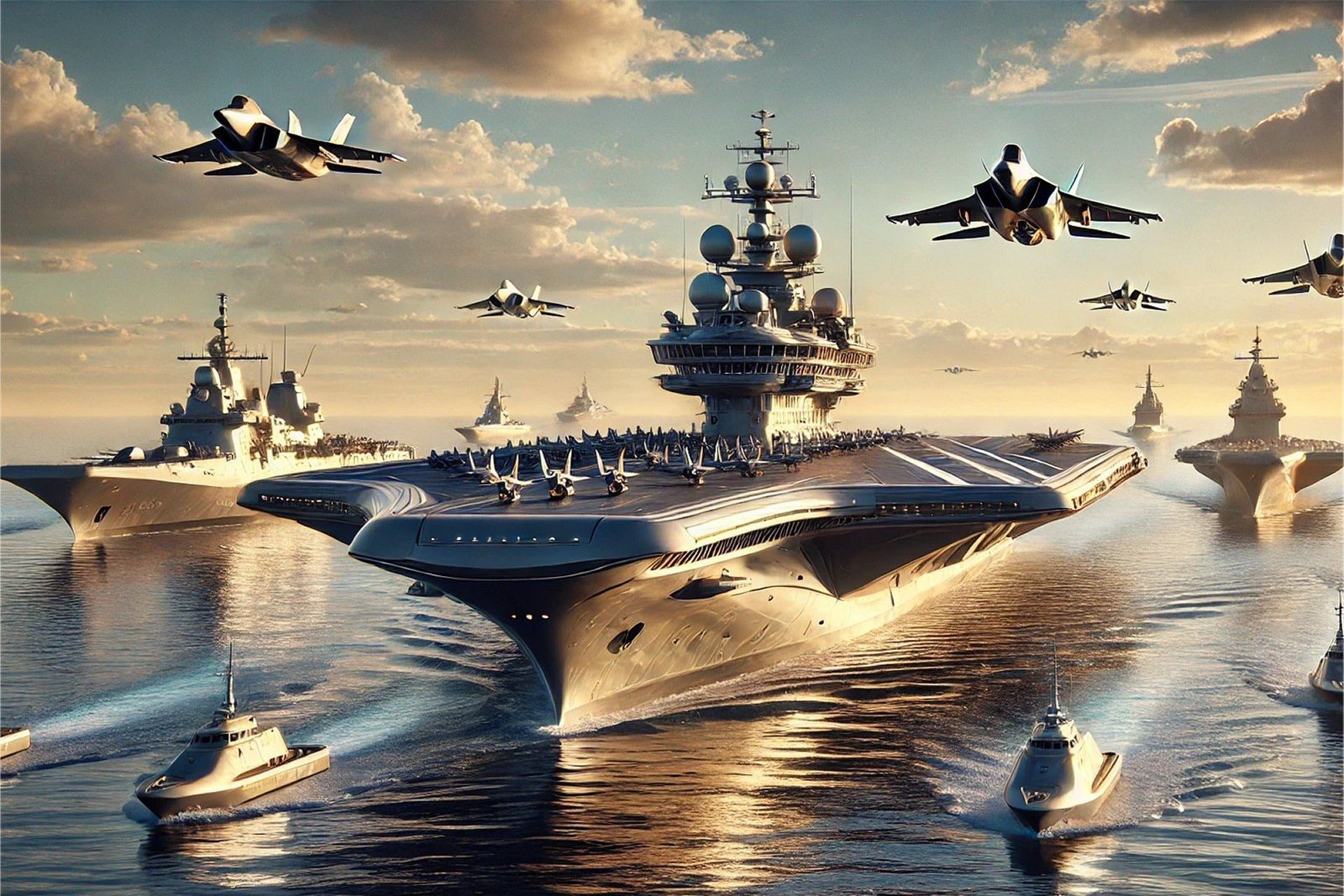
Commanders already treat data and networks the way they once thought about fuel and ammunition—critical resources to be guarded and managed. Drones and ghost fleets are no longer curiosities at the edge of naval power; they are the first real-world experiments in a far deeper integration of humans, machines, and code that will define how wars at sea are planned and fought.

The US Navy’s “Sea Hunter” and its Medium Unmanned Surface Vessel counterparts are purpose-built autonomous craft designed to trail submarines and conduct long-haul missions without crews. Ghost Fleet Overlord vessels like Ranger and Nomad have already completed largely autonomous ocean crossings and even fired SM-6 missiles from containerised launchers, offering an early glimpse of what a fully unmanned shooter might look like in practice.
Underwater, Australia’s Ghost Shark XL-AUV programme is developing extra-large autonomous submarines to complement crewed boats with covert, long-range presence—an explicit bet that undersea power in the 2030s and 2040s will be shared between humans and robots. And in the Black Sea, the future has arrived rudely early: since 2022, Ukraine has combined aerial drones, explosive sea drones, and conventional weapons to harass and damage a much larger Russian fleet, pushing high-value units back from Sevastopol, while “Sea Baby” naval drones strike shadow-fleet oil tankers and port infrastructure.

In each one of these cases, humans are firmly in the loop—designing missions, setting boundaries, approving targets, interpreting patterns, and deciding when to escalate or stand down. The machines extend reach, persistence, and precision. They do not replace sea power; they are quietly reshaping it.
Why Tomorrow’s Fleet Must Think in Pairs
Naval warfare has always been a race between detection, deception, and decision. In the missile age, that race was already measured in minutes; in the age of hypersonic, swarming drones, and cyberwar, it collapses to seconds—or even milliseconds. A destroyer in the Red Sea today, for instance, may have only moments to detect, classify, and intercept a mixed salvo of drones and missiles fired from shore before they reach a merchant convoy. In the Black Sea, commanders must decide just as quickly whether a fast-moving contact is a harmless boat or an explosive sea drone closing in on a harbour.
No human operator, no matter how skilled, alone can sift raw data from radar, sonar, electronic support measures, satellites, underwater sensors, cyber feeds, and open-source intelligence fast enough to make sense of it. At the same time, no AI system, no matter how powerful, can understand the political, cultural, and ethical context of a crisis, or anticipate how an adversary perceives risk, honour, or humiliation—for example, whether shooting first at a “suspicious” vessel will deter escalation or trigger a wider war.
That’s why future navies must be built around human–machine teams:
- Machines will handle the endless watching, correlating, forecasting, and updating—turning the “fog of war” into something closer to a dynamic weather report, with probabilities and likely courses of action rather than raw dots on a screen.
- Humans will handle the framing: Is this manoeuvre an attack, a probe, or a message? Is striking that radar worth the risk of escalation? How do we protect civilians and commercial traffic without inviting further aggression or miscalculation?
The biggest benefit of this partnership isn’t more firepower – it’s a clear edge in making better, faster decisions. Obviously, the side that can correctly understand what is happening faster—and choose better responses first—will win.
Future Navies will therefore need:
- Explicit doctrine about what can be delegated: machines may propose and execute within narrow envelopes, but humans must still take ownership of the decision to use lethal force.
- Technical architectures that log AI recommendations and data inputs, creating an audit trail that can be reviewed after an incident.
- Design principles that “bake in” restraint—geofencing, positive identification thresholds, and other brakes that reduce the risk of runaway automation.
- A ruthless focus on cyber-security, because a compromised AI is not just a broken tool; it is an enemy beachhead inside your decision loop.
In other words, “human & machine” is not just about efficiency; it is about preserving legitimacy.
The Choice in Front of Today’s Admirals
Human–machine naval teams are not some distant fantasies. They’re already coming together today—in prototype squadrons, on test ranges, and even in real wars. The question now is: will navies treat these systems as mere add-ons, or use them to fundamentally redesign how they plan, fight and project power at sea? Admirals and defence ministers have three broad choices:
You can already glimpse the future navy taking shape. Uncrewed surface vessels and underwater drones now scout, patrol and sometimes strike in waters once dominated only by grey hulls and white wakes. In each one of these cases, humans are firmly in the loop—designing missions, setting boundaries, approving targets, interpreting patterns, and deciding when to escalate or stand down
- Resist the shift. Cling to crewed platforms, dabble in unmanned experiments, and treat AI as a threat to tradition. This path feels safe—until the first crisis where an adversary’s integrated human–machine fleet can simply think and act faster.
- Automate recklessly. Chase cost savings and headline-grabbing “robot fleets,” pushing machines forward without adequate doctrine, training or ethical safeguards. This may yield short-term buzz, but it risks strategic miscalculation, accidents at sea and public backlash.
- Deliberately design the team. Invest in architectures, training pipelines, and legal frameworks that put humans and machines side by side from the start, with each doing what they do best.
Only the third path leads to a navy that is both effective and legitimate.
The Final Argument
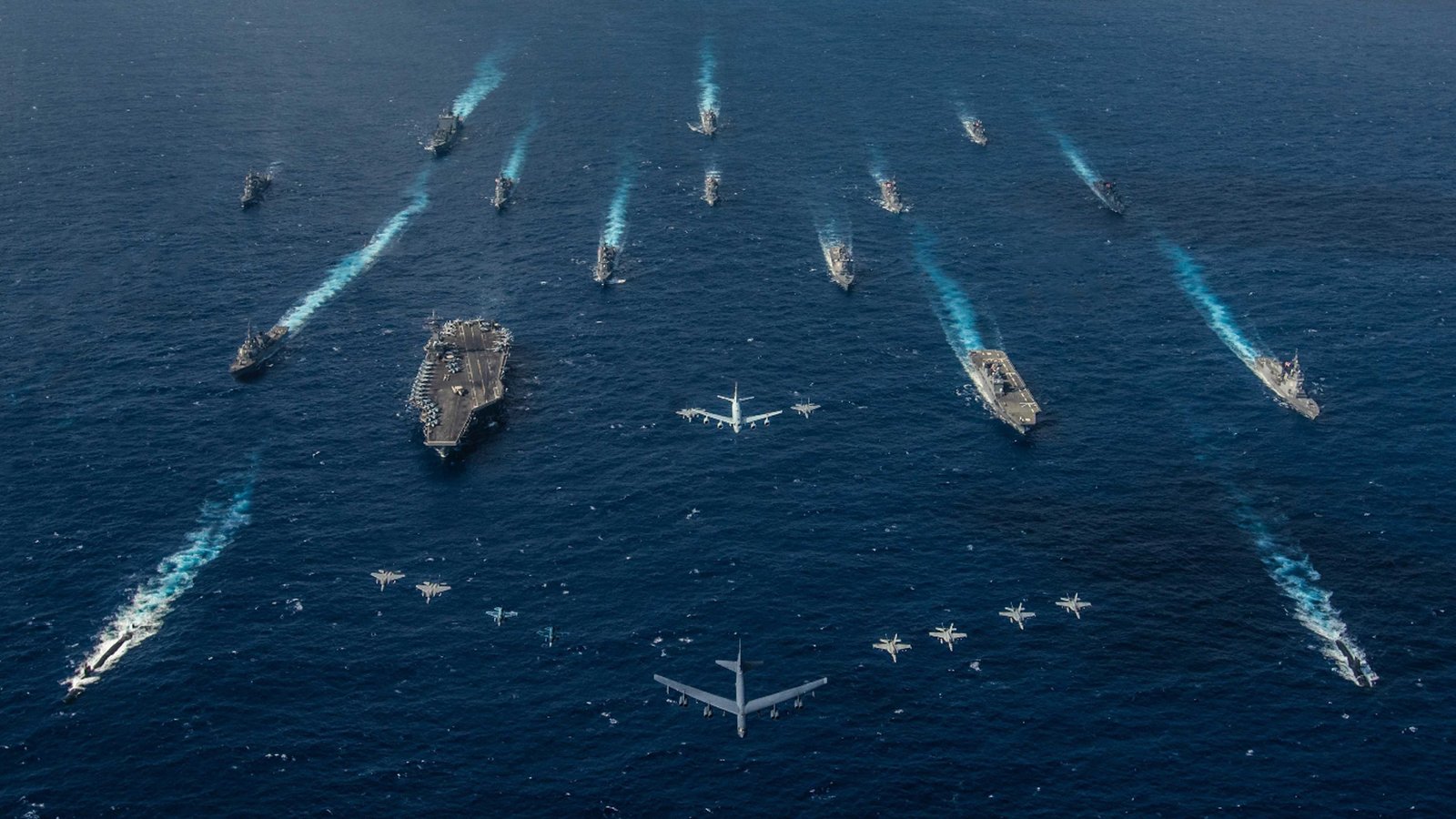
In 1942, the fleets that learned to trust the radars and sonars—without surrendering command or judgment—won decisive battles and rewrote maritime strategy. In the 2020s, we are watching cheap drones and clever algorithms punch far above their weight in real wars. By the 2040s, the oceans will be crowded with robotic hulls, silent underwater machines and invisible software agents.
Sea power in that world will not belong to the navy with the most impressive hulls on parade. It will belong to the navy whose humans and machines have truly learned to think together.
Future Navy is not human versus machine. It is human and machine.

–The writer is a seasoned media professional with over three decades of experience in print, electronic, and web media. He is presently Editor of Taazakhabar News. The views expressed are of the writer and do not necessarily reflect the views of Raksha Anirveda
