

The nature of conflict in the twenty-first century has evolved decisively from a largely linear, domain-specific contest into a multi-dimensional, high-speed orchestration of military power across land, air, sea, cyber, and space domains. Modern wars are no longer fought sequentially or in isolation by individual services; instead, they demand simultaneous, synchronised action across multiple domains, often under severe time compression. For decades, however, the Indian Armed Forces operated under a legacy command structure comprising seventeen service-specific commands, a system that, while professionally competent and operationally proven, frequently functioned in silos, limiting real-time synergy and slowing decision-making during crises.
The year 2025 has emerged as a watershed moment in India’s military evolution. With the formalisation of the Integrated Theatre Commands (ITCs) and the legal empowerment of the Chief of Defence Staff (CDS), India has fundamentally altered its approach to warfighting. This shift represents a movement away from a doctrine of limited inter-service cooperation towards one of deep, institutionalised jointness, embedded in command structures, legal authority, and operational philosophy.

Defining Jointness and Integration
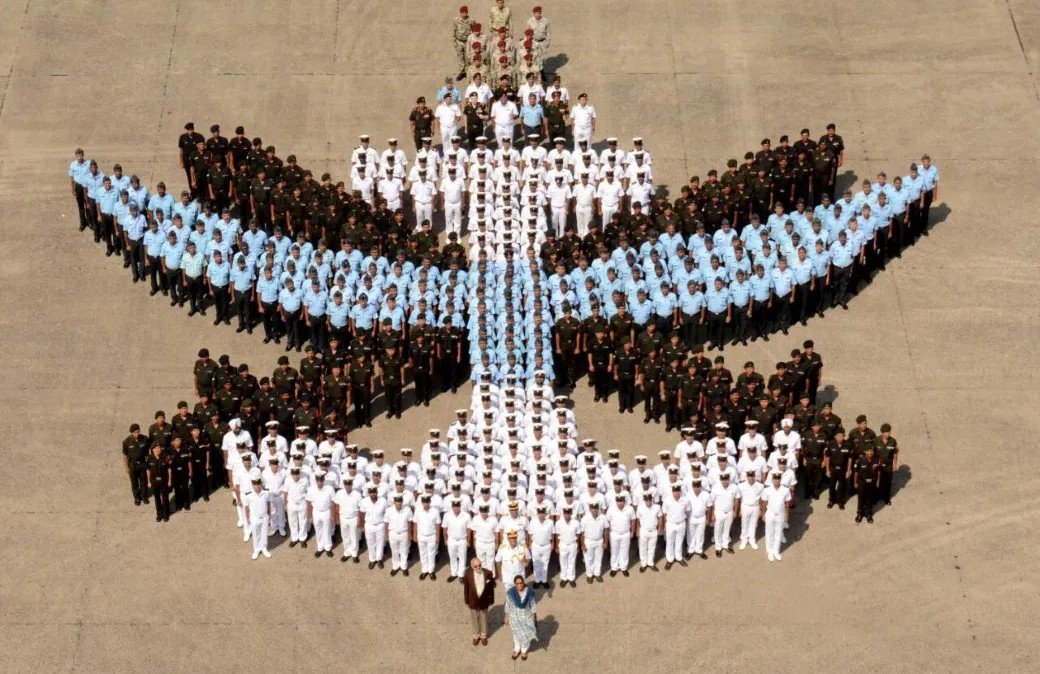
In military parlance, jointness refers to the coordinated employment of resources drawn from the Army, Navy, and Air Force towards a common operational objective. While this coordination has existed in varying degrees for decades, integration goes significantly further. Jointness allows services to plan and operate together; integration fuses command, planning, and execution into a single, unified warfighting structure. A commonly used analogy captures this distinction clearly: jointness is akin to independent hands shaking in cooperation, whereas integration forges those hands into a single clenched fist capable of delivering decisive force.
The transition towards Integrated Theatre Commands represents the most profound organisational overhaul of the Indian Armed Forces since Independence, replacing a fragmented structure of seventeen service-specific commands with unified, theatre-based formations designed for modern, high-tempo warfare
The Integrated Theatre Command (ITC) is the institutional manifestation of this deeper integration. It envisages a unified command architecture in which all combat and enabling assets—armoured formations, infantry, fighter aircraft, naval platforms, surveillance systems, and logistics—within a defined geographical theatre are placed under a single four-star Theatre Commander. This commander is not operationally answerable to individual service chiefs, but is entrusted with the unified defence of a specific strategic frontier or maritime domain, ensuring clarity of responsibility and unity of effort.
A Historic Structural Transformation
The transition towards ITCs represents the most profound structural overhaul of the Indian Armed Forces since Independence. Historically, India operated with a fragmented command architecture of seventeen service-specific commands—seven of the Army, seven of the Air Force, and three of the Navy. While this structure reflected service autonomy and specialisation, it also encouraged parallel planning, duplicated logistics, and delayed coordination, particularly during fast-moving contingencies. The essence of the 2025 reforms lies in the deliberate shift from jointness as coordination to integration as unification into a single fighting force, optimised for modern, high-tempo, technology-driven warfare.
The Architecture of Integrated Theatre Commands
Under the proposed architecture, the existing command structure is being consolidated into three or four geography-centric and threat-based theatre commands. Each theatre is designed to address a specific strategic challenge, with all land, air, and maritime assets within that theatre reporting to a single commander, thereby eliminating divided authority. The Northern Theatre Command, headquartered at Lucknow, is primarily oriented towards the Himalayan frontier and the strategic challenge posed by China. The Western Theatre Command, headquartered at Jaipur, is tasked with addressing contingencies along the western border with Pakistan. The Maritime Theatre Command, based at Thiruvananthapuram, consolidates naval and maritime air assets to secure the Indian Ocean Region (IOR). In addition, an Air Defence Command has been proposed as a functional command responsible for pan-India air and missile defence, cutting across geographical boundaries.

Force Application and Force Generation
One of the most consequential aspects of the 2025 reforms is the clear separation of responsibilities between force application and force generation. Theatre Commanders are responsible for force application—they are the operational warfighters, tasked with planning and executing missions using fully integrated, multi-domain assets. Service Chiefs, in contrast, are transitioning into a force generation role, focusing on raising, training, and sustaining (RTS) their respective services. This separation ensures that operational commanders are not burdened with administrative responsibilities, while service chiefs remain custodians of professional standards, training, and long-term capability development. This model mirrors global best practices while preserving service expertise and institutional continuity.
Under the new framework, all land, air, and maritime assets within a defined theatre report to a single four-star Theatre Commander, ensuring unity of command and eliminating delays caused by inter-service consultations during fast-paced operational scenarios
Strategic Rationale and Operational Advantages
The strategic significance of ITCs is considerable. Unity of command eliminates delays caused by inter-service consultations during high-speed modern warfare, enabling real-time, cross-domain decision-making by a single commander. Resource optimisation reduces duplication in logistics, training institutions, and procurement, ensuring greater cost-efficiency, standardisation, and interoperability. ITCs are also designed to integrate emerging domains such as cyber warfare, space operations, and special operations, areas that do not fit neatly within traditional service boundaries. Furthermore, India’s move towards theatreisation mirrors developments among potential adversaries. China reorganised its military into five theatre commands in 2016, with its Western Theatre Command focused squarely on India, reshaping the regional balance and compelling India to adopt a more symmetrical and focused defensive posture.

Why Reform Became Inevitable
The rationale for such sweeping reform is rooted in both strategic necessity and economic realism. In a modern contingency along the Line of Actual Control (LAC), the time required for coordination between geographically separated service headquarters can prove operationally disastrous. Theatreisation creates a single-point authority, dramatically shortening the Observe–Orient–Decide–Act (OODA) loop. India’s principal threats are geographically distinct, making China-centric and Pakistan-centric theatres essential for tailored doctrines, intelligence priorities, and force structures. Additionally, the Shekatkar Committee highlighted inefficiencies arising from parallel logistics and training ecosystems, reinforcing the need for pooled resources and joint procurement under ITCs. Future conflicts will also unfold initially in cyber, space, and electromagnetic domains, long before kinetic operations commence, demanding an integrated command structure capable of synchronised response.
The 2025 reforms clearly distinguish between “Force Application” and “Force Generation,” with Theatre Commanders focusing on operational execution while service chiefs concentrate on raising, training, and sustaining combat-ready forces
Institutional Concerns and Strategic Risks
Despite its compelling logic, the path to jointness has not been without resistance. Institutional and doctrinal concerns have been most pronounced within the Indian Air Force (IAF). Critics argue that India lacks sufficient fighter squadron strength to fragment air assets across multiple theatres, warning that air power’s strategic flexibility—its ability to rapidly swing between fronts—could be diluted. There is also concern that ITCs could evolve into Army-dominated land commands, potentially diminishing the independent strategic roles of the Navy and the IAF. Some analysts caution that the introduction of Theatre Commanders could add an additional bureaucratic layer between the CDS and operational units, risking slower decision-making if not carefully structured. Others warn against mechanically copying foreign models, noting that India’s geography, characterised by contiguous and active borders, differs significantly from expeditionary military architectures.
Why 2025 Marks a Turning Point
What makes 2025 particularly significant is that the debate over jointness has moved from theory to law. The Inter-Services Organisations (Command, Control and Discipline) Rules, 2025, have provided statutory authority to joint commanders. For the first time, a Theatre Commander can exercise administrative and disciplinary control over personnel drawn from all three services, addressing a long-standing legal vacuum. The empowerment of the CDS in June 2025 further enables the issuance of binding joint orders, effectively ending the era in which individual service vetoes could stall joint operations.
With the notification of the Inter-Services Organisations (Command, Control and Discipline) Rules, 2025, joint commanders have, for the first time, been granted statutory authority over personnel from all three services, providing legal teeth to the concept of integrated command
Towards a “Purple” Military Culture
Ultimately, jointness is not merely an organisational adjustment; it represents a transformation of military culture and institutional identity. The objective is the creation of a “Purple Culture”, where allegiance to national objectives transcends service-specific identities and traditions. While challenges related to asset availability, institutional inertia, and inter-service rivalry persist, they are outweighed by the risks of fighting future wars in isolation. In an era where China has already operationalised a mature Western Theatre Command focused on India, New Delhi cannot afford fragmented responses. The Integrated Theatre Command is therefore not just an administrative reform, but an institutional shield that ensures India’s response to future threats is unified, agile, and decisively effective.

–The writer is Assistant Professor, ICFAI School of Liberal Arts, ICFAI University, Jaipur. The views expressed are of the writer and do not necessarily reflect the views of Raksha Anirveda
