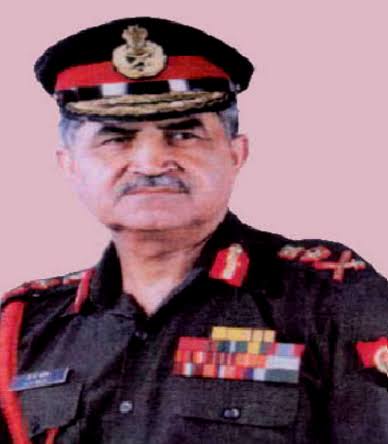
New Delhi: With leadership having played a crucial role in the 1999 Kargil conflict, former Army Chief General VP Malik said that training leaders at all levels is necessary and the focus has to be on ‘human capital.‘
Speaking at the ET Global Summit, he explained how leadership played a crucial role during the Kargil conflict in 1999 when the Army was prepared to cross over to Pakistan at six days notice.

He said there were three types of leadership — junior, middle and senior — and that it was necessary to train leaders at all levels.
The former Army Chief said leadership was knowledge, attitude, character, taking on challenges and a result of hard work. Whether it was war or business, people are the core concern, he explained. “It is the man or woman behind the gun which makes most of the good human capital.”
On the Kargil conflict, he said a leader was effective when he knew what he wanted and made it clear. He said he had decided then that the Army must be prepared to launch forces across the border, contrary to the government’s instruction to not cross the Line of Control.
“Prime Minister (Atal Bihari) Vajpayee in public had said that the armed forces will not cross the border. I later asked him to not say that. He asked me why. I explained that if we cannot vacate the intruders, we will have to cross the border. Later, the then NSA said in an interview that not crossing the border holds good today, we don’t know about tomorrow,” he said.

“I prepared the Army to cross the border with six days notice. Our strategy was to show that we are capable of crossing the border anywhere,” he said.
Gen (Retd) Malik said he has five takes on leadership. Leadership is 30 per cent knowledge, while the rest is attitude and how you deal with people and make them do what you want. “The next one is your character, a sum of good and bad, which forms a component of trust. If people don’t have trust, they won’t follow you,” he said.

A leader takes on challenges, he said, but does not believe in the concept of born leaders. “They are a result of hard work, self-belief and opportunities,” he said.
A senior officer should not interfere in the affairs of juniors, but it is important to motivate people. He said, “Leadership training has to happen at all levels. We have to train at all levels.”