

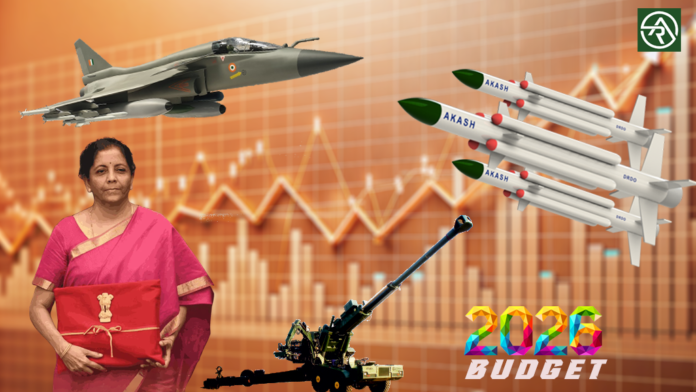
Defence Budgeting and the Changing Security Environment: India’s defence budget today must be read against the backdrop of a fundamentally altered strategic landscape. Persistent friction along the Line of Actual Control with China, an unresolved and volatile western front with Pakistan, and expanding obligations in the Indian Ocean Region have collectively imposed sustained operational and readiness demands on the armed forces. These challenges coincide with a period of rapid military-technological transformation, where capabilities in space, cyber, artificial intelligence, electronic warfare, and unmanned systems increasingly shape battlefield outcomes.
In this context, defence budgets are no longer neutral fiscal instruments. They signal strategic intent, influence deterrence credibility, and determine whether armed forces can transition from manpower-intensive legacy structures to technology-enabled, multi-domain forces. India’s recent defence budgets, however, reflect a growing mismatch between strategic ambition and fiscal structure.

The Structure of Defence Budget 2025–26
The Defence Budget 2025–26 allocated approximately ₹6.81 lakh crore to the Ministry of Defence, retaining defence as the largest single item of Union government expenditure. In absolute terms, this represented a meaningful year-on-year increase. Yet, measured as a share of GDP, defence spending remained around 1.9 per cent — well below levels considered necessary for sustained modernisation in a two-front contingency environment.
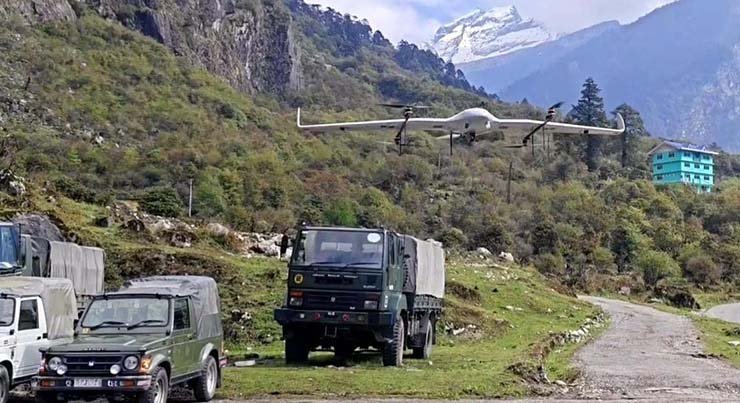
More significant than the aggregate figure was the budget’s internal composition. Revenue expenditure, including salaries, maintenance, and logistics, absorbed nearly two-thirds of the allocation. Defence pensions alone accounted for close to one-fourth of total spending. Capital outlay, which directly supports new acquisitions and modernisation, constituted barely over one-quarter of the budget.
This revenue dominance is not merely an accounting issue. It reflects the cumulative effect of force-structure choices, demographic trends, and policy decisions taken over decades. The strategic consequence is a narrowing of fiscal space for capital-intensive modernisation at precisely the moment when technological obsolescence is accelerating.

Capital outlay, which directly supports new acquisitions and modernisation, constituted barely over one-quarter of the budget. The strategic consequence is a narrowing of fiscal space for capital-intensive modernisation at precisely the moment when technological obsolescence is accelerating
Budget Estimates, Revised Estimates, and the Problem of Execution
A persistent feature of India’s defence budgeting is the divergence between Budget Estimates and Revised Estimates, particularly under capital heads. Capital allocations announced at the beginning of the financial year are frequently revised downward, reflecting delays in procurement processes, trials, negotiations, and contract finalisation.
This pattern was evident again in FY 2024–25, when capital outlay was reduced substantially at the RE stage. Such revisions are not isolated anomalies but symptoms of systemic execution deficits. The defence acquisition system, despite repeated procedural reforms, remains risk-averse and time-intensive, often unable to absorb even modest increases in capital allocation within a single financial cycle.

The issue of lapsed or unutilised funds compounds this problem. Although precise figures are not always transparently disclosed, audit and parliamentary reviews consistently point to underutilisation under capital heads. These lapses translate directly into delayed induction of platforms, prolonged dependence on ageing equipment, and rising operational risk — particularly in high-altitude and high-intensity deployment scenarios.
The capital outlay in the Defence Budget 2025–26, amounting to roughly ₹1.8 lakh crore, supported ongoing acquisitions across the three services. These included aircraft and aero-engines for the Air Force, shipbuilding and submarine programmes for the Navy, and artillery, air defence, and surveillance systems for the Army. A significant proportion of this outlay — approximately 75 per cent — was earmarked for procurement from domestic sources, reinforcing the policy emphasis on defence indigenisation.
While this direction is strategically sound, the scale of capital allocation remains insufficient relative to the modernisation challenge. All three services face critical capability gaps in areas that are capital-intensive and technologically complex. Incremental increases in capital spending risk spreading limited resources across multiple programmes without achieving decisive capability enhancement in any single domain. The result is a gradual erosion of qualitative edge rather than a sharp modernisation push.
Border Infrastructure as a Strategic Enabler
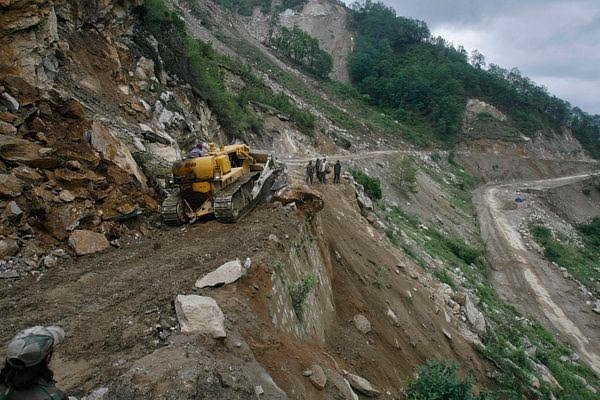
One of the more operationally significant components of recent defence budgets has been sustained investment in border infrastructure, particularly through the Border Roads Organisation. Allocations in 2025–26 supported the construction of roads, bridges, and tunnels in forward areas along both the northern and western borders.
The strategic value of such infrastructure extends well beyond logistics. Improved connectivity enhances mobilisation speed, sustainment capacity, and tactical flexibility, particularly in mountainous terrain. In the context of the LAC, infrastructure directly affects deterrence by denial, enabling rapid force concentration and sustained presence.
Despite its high strategic payoff, border infrastructure spending often remains vulnerable to fiscal compression. Treating such investment as discretionary rather than foundational undermines long-term operational readiness and crisis response capability.
India’s defence R&D expenditure remains modest when compared with peer competitors, particularly China. The People’s Liberation Army’s rapid integration of AI-enabled ISR, long-range precision strike, space-based enablers, and information warfare capabilities underscores the competitive pressure India faces
Technology, R&D, and the Future of Warfare
The allocation to the Defence Research and Development Organisation in 2025–26 reflected moderate growth, with continued emphasis on missile systems, electronic warfare, space capabilities, and unmanned platforms. Innovation mechanisms such as iDEX and the Technology Development Fund have expanded participation by private industry and start-ups, contributing to a more diversified defence innovation ecosystem.
Nevertheless, India’s defence R&D expenditure remains modest when compared with peer competitors, particularly China. The People’s Liberation Army’s rapid integration of AI-enabled ISR, long-range precision strike, space-based enablers, and information warfare capabilities underscores the competitive pressure India faces. Fragmented project-based funding is insufficient in an era where technological dominance increasingly determines operational outcomes.
Structural Constraints in Defence Budgeting
Three interlinked structural constraints continue to shape India’s defence budget. The first is revenue lock-in, where high fixed costs limit fiscal flexibility. The second is a persistent mismatch between capital allocation and the scale of capability development required. The third is stagnation in defence spending as a share of GDP, despite expanding strategic responsibilities.
Together, these constraints reduce the effectiveness of nominal budget increases and limit the armed forces’ ability to adapt to emerging forms of warfare.
Defence Budget 2026–27 represents a critical opportunity to correct course. A central expectation is a decisive rebalancing towards capital expenditure, with capital growth outpacing overall budget growth. A capital share approaching 30% of total defence expenditure should be treated as a medium-term objective rather than an aspirational benchmark
Strategic Expectations from Defence Budget 2026–27
Defence Budget 2026–27 represents a critical opportunity to correct course. A central expectation is a decisive rebalancing towards capital expenditure, with capital growth outpacing overall budget growth. A capital share approaching 30 per cent of total defence expenditure should be treated as a medium-term objective rather than an aspirational benchmark.
Technology must emerge as a core organising principle of defence budgeting rather than a residual category within capital expenditure. Dedicated, ring-fenced allocations are required for AI-enabled command and control, space resilience, cyber and electromagnetic operations, and autonomous systems. Such capabilities are no longer optional force multipliers but determinants of battlefield effectiveness.
Border infrastructure must be institutionalised as a long-term strategic programme with assured multi-year funding. Episodic or reactive funding undermines the very advantages such infrastructure is meant to provide.
Finally, budgetary planning must be synchronised more closely with acquisition pipelines and emerging theatre-level capability concepts. Financial planning divorced from acquisition realism only perpetuates underutilisation and delay.
Strategic Implications
A defence budget that grows in nominal terms but remains structurally constrained risks widening the gap between India’s strategic ambitions and its military capabilities. Over time, this gap erodes deterrence credibility and narrows strategic options in crisis scenarios.
India requires a decisive shift towards capital intensity, technological depth, and infrastructure-enabled readiness. Without such a shift, the mismatch between India’s strategic objectives and its military capabilities will continue to widen, constraining national power in an increasingly contested security environment
Conversely, a capital- and technology-focused Defence Budget 2026–27 would strengthen deterrence along contested borders, accelerate the transition to multi-domain operations, and reinforce India’s credibility as a consequential security actor in the Indo-Pacific.
Conclusion
Defence Budget 2026–27 constitutes a strategic inflection point. Incremental adjustments are no longer adequate in an era defined by rapid technological disruption and intensifying regional competition. India requires a decisive shift towards capital intensity, technological depth, and infrastructure-enabled readiness. Without such a shift, the mismatch between India’s strategic objectives and its military capabilities will continue to widen, constraining national power in an increasingly contested security environment.

-The author retired as Major General, Army Ordnance Corps, Central Command, after 37 years of service. A management doctorate and expert on defence modernisation, he is the author of four books, including the Amazon bestseller “Breaking the Chinese Myth,” and a frequent media commentator. He is affiliated with several leading defence and strategic studies institutions in New Delhi. The views expressed are of the writer and do not necessarily reflect the views of Raksha Anirveda
