

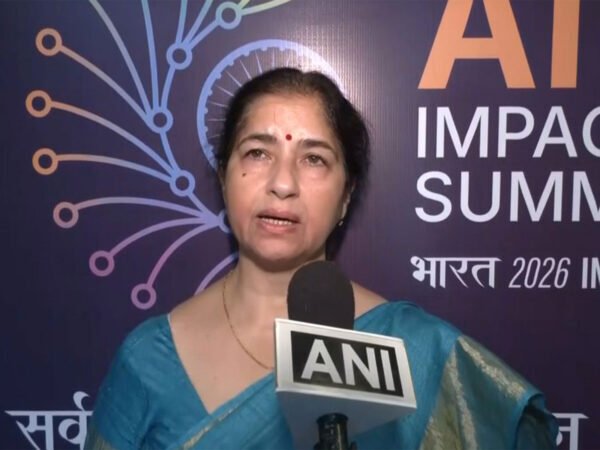
New Delhi: India’s Defence Research and Development Organisation (DRDO) has issued a stark warning on the risks of relying on foreign artificial intelligence (AI) models for military purposes.
Speaking at the India-AI Impact Summit 2026, DRDO Director General Chandrika Kaushik emphasised the critical need for indigenous AI solutions in the defence sector. Kaushik said India cannot afford to depend on AI technologies originating abroad. “In the defence domain, we can’t afford to depend on solutions and AI models which are coming from abroad,” she stated. She stressed the importance of ensuring the trustworthiness of any models and systems adopted for national security.

The DRDO chief highlighted how AI has permeated everyday life across various sectors. From education to problem-solving and solution development, people increasingly turn to AI tools first. Students, teachers, presentation makers, and innovators all hook into these solutions for quick results. However, Kaushik pointed out a key vulnerability: most of these AI solutions come from foreign sources. This dependence raises concerns, particularly in sensitive areas like defence, where reliability and security are paramount.
She praised the efforts of the Ministry of Electronics and Information Technology (MeitY) and the Government of India. The ministry has convened stakeholders to bolster the nation’s AI ecosystem. Kaushik described the summit as “the way to go,” serving as a vital platform for collaborative advancement.
DRDO itself has taken concrete steps forward. The organisation has developed two key frameworks to address AI challenges in defence. The first, known as the ETAI (Evaluating Trustworthy Artificial Intelligence) framework, aims to build resilience into AI-enabled systems. The second framework provides guidelines for validating and verifying AI solutions. It offers a structured approach for developers working in the defence domain, ensuring robustness and reliability.
Kaushik revealed that DRDO is now incorporating AI into nearly every solution it develops. Wherever data exists for analysis, AI plays a role. These applications are progressing from labs towards operational environments. AI integration is advancing to the very edge of operations, including the battlefield itself. “AI has started going to the edge. It is going to the battlefield itself,” she noted. This shift demands rapid adaptation to embed AI effectively in defence scenarios.

The India-AI Impact Summit 2026 serves as a global platform for dialogue on responsible AI governance. It focuses on innovation ecosystems, digital public infrastructure, climate-conscious technology, and equitable access to emerging technologies.
Organised around three core pillars—People, Planet, and Progress—the summit addresses key issues. Discussions cover employment and skilling, sustainable and energy-efficient AI, and pathways for economic and social development. Seven thematic working groups, co-chaired by representatives from the Global North and Global South, are driving the agenda. They are presenting tangible deliverables, such as proposals for AI Commons, trusted AI tools, shared compute infrastructure, and sector-specific compendiums of AI use cases.

Participants at the summit gain valuable insights into AI’s impact on professions and industries. The event highlights new skills required in the evolving job market, opportunities for start-ups to connect with investors and partners, and AI’s role in aiding farmers, small businesses, and service providers. Sessions delve into critical topics like AI safety, governance, ethical use, and data protection. A particular focus lies on India’s approach to sovereign AI, including the development of indigenous foundation models for strategic sectors such as defence.
Kaushik’s remarks underscore a broader national push towards self-reliance in AI, aligning with India’s Aatmanirbhar Bharat initiative. As geopolitical tensions rise, trusted domestic technologies become essential for safeguarding military capabilities. The summit’s emphasis on moving from high-level talks to concrete outcomes positions it as a catalyst for India’s AI future. Deliverables from the working groups could accelerate progress in building a secure, indigenous AI landscape.
For DRDO, the integration of AI at the tactical edge represents a transformative leap. Battlefield deployment of AI promises enhanced decision-making, but only if grounded in verifiable, home-grown systems. India’s defence establishment views this summit as a stepping stone. Collaborative efforts between government, industry, and academia will be key to realising sovereign AI ambitions.

