

“Even a powerful army perishes without wise counsel and adaptation to changing fortunes.”
– Chanakya in Arthashastra

Chanakya’s insight on the need to evolve with the times remains as pertinent today as it was centuries ago. The central question we must answer is: “Are our forces ready for future threats?” Though simple in phrasing, this query carries profound implications. A structured analysis of its components can provide clarity.
The first component is: “What are the future threats?”
This requires a study of geopolitics and an assessment of challenges we may face in the near, medium, and long term. Future threats will be multi-domain and non-linear, with operations heavily contested in networked environments. Non-traditional threats from ambiguous non-state actors will also impact national security.
Effectively countering these will demand the integrated application of all instruments of national power—not only military, but also cyber, space, intelligence, economic, trade, water, and medical capabilities. These threats will operate across the spectrum, during peace, crisis, and conflict, necessitating continuous evaluation and concurrent action. To pre-empt them, we must develop robust intelligence, seamless inter-agency coordination, interconnected command-and-control structures, and enhanced capability-building for real-time response.
The second component is: “What comprises the forces?”
In the present and future context, the defence apparatus will evolve to include technically and professionally qualified warriors not only from the armed services but also from other government agencies, civil sectors, and academia—all contributing seamlessly to national security. Achieving this ‘Whole of Nation’ approach is easier said than done. It demands a determined effort to overcome siloed approaches and turf wars, and to foster civil-defence fusion, technology integration, and structural changes in organisations, policies, mindsets, and funding philosophies.

The armed forces must be structured to operate as a key instrument of the government, aligned with all stakeholders toward achieving national objectives.
The final component is: “Are we ready?”
Readiness can only be gauged after analysing the first two questions: understanding the threats, identifying who will combat them, and determining how. This encompasses personnel, material, and professional ethos. The armed forces must be structured to operate as a key instrument of the government, aligned with all stakeholders toward achieving national objectives.
Significant strides have already been made in transforming our forces—the creation of the post of Chief of Defence Staff (CDS), planned theaterisation, enhanced inter-service synergy, better coordination with civil administration and Central Armed Police Forces (CAPF), the push for Aatmanirbhar Bharat (self-reliant India), and the establishment of the Space and Special Operations Commands, among others. However, much remains to be done. Given the increased volatility in the neighbourhood —including threats from China, heightened rhetoric from Pakistan, and instability in Bangladesh and Nepal— we need to be prepared for any eventualities.

Key actions that must be undertaken include:
- Streamlining and Synergising Intelligence: Multi-agency coordination in the collection, analysis, and dissemination of intelligence—both internal and external—is paramount. Leveraging technology and strengthening inter-governmental agreements will form the bedrock of our response to emerging challenges.
- Advancing Jointness and Theaterisation: Implementing common protocols, training, logistics, and command-and-control across the three services will optimise resources and enhance operational efficiency.
- Leveraging Technology and Pursuing Self-Reliance: Investment in niche technologies must be guided by a long-term perspective with dedicated resource allocation. Key areas such as Artificial Intelligence (AI), quantum electronics, hypersonic systems, space, cyber, and Directed Energy Weapons (DEW) require focused attention.
- Reforming Defence Acquisition and Fostering Innovation: Streamlining procurement and harnessing technology for innovation are critical. We must leapfrog into futuristic technologies to reduce asymmetry with potential adversaries. Inter-Governmental Agreements (IGA) and focused Research & Development (R&D) by both government and the Defence Industrial Base (DIB) are essential. The ongoing revision of the Defence Acquisition Procedure (DAP) 2025 presents an opportunity to simplify processes and shorten timelines.
Given the increased volatility in the neighbourhood—including threats from China, heightened rhetoric from Pakistan, and instability in Bangladesh and Nepal— we need to be prepared for any eventualities.
Technology alone will not win future wars. It must be accompanied by transformational changes in organisation, structures, and war-fighting doctrines. A holistic review of how future wars may be fought in the Indian context is imperative. Subsequently, we must build organisations and forces capable of such operations. Beyond conventional joint warfare, we must also prepare for Grey Zone conflicts—a lesson underscored by Chinese actions in Doklam, Ladakh, and the South China Sea. Existing institutions and structures must be transformed to ensure complete synergy across all arms of government in planning and execution.

Such transformation demands a planned and focused approach, given finite resources and the time- and cost-intensive nature of these changes. The prioritisation of ‘Bread vs Bullet’ is critical, as resources are also needed for healthcare, education, agriculture, and poverty alleviation. Therefore, funding for niche technologies, organisational restructuring, and human resource development must be utilised strategically and with a long-term vision.
Resources should not be fragmented across silos. The approach should favour centralised planning and monitoring with decentralised execution. The enormous talent pool within the country—vibrant Micro, Small & Medium Enterprises (MSMEs) and startups, responsible private industry, and government establishments such as Defence Public Sector Undertakings (DPSUs), Ordnance Factory Board (OFB), and Defence Research & Development Organisation (DRDO)—must all unite behind this vision. Government policies and regulations should provide clear direction and ease of collaboration, fostering a philosophy of shared partnership over bureaucratic obfuscation.
In conclusion, the key drivers of transformation—Technology, Jointness (through revised doctrines), and Resources (human and financial)—must operate in synergy. Only then will we truly be on the path to becoming a future-ready force.

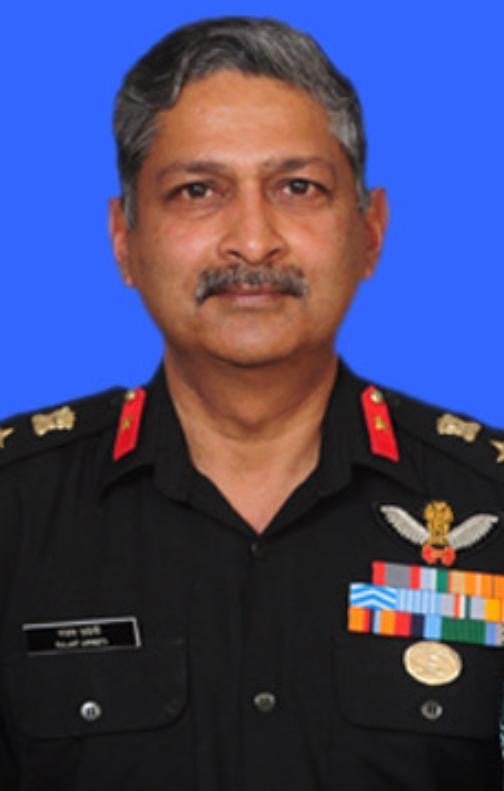
The writer is from Army Air Defence with tenures in Army Aviation also. With a wide experience in Command and Staff appointments, he has gained expertise in procurement – both capital and revenue. Based out of Delhi, he is presently mentoring start-ups in defence innovation. The views expressed are personal and do not necessarily carry the views of Raksha Anirveda
